...

What “Not for Human or Animal Consumption” Means

This article explains what “Not for Human or Animal Consumption” means on peptide product pages and why the phrase should be read as an intended-use boundary, not as proof of approval or analytical quality. It also outlines the documentation and testing signals research buyers should review before selecting RUO peptide materials.

Tirzepatide in Dual-Receptor Research Literature

This article reviews how tirzepatide is characterized in dual GIP/GLP-1 receptor research, including signaling bias, structural data, human islet findings, and documentation standards. It is written strictly for laboratory research audiences and RUO compliance.

Third-Party Peptide Testing Explained for Labs

Third-party peptide testing is not just a purity number. This article explains how independent labs verify identity, purity, content, and documentation for research-use-only peptides and what a strong external report should contain.

Tesamorelin Research Peptide Overview

Tesamorelin is one of the better-documented peptide compounds in the public literature because its regulatory chemistry and published endocrine studies are accessible. This RUO-focused overview explains what tesamorelin is, how researchers study it, and what documentation standards matter when evaluating research materials.

TB-500 Research Peptide Overview for RUO Labs

TB-500 is most accurately understood as the acetylated thymosin beta-4 fragment Ac-LKKTETQ. This article explains the sequence, parent-peptide context, actin-focused mechanism literature, and the quality documents that matter for RUO sourcing.

Sermorelin Research Peptide Overview for RUO Labs

Sermorelin is a defined GHRH(1-29)-NH2 research peptide, not a vague catalog term. This article explains its fragment classification, receptor pathway relevance, and the documentation standards researchers should review before selecting RUO material.

Semaglutide in Published Incretin Research

This article explains how semaglutide fits into published incretin research, from GLP-1 analog design and receptor signaling to ADME, oral absorption, and analytical documentation. It is written for laboratory readers and framed strictly for research-use-only evaluation.

RUO vs Clinical Use: Key Differences for Research Compounds

This article explains how RUO vs clinical use differs for research compounds, especially peptides, by comparing intended use, documentation, analytical expectations, and regulated manufacturing context. It is written for laboratory buyers and research institutions that need a clear, evidence-based view of the boundary.

Retatrutide and Multi-Receptor Research Pathways

Retatrutide and Multi-Receptor Research Pathways describe the study of a single engineered peptide that engages GLP-1R, GIPR, and GCGR within one molecular design. In laboratory research, that makes retatrutide relevant to receptor pharmacology, structure-guided peptide engineering, and analytical verification. This article reviews what the published literature shows,

Research Peptide Blends Explained for RUO Labs

This article explains what a research peptide blend is, how it differs from co-agonists and peptide arrays, and which analytical signals matter before RUO procurement. It focuses on component identity, impurity control, ratio verification, and batch-specific documentation.

Peptide Storage and Handling for Laboratory Research

This article explains how laboratories evaluate peptide storage and handling through the lens of stability science, packaging control, and analytical verification. It is written for RUO peptide buyers, research teams, and science-focused readers who need evidence-based guidance without consumer-use framing.

Peptide Stability: Research Documentation Basics

This article explains what peptide stability documentation should actually show in RUO workflows. It covers degradation pathways, analytical methods, lot-level records, and how researchers can review stability claims with less ambiguity.

Peptide Purity vs Peptide Identity for RUO Labs

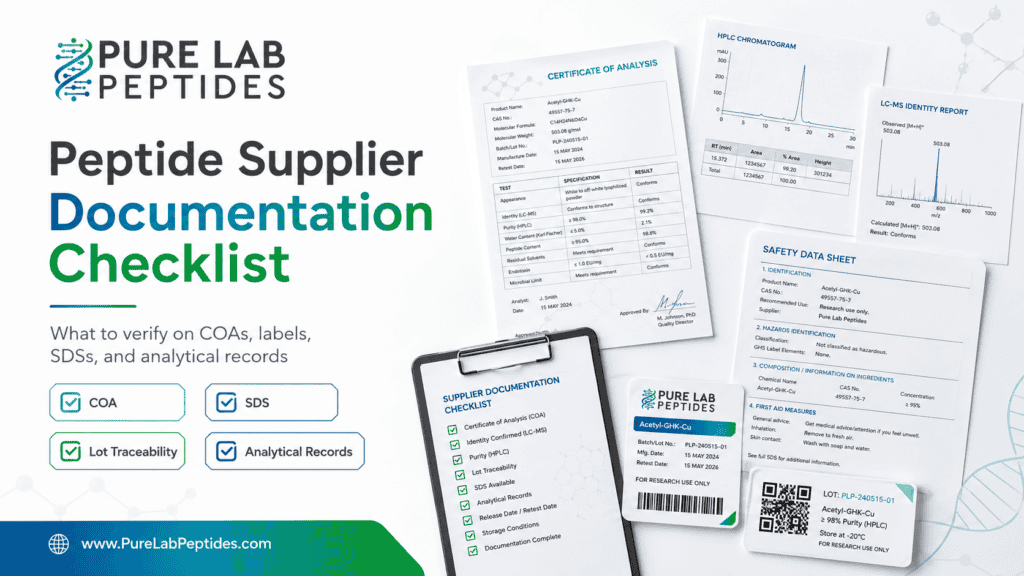
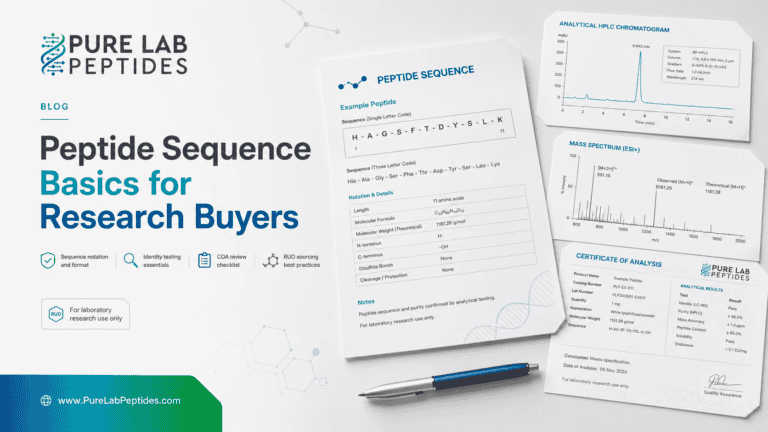
Peptide purity and peptide identity are related but separate analytical attributes. This article explains how laboratories evaluate each one, why both belong on a serious COA review, and what research buyers should look for in RUO peptide documentation.

Peptide Purity Testing Explained for RUO Research

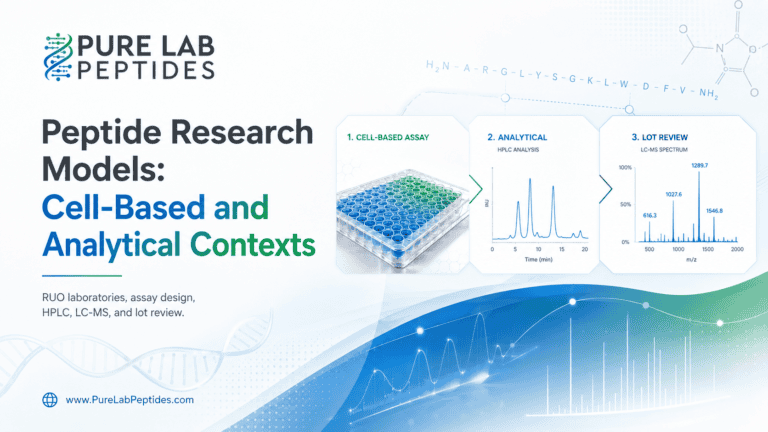
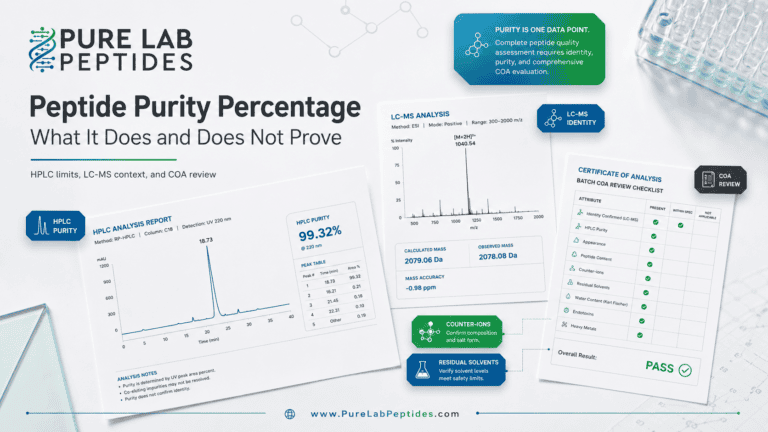
Peptide purity testing is more than a single percentage on a label. This article explains how HPLC, LC-MS, assay, impurity profiling, and batch-specific COA review fit together in research-use-only peptide evaluation.

LC-MS Testing for Peptide Identity Explained

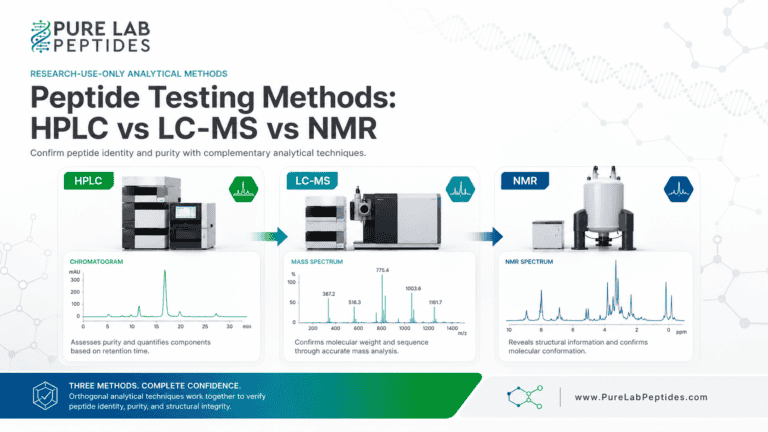
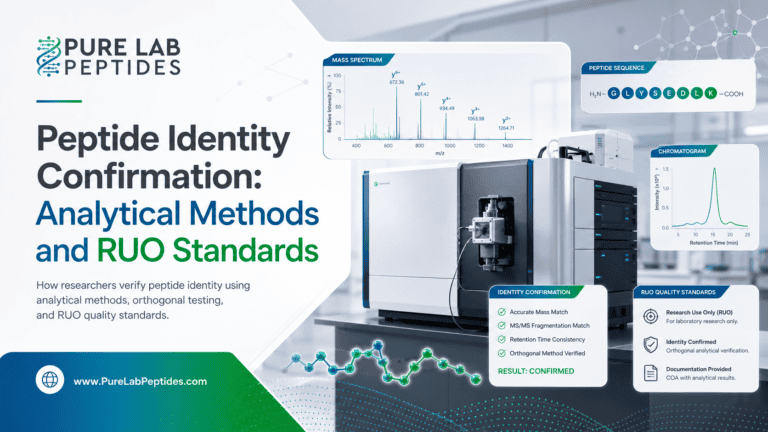
LC-MS testing for peptide identity helps laboratories confirm whether a peptide batch aligns with its expected mass-based and sequence-supporting profile. This article explains what the method measures, where it fits in COA review, and why orthogonal methods still matter for RUO peptide sourcing.

Researchers in a lab, wearing lab coats and safety goggles, discuss peptide-related DNA analysis in front of a computer screen.

Insights and Innovations in Peptide Research

Welcome to Pure Lab Peptides’ Blog & Resource Center. Here, we offer a wealth of information to support, educate, and inspire researchers in their peptide-related studies. Our resources are tailored to keep you informed about the latest trends, techniques, and discoveries in the world of peptide research.

Contribute to Our Resource Center

Are you a scientist, researcher, or industry expert with insights to share? Submit your article or study for consideration and become a contributor to our growing community.

A set of test tubes filled with blue liquid in the foreground, with a scientist wearing a face mask using a microscope in the background. The scene represents peptide research in a laboratory.

Disclaimer

Research Use Only: All products sold by Pure Lab Peptides are intended strictly for laboratory research purposes only. Products are not intended for human or animal consumption, diagnostic use, therapeutic use, clinical use, veterinary use, or as food, drugs, cosmetics, dietary supplements, or household products. Purchasers are responsible for ensuring proper handling, storage, and use in accordance with all applicable laws, regulations, and institutional guidelines. By purchasing, customers confirm they are qualified researchers or authorized institutions and agree to use all products solely for lawful research purposes.