
How to Interpret HPLC Chromatograms for Research
A concise, research-focused guide on reading HPLC chromatograms: understand retention time, peak area and shape to identify compounds and assess purity in RUO peptide analysis.
 Skip to content
 A concise, research-focused guide on reading HPLC chromatograms: understand retention time, peak area and shape to identify compounds and assess purity in RUO peptide analysis.

A guide for researchers on interpreting peptide listing storage instructions. Learn how to verify recommended conditions, check supporting data, and apply best practices for research-grade peptide stability.

A research peptide supplier should be evaluated through documentation, not marketing. This guide explains RUO-safe checks for COAs, traceability, HPLC purity, LC-MS identity, and supplier transparency for laboratory procurement.

A research-first peptide knowledge base is built around structured identity data, lot-level analytical evidence, and explicit RUO compliance controls. This guide explains how to design the schema, workflow, and review model so peptide entries remain searchable, auditable, and publication-ready.
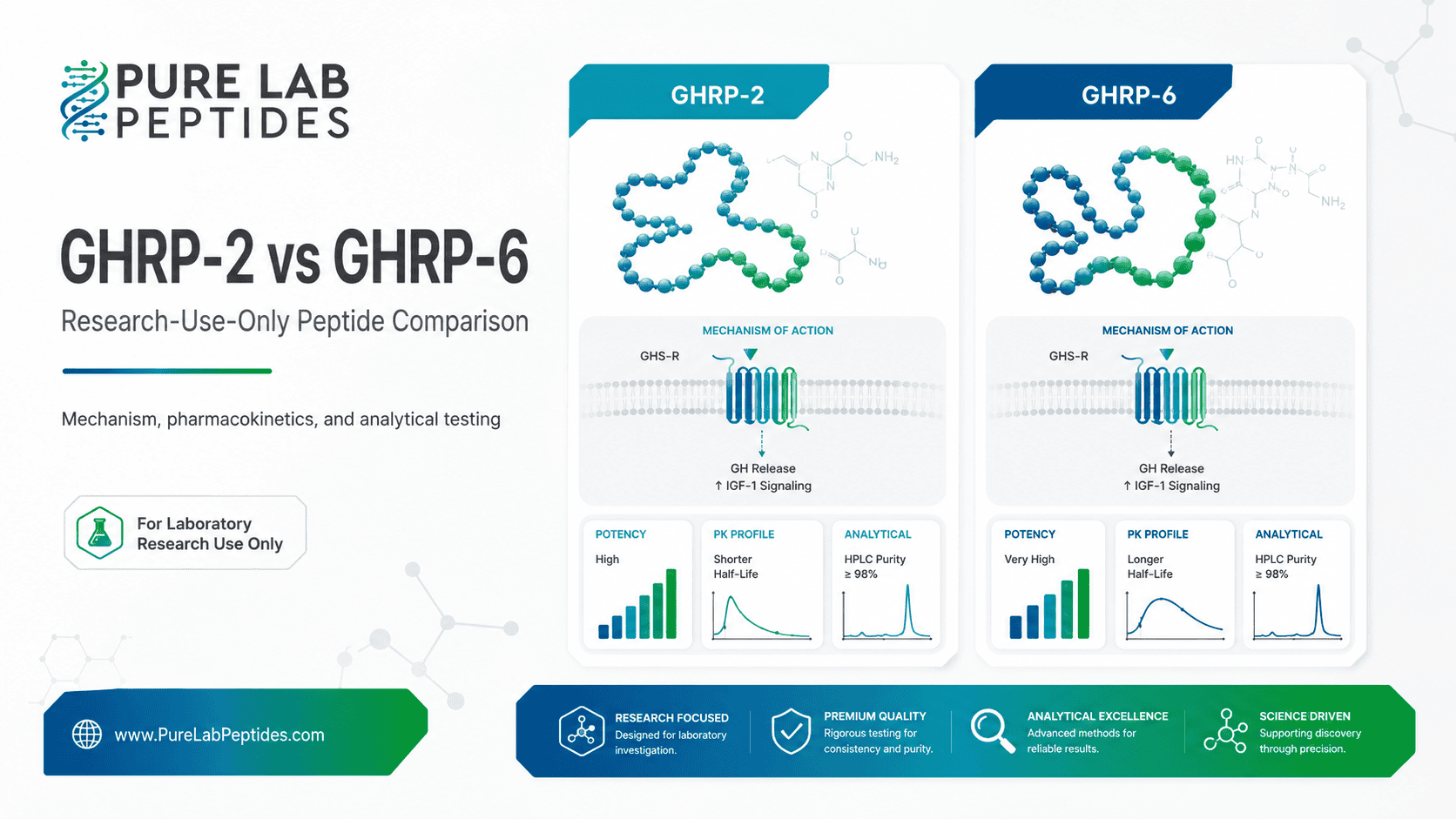
Compare GHRP-2 and GHRP-6 in published laboratory models, including receptor signaling, GH release, desensitization, assay design, and lot documentation.

Glow Blend documentation covers the analytical reports and safety data confirming this multi-peptide research product’s identity and purity. Understand COAs, RUO labeling, and QC practices for laboratory-use Glow Blend.

This article explores in vitro fibroblast model research and the use of peptides as research tools. It covers cell culture assays, key signaling pathways, and RUO documentation to guide scientists in selecting and evaluating research-grade peptides.

This article explores how peptides from the extracellular matrix are used in lab research to study cell adhesion and signaling. Key peptide motifs (RGD, IKVAV) and quality-testing (HPLC, MS) for RUO peptides are discussed.

Secretagogue peptides (GH-releasing peptides) have precise definitions in research. This article clarifies common misconceptions about their labeling, purity, and net content for RUO research contexts.

Peer-reviewed research demands precise peptide quality. This article explains how to interpret Certificates of Analysis (COAs) for secretagogue peptides, covering purity assays, identity confirmation, and best practices in a strictly research-use-only context.
Discount Applied Successfully!
Your savings have been added to the cart.