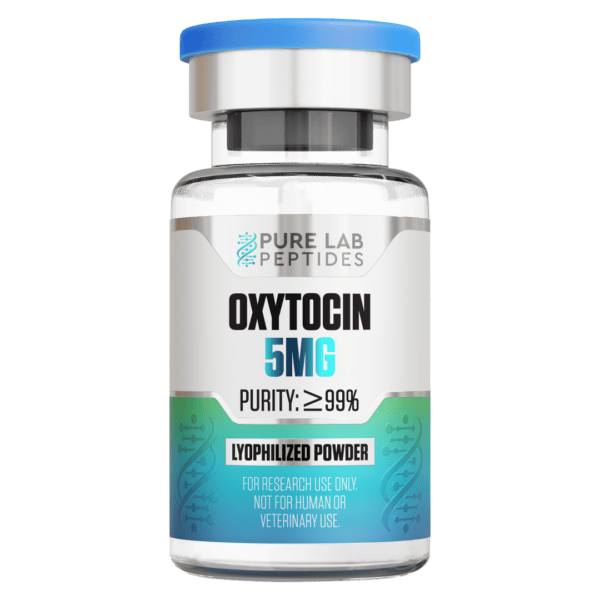

Researchers searching for buy Oxytocin online should evaluate Oxytocin as a research-use-only laboratory material, not a consumer product. For laboratory buyers, the key considerations are compound identity, purity documentation, batch-specific COAs, lot traceability, product labeling, and storage information. This guide explains how to evaluate Oxytocin for controlled research procurement through Pure Lab Peptides, with emphasis on RUO labeling, supplier transparency, analytical documentation, and research recordkeeping.
Fast Answer: buy Oxytocin online
Researchers can buy Oxytocin online for laboratory research by reviewing RUO labeling, batch-specific COA documentation, purity data, identity information, storage guidance, and supplier transparency before selecting a source. Products discussed in this article are intended for laboratory research use only and are not intended for human or animal consumption.
What Does “Buy Oxytocin Online” Mean in a Research Context?
The phrase “buy Oxytocin online” is addressed here as laboratory research procurement intent, not personal-use intent. In this context, the buyer is a qualified researcher, laboratory buyer, research institution, or technical procurement team evaluating Oxytocin research material for controlled laboratory settings.
Research procurement is documentation-driven. A laboratory buyer should review research-use-only labeling, product identity, purity documentation, Oxytocin COA availability, lot number consistency, storage information, and supplier language before adding any material to a research inventory. FDA guidance for RUO-labeled in vitro diagnostic products illustrates the broader compliance principle that RUO labeling should be kept separate from diagnostic or clinical positioning, even though peptide research materials are a different product category [1].
For Oxytocin research-use-only sourcing, the commercial phrase should therefore be understood as a request for supplier documentation, not a request for use instructions. Researchers searching for buy Oxytocin online should evaluate whether the supplier clearly separates RUO materials from personal-use language, whether a batch-specific COA is available, and whether the product page provides enough information for internal procurement records.
Oxytocin Research Material Overview
Oxytocin is a peptide compound identified in chemical databases with the molecular formula C43H66N12O12S2 [2]. The Human Metabolome Database lists Oxytocin with CAS Registry Number 50-56-6, average molecular weight 1007.187, and monoisotopic molecular weight 1006.436457016 [3]. These database identifiers are useful for procurement teams comparing supplier listings, COA fields, and internal catalog records.
Structurally, Oxytocin is commonly described as a cyclic nonapeptide with a sequence represented as Cys-Tyr-Ile-Gln-Asn-Cys-Pro-Leu-Gly-NH2 and a disulfide bridge between cysteine residues [3]. That identity information helps researchers evaluate whether Oxytocin identity testing is consistent with the listed compound.
Oxytocin appears in research literature related to neuropeptide signaling and oxytocin receptor pathway models. The human OXTR gene encodes the oxytocin receptor, and NCBI identifies the encoded protein as a G protein-coupled receptor [4]. UniProt likewise describes OXTR as an oxytocin receptor mediated by G proteins and linked to a phosphatidylinositol-calcium second messenger system [5]. ChEMBL also maintains a curated compound record for Oxytocin, supporting cross-checking of name, formula, and compound identity during documentation review [6].
Research model findings should not be interpreted as human-use guidance for RUO materials. Published receptor and signaling literature provides scientific context only; it does not establish instructions, outcomes, or claims for an Oxytocin research-use-only material.
Why Researchers Search “Buy Oxytocin Online”
Researchers may search buy Oxytocin online to compare RUO product availability, supplier documentation, batch-specific COA access, purity data, identity confirmation, product form, and storage information. The procurement question is not “how should this compound be used?” but “does this supplier provide enough documentation for controlled research purchasing and recordkeeping?”
A laboratory buyer may also search buy Oxytocin to confirm that a supplier uses research-safe language. The product listing should not rely on unsupported outcomes, personal-use claims, or promotional interpretations of published literature. It should instead provide Oxytocin supplier documentation, product identity information, RUO labeling, lot-level traceability, and clear separation between research procurement and non-research positioning.
For an Oxytocin research material, the most useful supplier signals are batch-specific documentation, analytical method information, product page consistency, and a direct link between the COA and the lot received by the laboratory.
Research Procurement Checklist for Oxytocin
- Verify that Oxytocin is labeled for research use only.
- Review the batch-specific certificate of analysis before procurement.
- Confirm that the Oxytocin COA includes purity documentation and identity information.
- Check whether HPLC, LC-MS, mass spectrometry, or another analytical method is listed.
- Compare the product name, lot number, and documentation for consistency.
- Assess whether the supplier avoids therapeutic, diagnostic, or personal-use claims.
- Document storage and handling information in laboratory records.
- Evaluate whether the lyophilized powder form matches the needs of the research workflow.
- Confirm that the product is not marketed for human or animal consumption.
Oxytocin Quality Signals to Review Before Buying Online
Qualified researchers evaluating where to buy Oxytocin online for laboratory research should focus on verifiable documentation. Receptor pathway literature can help classify Oxytocin as a neuropeptide signaling research material, but supplier evaluation should remain centered on COA review, identity data, purity documentation, and lot traceability. Reviews of oxytocin receptor systems describe OXTR as part of a GPCR signaling framework, which is useful scientific context but not product-use guidance [7] [8].
| Evaluation Area | What Researchers Should Review | Why It Matters for RUO Procurement |
| RUO labeling | Confirm the product is clearly labeled for research use only | Helps separate research procurement from human-use positioning |
| COA availability | Review the batch-specific certificate of analysis | Supports lot-level documentation and quality review |
| Purity data | Look for analytical support for the stated purity | Helps evaluate material consistency |
| Identity testing | Review HPLC, LC-MS, mass spectrometry, or related identity data in the documentation | Helps confirm the material matches the listed compound |
| Lot traceability | Match lot numbers across product and documentation | Supports research recordkeeping |
| Product form | Confirm whether the material is supplied as lyophilized powder or another documented form | Supports laboratory planning |
| Storage information | Review storage and handling documentation | Helps maintain material integrity in laboratory settings |
| Supplier language | Confirm the supplier avoids therapeutic, diagnostic, or personal-use claims | Supports research-use-only positioning |
COA, Purity, and Identity Documentation
Oxytocin purity documentation should be read together with identity information, test method, lot number, and product labeling. A purity percentage alone does not establish complete compound identity; researchers should evaluate purity, identity, method, lot number, and documentation together. Analytical guidance from FDA and ICH emphasizes that method validation and analytical procedure development are central to documenting identity, quality, purity, and method suitability in regulated analytical contexts [9] [10] [11].
For peptide materials, HPLC is widely used for peptide analysis and purification, while LC-MS and high-resolution mass spectrometry can support peptide identity and impurity evaluation [12]. Oxytocin-specific analytical studies have used LC-HRMS to identify and quantify structurally related peptide impurities in synthetic Oxytocin materials [13]. A multi-laboratory peptide quantification study using Oxytocin also compared reproducibility across analytical approaches, reinforcing why procurement teams should read method information rather than relying on a purity claim alone [14].
Researchers should review the product page and batch-specific documentation to determine the exact method summaries, chromatograms, spectra, molecular weight information, sequence references, and storage notes included for the lot. If third-party laboratory testing is referenced, ISO/IEC 17025 is a recognized standard for testing and calibration laboratory competence, impartiality, and consistent operation [15].
flowchart TD
A[Receive product and COA] --> B{RUO labeling present?}
B -- No --> C[Flag procurement gap]
B -- Yes --> D{Lot number matches across label and COA?}
D -- No --> E[Request batch-specific documentation]
D -- Yes --> F{Identity supported by analytical method?}
F -- No --> G[Request HPLC, LC-MS, or equivalent]
F -- Yes --> H[Proceed to laboratory documentation and storage]
Research Literature Context
Published literature has examined Oxytocin in several research contexts, including compound identity, neuropeptide signaling, OXTR receptor biology, GPCR pathway models, and analytical measurement. Reviews describe the oxytocin receptor as a seven-transmembrane GPCR and discuss intracellular signaling networks associated with OXTR in model systems [16]. A Frontiers review also discusses OXTR within GPCR heteroreceptor network research, which is relevant to pathway classification but not to product claims [17].
The evidence landscape is mixed. Database records support compound identification; receptor reviews support pathway classification; analytical studies support method awareness; and some literature outside RUO sourcing involves clinical or translational settings. Published clinical literature should not be interpreted as use guidance for RUO materials. The presence of regulated-medicine records in a database does not convert an RUO research material into a clinical product or support personal-use positioning.
Analytical literature is especially relevant to procurement. Oxytocin has been measured in biological matrices by orbitrap LC-MS, serum-focused mass spectrometry approaches, LC-MS/MS in posterior pituitary and CSF research, and highly sensitive plasma LC-MS/MS method development [18] [19] [20] [21]. These publications should be treated as analytical or research-method context, not as instructions for RUO product use.
Evidence Landscape
| Research Area | What Literature Examines | Evidence Type | RUO Interpretation |
| Compound identity | Molecular structure, sequence, formula, classification, and database identifiers | Database / analytical | Supports identification, not product-use claims |
| Pathway or category context | Oxytocin receptor signaling, GPCR classification, and neuropeptide pathway models | Review / in vitro / model-based | Useful for research context, not therapeutic claims |
| Analytical testing | Purity, identity, impurity evaluation, and batch verification | HPLC / LC-MS / mass spectrometry / COA | Supports documentation review |
| Storage and stability | Material form and handling considerations | Laboratory documentation | Supports research workflow planning |
Claim Boundary Table
| Research-Safe Statement | Why It Is Acceptable | Non-Compliant Version to Avoid |
| “Oxytocin is discussed in published research related to neuropeptide signaling and OXTR pathway models.” | Describes literature context without making a product claim | “Oxytocin helps with a human outcome.” |
| “Researchers should review COA and identity data before procurement.” | Focuses on documentation and quality review | “Users should buy Oxytocin for results.” |
| “Pure Lab Peptides supplies Oxytocin as a research-use-only material.” | Clarifies intended use | “Pure Lab Peptides supplies Oxytocin for therapy.” |
| “The phrase buy Oxytocin online is addressed as research procurement intent.” | Qualifies commercial search intent | “Buy Oxytocin online for personal use.” |
| “Oxytocin purity documentation should be evaluated with identity testing and lot traceability.” | Connects quality review to analytical documentation | “A purity percentage proves everything needed about the material.” |
How Pure Lab Peptides Presents Oxytocin
Pure Lab Peptides presents Oxytocin 10mg as a research-use-only compound supplied in lyophilized powder form with a ≥99% purity claim. A batch-specific COA is available, and researchers should review the product page, COA, purity information, identity documentation, storage and handling information, and lot-level traceability before procurement.
Review the Pure Lab Peptides Oxytocin research-use-only product page for RUO labeling, product details, purity information, and batch-specific documentation. Researchers comparing related materials may also review the broader research peptide collection, the Pure Lab Peptides research blog, and shipping and returns information for procurement planning.
For Oxytocin supplier documentation, the key review points are the same across laboratory sourcing workflows: identity, purity, batch-specific COA, lot number consistency, product form, storage guidance, and supplier transparency.
Common Misunderstandings About Buying Oxytocin Online
Misunderstanding: “Buy Oxytocin online” means personal use
Buy Oxytocin online should not be interpreted as personal-use guidance on this page. The phrase is addressed as laboratory procurement intent for qualified researchers reviewing RUO labeling, documentation, purity data, identity information, and supplier transparency.
Misunderstanding: Published literature equals product-use guidance
Published research can help classify Oxytocin as a neuropeptide signaling research material, but it does not provide instructions for an RUO compound. Literature discussing receptors, pathways, analytical methods, or model systems should be separated from supplier claims and procurement documentation.
Misunderstanding: Purity percentage alone proves identity
Oxytocin purity documentation is important, but a purity percentage should be reviewed with identity testing, method information, lot number, product name, molecular identity, and COA consistency. Purity and identity are related documentation categories, not interchangeable categories.
Misunderstanding: COA documentation does not need to be batch-specific
For research recordkeeping, an Oxytocin COA should be matched to the specific lot under review. Batch-specific documentation helps the laboratory connect the received material to purity data, method information, identity confirmation, and internal purchasing records.
Misunderstanding: RUO labeling supports human or animal consumption
RUO labeling does not support human or animal consumption. It identifies the material as intended for controlled laboratory research procurement and documentation review. FDA IVD labeling resources also illustrate why labeling language must be carefully separated from diagnostic or clinical positioning [22].
FAQs About Buying Oxytocin Online for Research
Where can researchers buy Oxytocin online for laboratory research?
Researchers can buy Oxytocin online for laboratory research from an RUO supplier that provides clear research-use-only labeling, batch-specific COA access, purity information, product identity details, storage guidance, and transparent supplier documentation. Pure Lab Peptides provides an Oxytocin 10mg product page for researchers reviewing RUO procurement details.
What should researchers check before buying Oxytocin online?
Before buying Oxytocin online, researchers should check RUO labeling, Oxytocin COA availability, lot number consistency, purity documentation, identity testing, product form, storage information, and supplier language. The supplier should present Oxytocin as a laboratory research material, not as a consumer, therapeutic, or diagnostic product.
Why does a COA matter when buying Oxytocin?
A COA matters when buying Oxytocin because it connects the research material to batch-specific documentation. Researchers should review the compound name, lot number, purity percentage, test method, identity information, and supporting analytical notes together. COA review supports laboratory recordkeeping and supplier evaluation.
Is Oxytocin intended for human or animal consumption?
Oxytocin discussed here is not intended for human or animal consumption. This article addresses Oxytocin research-use-only procurement for qualified laboratory buyers. It does not provide personal-use guidance, animal-use guidance, therapeutic recommendations, diagnostic recommendations, or product-use instructions.
What does research use only mean for Oxytocin?
Research use only means Oxytocin is positioned as a laboratory research material for controlled research settings. RUO procurement focuses on labeling, COA documentation, purity data, identity confirmation, lot traceability, storage information, and supplier transparency. RUO status should not be converted into personal-use or clinical-use language.
How should published literature about Oxytocin be interpreted?
Published literature about Oxytocin should be interpreted as scientific context. Database records, receptor reviews, GPCR pathway literature, and analytical method papers can inform research classification and documentation review. They should not be interpreted as product-use guidance for RUO materials.
Next Steps
Qualified researchers evaluating Oxytocin should review product labeling, COA status, identity documentation, storage information, purity data, and supplier transparency. Review the Oxytocin product page for RUO labeling, purity information, and available batch-specific documentation.
References
- U.S. Food and Drug Administration. “Distribution of In Vitro Diagnostic Products Labeled for Research Use Only or Investigational Use Only.” FDA Guidance Document. 2013, updated 2018. fda.gov
- National Center for Biotechnology Information. “Oxytocin.” PubChem Compound Database. Accessed 2026. pubchem.ncbi.nlm.nih.gov/compound/Oxytocin
- Human Metabolome Database. “Showing Metabocard for Oxytocin (HMDB0002865).” HMDB. Accessed 2026. hmdb.ca/metabolites/HMDB0002865
- National Center for Biotechnology Information. “OXTR Oxytocin Receptor [Homo sapiens].” NCBI Gene. Accessed 2026. ncbi.nlm.nih.gov/gene/5021
- UniProt Consortium. “OXTR – Oxytocin receptor – Homo sapiens.” UniProtKB. Accessed 2026. uniprot.org/uniprotkb/P30559/entry
- European Bioinformatics Institute. “Compound: OXYTOCIN (CHEMBL395429).” ChEMBL. Accessed 2026. ebi.ac.uk/chembl/explore/compound/CHEMBL395429
- Gimpl G, Fahrenholz F. “The oxytocin receptor system: structure, function, and regulation.” Physiological Reviews. 2001. doi.org/10.1152/physrev.2001.81.2.629
- Chatterjee O, Patil K, Sahu A, et al. “An overview of the oxytocin-oxytocin receptor signaling network.” Journal of Cell Communication and Signaling. 2016. doi.org/10.1007/s12079-016-0353-7
- U.S. Food and Drug Administration. “Analytical Procedures and Methods Validation for Drugs and Biologics.” FDA Guidance Document. 2015, updated 2020. fda.gov
- U.S. Food and Drug Administration. “Q2(R2) Validation of Analytical Procedures.” FDA Guidance Document. 2024. fda.gov
- U.S. Food and Drug Administration. “Q14 Analytical Procedure Development.” FDA Guidance Document. 2024. fda.gov
- Mant CT, Chen Y, Yan Z, et al. “HPLC Analysis and Purification of Peptides.” Methods in Molecular Biology. 2007. doi.org/10.1007/978-1-59745-430-8_1
- Li M, Josephs RD, Daireaux A, et al. “Structurally related peptide impurity identification and accurate quantification for synthetic oxytocin by liquid chromatography-high-resolution mass spectrometry.” Analytical and Bioanalytical Chemistry. 2021. doi.org/10.1007/s00216-021-03154-5
- Li C, Bhavaraju S, Thibeault MP, et al. “Survey of peptide quantification methods and comparison of their reproducibility: A case study using oxytocin.” Journal of Pharmaceutical and Biomedical Analysis. 2019. doi.org/10.1016/j.jpba.2018.12.028
- International Organization for Standardization. “ISO/IEC 17025:2017 General requirements for the competence of testing and calibration laboratories.” ISO. 2017. iso.org/standard/66912.html
- Jurek B, Neumann ID. “The Oxytocin Receptor: From Intracellular Signaling to Behavior.” Physiological Reviews. 2018. doi.org/10.1152/physrev.00031.2017
- Borroto-Escuela DO, Cuesta-Marti C, Lopez-Salas A, et al. “The oxytocin receptor represents a key hub in the GPCR heteroreceptor network: potential relevance for brain and behavior.” Frontiers in Molecular Neuroscience. 2022. doi.org/10.3389/fnmol.2022.1055344
- Franke AA, Li X, Menden A, Lee MR, Lai JF. “Oxytocin analysis from human serum, urine, and saliva by orbitrap liquid chromatography-mass spectrometry.” Drug Testing and Analysis. 2019. doi.org/10.1002/dta.2475
- Hering A, Jieu B, Jones A, Muttenthaler M. “Approaches to Improve the Quantitation of Oxytocin in Human Serum by Mass Spectrometry.” Frontiers in Chemistry. 2022. doi.org/10.3389/fchem.2022.889154
- Erikson DW, Blue SW, Kaucher AV, Shnitko TA. “LC-MS/MS measurement of endogenous oxytocin in the posterior pituitary and CSF of macaques: A pilot study.” Peptides. 2021. doi.org/10.1016/j.peptides.2021.170544
- Grifnee E, Mackowiak A, Demeuse J, et al. “Development and validation of a highly-sensitive, quantitative LC-MS/MS assay to evaluate plasma oxytocin.” Journal of Mass Spectrometry and Advances in the Clinical Lab. 2025. doi.org/10.1016/j.jmsacl.2025.02.002
- U.S. Food and Drug Administration. “In Vitro Diagnostic Device Labeling Requirements.” FDA. 2023. fda.gov
There are no reviews yet.