

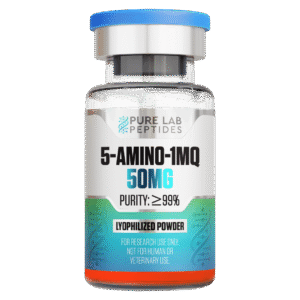


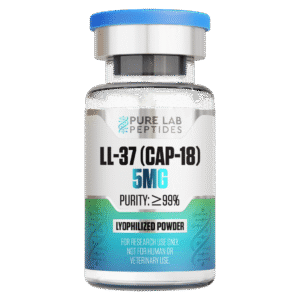



How Product Labeling Shapes RUO Compliance

How Product Labeling Shapes RUO Compliance is ultimately a question of intended use, not just package design. In FDA frameworks, intended use is inferred from objective evidence such as labeling claims, advertising, and distribution context, and FDA’s RUO guidance for in vitro diagnostics makes the same point: a research-only position holds only when the label, product page, and supporting materials consistently point to laboratory research rather than broader uses. [1][2][3]
Fast Answer
Product labeling shapes RUO compliance because it tells regulators and research buyers what a material appears to be for. Products discussed in this article are intended for laboratory research use only and are not intended for human or animal consumption. If the vial, website, technical sheet, or surrounding sales context implies a broader intended use, an RUO statement becomes much less persuasive. [1][2][3]
What product labeling includes in an RUO context
In compliance practice, “labeling” is broader than the sticker on a vial. FDA’s intended-use regulations for both drugs and devices say objective intent can be shown by labeling claims, advertising matter, oral or written statements, the design or composition of the article, and the circumstances surrounding distribution. That means product titles, packaging copy, downloadable PDFs, catalog text, email copy, and sales positioning can all contribute to how a product is interpreted. [1][2]
The same broad view appears in FTC guidance. The FTC explains that advertising for health-related products includes statements on packaging and labeling, promotional materials, websites and other digital content, social media, press appearances, and trade-show or seminar materials. It also reiterates that objective claims, whether express or implied, require substantiation before dissemination. For an RUO peptide supplier, that means the public-facing message is the total package, not the disclaimer in isolation. [5][6]
FDA’s IVD labeling rule is especially instructive because it shows how regulators connect limiting statements with traceability data. Under 21 CFR 809.10, IVD labeling includes intended use, storage instructions, quantity declarations, manufacturer identity, and lot or control numbers, and an RUO-phase IVD must bear the prominent statement “For Research Use Only. Not for use in diagnostic procedures.” The same section also shows that general laboratory reagent labeling is expected to carry identity, purity or quality information, warnings, storage, supplier identity, and lot traceability. [4]
Not every peptide supplier is distributing an IVD or a CFR-defined general purpose laboratory reagent. Still, the regulatory logic is useful: a compliant research-facing label is not merely a warning statement. It is a structured set of signals about research scope, product identity, batch traceability, storage, and scientific quality. That is why product labeling sits at the center of RUO compliance rather than at its margins. [3][4]
Why an RUO disclaimer by itself is not enough
FDA’s RUO guidance states the central compliance lesson directly: the presence of an RUO label alone does not automatically exempt a product from otherwise applicable requirements. FDA says intended use may still be determined from other evidence, including how a product is marketed, and the guidance lists conflicting signals such as performance claims, product names or descriptors that suggest non-research use, and promotional statements that move beyond a research framing. In other words, disclaimers do not override context. [3][1][2]
Drug-labeling exemptions show the same dependency on scope. Under 21 CFR 201.125, certain research and analysis uses are exempt only when the article is shipped or held by persons engaged in non-clinical instruction, research, analysis, or physical testing, and only when it is to be used for those purposes. Under 21 CFR 201.127, that exemption expires if shipment or delivery is made for another purpose. The practical point for peptide suppliers is that “research use” is a bounded status, not a blanket phrase that survives contradiction. [7][8]
FTC guidance reaches a parallel conclusion from the advertising side. The agency states that health-related marketing must be truthful, not misleading, and adequately substantiated, and it expressly notes that a disclaimer or qualifying statement will not rescue an otherwise deceptive claim if the larger message still communicates something broader. For RUO content strategy, that means a product page cannot rely on a footer disclaimer while the headline, metadata, or body copy suggests a non-research application. [5][6]
This is why answer-first RUO copy should stay close to laboratory context. Neutral compound descriptions, analytical documentation notes, and batch-specific traceability support a research-only position. By contrast, promotional phrasing that shifts the reader toward an implied outcome or non-research endpoint changes the intended-use story the label is telling, even if the package still says RUO. [1][5]
Label elements that support research-only positioning
A stronger RUO label does two jobs at once. First, it marks a clear scope boundary around laboratory research. Second, it gives a qualified buyer enough traceability to connect the container to the COA, SDS, and lot record. That combination matters because serious research institutions do not evaluate a peptide by disclaimer alone; they evaluate whether the material is identifiable, document-linked, and analytically described with enough precision to support procurement review and reproducibility. [4][9][10][11]
It also helps to think about label content in layers. One layer defines the research-only boundary. Another identifies the actual article being sold. Another links the article to batch-specific documents. Another tells the receiving laboratory how stability and workplace hazard communication are being handled. When one layer is missing, the entire RUO presentation becomes less credible. [4][9]
| Label element | Why it matters | RUO-safe implementation | If missing or inconsistent |
| Limiting statement and research scope [3][4] | It separates laboratory research positioning from broader use implications and clarifies that the material is being supplied as research-use-only content. | Use a prominent research-only statement and keep adjacent copy mechanistic, analytical, and laboratory-focused. | The supplier relies on one disclaimer while surrounding copy implies a different intended use. |
| Compound-accurate product identifier and quantity [4][9] | Researchers need to know exactly what material is in the container and in what labeled amount so they can match incoming inventory to procurement records. | Use the compound name, a clear fill or content statement, and a stable product identifier that matches the catalog and documentation. | Ambiguous nicknames, marketing-led naming, or quantity statements that do not map cleanly to documents increase review friction. |
| Lot number and supplier identity [4][9] | Lot-linked traceability is what allows a container to be connected to a specific manufacturing history and batch-specific COA. | Display a lot or control number and supplier contact information consistently on the label, COA, and shipping documentation. | A lot mismatch or missing supplier identification weakens traceability and complicates qualification review. |
| Storage and hazard communication [4][9] | RUO status does not replace stability or workplace safety obligations. Laboratories still need storage information and, where applicable, hazard labeling and SDS access. | State storage conditions clearly and ensure any required hazard elements and SDS references are available. | An RUO statement is treated as though it covers questions that actually belong to hazard communication or stability control. |
| Method-linked quality language and document trail [10][11][12][13][14] | Identity, purity, related substances, and stability are not interchangeable claims. Researchers need quality language that points to an actual analytical basis. | Tie quality statements to a lot-specific COA and identify the analytical context, such as identity confirmation by MS or purity reported by chromatography. | Undefined quality badges create ambiguity about what was measured, by which method, and for which lot. |
Quality language deserves special discipline because peptide quality is multidimensional. Peer-reviewed and regulatory reviews emphasize that peptide specifications should be built from defined quality attributes, procedures, and acceptance criteria, and that orthogonal approaches are often needed to distinguish identity, purity, and impurity profiles. A label should therefore signal what kind of evidence exists, not collapse several distinct measurements into a single marketing shorthand. [12][13][14]
How labels, COAs, and analytical methods should align
A defensible RUO presentation is not label-only. The product label, COA, and any technical document should agree on compound identity, lot number, labeled amount, storage conditions, supplier identity, and document versioning. When those elements diverge, the buyer is left with a traceability problem, and the supplier weakens the evidence that the article is a controlled research material supported by batch-specific documentation. [4][11][12]
Why method-linked quality language matters
ICH Q2(R2) frames analytical validation around characteristics such as specificity, accuracy, precision, and robustness. That framework matters for peptides because statements like “identity confirmed” or “purity reported” are only meaningful if the method is fit for the attribute being discussed. In practical terms, an RUO label should point the buyer toward the underlying document trail instead of presenting quality as a vague decorative claim. [10][12]
McCarthy and colleagues describe peptide reference-standard programs that combine NMR, mass spectrometry, HPLC, and GC to assign identity, content, purity, lot consistency, and stability. Reviews focused on peptide LC-MS and regulatory characterization also emphasize critical-quality-attribute thinking, impurity profiling, and the use of orthogonal techniques to understand sequence-related variants and related substances. For RUO suppliers, the most important takeaway is not to mimic a pharmaceutical dossier, but to ensure that any quality language on the label can be traced to a real analytical basis. [11][13][14]
Why documentary alignment matters for research reproducibility
Documentary precision is not just a compliance preference. Reports on commercial synthetic peptides have found mislabeled material, insufficient purity, and contaminants capable of altering experimental interpretation, which is precisely why qualified buyers look for lot-linked analytical documentation rather than label slogans alone. When the label clearly maps to a batch-specific COA and the COA explains what was measured, the supplier gives the research team a much stronger basis for qualification and repeat purchasing. [15][16]
Current peptide-specific regulatory thinking reinforces the same direction of travel. EMA’s synthetic peptide guideline centers characterization, specifications, and analytical control, underscoring that peptide documentation should be method-aware and impurity-aware. In an RUO context, that does not mean adopting every medicinal-product convention. It does mean understanding that any label claim about peptide quality is stronger when it is clearly anchored to batch documentation and analytically meaningful terminology. [19][12]
A practical review framework for research buyers and suppliers
For both suppliers and procurement teams, the most useful question is simple: does every public-facing and lot-linked artifact describe the same research-only material in the same way? If the answer changes between the vial label, product title, indexed metadata, COA, SDS, and support copy, then intended-use clarity and buyer confidence both start to erode. RUO compliance is therefore shaped as much by consistency as by wording. [1][2][5][6]
This diagram is an editorial synthesis of a practical RUO label review workflow, not a published regulatory figure.
What recent enforcement shows
Recent FDA warning letters to peptide sellers illustrate how quickly an RUO position can unravel when web copy drifts. In December 2024 and March 2026, FDA cited peptide websites that used research-only disclaimers while still presenting the products with human-use outcome language and other non-research signals. FDA treated the broader web presentation as evidence of intended drug use, which is exactly why compliant RUO strategy has to include product names, category pages, captions, and summary copy, not only the vial label. [17][18]
A workable internal review sequence
In practice, an internal RUO review can stay concise. Check that the limiting statement is prominent, the product name is compound-accurate and neutral, the lot and quantity data match the COA, storage and hazard communication are handled where relevant, and every quality statement points to a real method or document. That sequence aligns label content with both regulatory logic and the expectations of serious research procurement. [3][4][9][10][11]
The same discipline should extend to search metadata and outreach copy. If a search snippet, image caption, email subject line, or landing-page summary implies a broader use than the RUO label itself, the supplier has effectively changed the message seen by regulators and buyers. That is the deeper answer to how product labeling shapes RUO compliance: labeling is the entire evidence trail of intended use. [1][2][5][6]
FAQs
Does RUO compliance depend only on what appears on the vial?
No. RUO compliance does not depend only on the vial label because FDA intended-use rules and FTC advertising guidance both treat the broader messaging environment as relevant evidence. Product pages, downloadable documents, social content, and other written or promotional statements can all shape how a research material is interpreted. [1][2][5]
What wording belongs on an RUO peptide label?
An RUO peptide label should use a clear research-only limiting statement, compound-accurate naming, lot identification, quantity information, supplier identity, and any relevant storage or hazard language. In the IVD context, FDA requires the prominent statement “For Research Use Only. Not for use in diagnostic procedures,” which illustrates how explicit limiting language is expected to function. [3][4][9]
Why do lot numbers matter so much in RUO peptide purchasing?
Lot numbers matter in RUO peptide purchasing because they connect the physical container to the COA, manufacturing history, and any stability or follow-up documentation. Without lot-linked traceability, a research team cannot confidently verify whether the label, analytics, and received material all describe the same batch. [4][11][19]
Can a supplier cite published literature without undermining RUO positioning?
Yes, a supplier can cite published literature without undermining RUO positioning if the literature is summarized neutrally, accurately, and in a research context rather than converted into a supplier-made outcome claim. The key is that the surrounding copy should describe what literature has examined, not imply a broader intended use for the sold material. [1][2][5][6]
Do hazard labels and SDSs still matter if a product is marked RUO?
Yes. Hazard labels and SDSs still matter when a product is marked RUO because research-only positioning does not replace workplace hazard communication requirements. OSHA’s Hazard Communication Standard separately addresses shipped-container labels and SDS availability for hazardous chemicals, so an RUO statement should not be treated as a substitute for safety communication. [9][4]
What is the most common labeling mistake in the RUO category?
The most common labeling mistake in the RUO category is inconsistency: the supplier places a research-only disclaimer on the product while the website, category page, or summary copy communicates a broader use story. Recent FDA warning letters to peptide sellers show that regulators can treat that mismatch as evidence that the material is not really being positioned solely for research. [3][17][18]
Next Steps
Review batch-specific documentation before selecting any research-use-only peptide. Explore Pure Lab Peptides for RUO peptide compounds with clear labeling, research-focused product information, and available documentation. For research teams comparing suppliers, prioritize COA availability, transparent labeling, and lot-level traceability.
References
- U.S. Food and Drug Administration. “21 CFR 201.128 – Meaning of Intended Uses.” Electronic Code of Federal Regulations. Current version. https://www.ecfr.gov/current/title-21/chapter-I/subchapter-C/part-201/subpart-D/section-201.128
- U.S. Food and Drug Administration. “21 CFR 801.4 – Meaning of Intended Uses.” Electronic Code of Federal Regulations. Current version. https://www.ecfr.gov/current/title-21/chapter-I/subchapter-H/part-801/subpart-A/section-801.4
- U.S. Food and Drug Administration. “Distribution of In Vitro Diagnostic Products Labeled for Research Use Only or Investigational Use Only.” Guidance for Industry and FDA Staff. 2013. https://www.fda.gov/files/medical%20devices/published/Distribution-of-In-Vitro-Diagnostic-Products-Labeled-for-Research-Use-Only-or-Investigational-Use-Only—Guidance-for-Industry-and-FDA-Staff.pdf
- U.S. Food and Drug Administration. “21 CFR 809.10 – Labeling for In Vitro Diagnostic Products.” Electronic Code of Federal Regulations. Current version. https://www.ecfr.gov/current/title-21/chapter-I/subchapter-H/part-809/subpart-B/section-809.10
- Federal Trade Commission. “Health Products Compliance Guidance.” FTC Business Guidance. 2022. https://www.ftc.gov/business-guidance/resources/health-products-compliance-guidance
- Federal Trade Commission. “FTC Policy Statement Regarding Advertising Substantiation.” FTC Legal Library. 1984. https://www.ftc.gov/legal-library/browse/ftc-policy-statement-regarding-advertising-substantiation
- U.S. Food and Drug Administration. “21 CFR 201.125 – Drugs for Use in Teaching, Law Enforcement, Research, and Analysis.” Electronic Code of Federal Regulations. Current version. https://www.ecfr.gov/current/title-21/chapter-I/subchapter-C/part-201/subpart-D/section-201.125
- U.S. Food and Drug Administration. “21 CFR 201.127 – Drugs; Expiration of Exemptions.” Electronic Code of Federal Regulations. Current version. https://www.ecfr.gov/current/title-21/chapter-I/subchapter-C/part-201/subpart-D/section-201.127
- Occupational Safety and Health Administration. “29 CFR 1910.1200 – Hazard Communication.” Electronic Code of Federal Regulations. Current version. https://www.ecfr.gov/current/title-29/subtitle-B/chapter-XVII/part-1910/section-1910.1200
- International Council for Harmonisation. “Q2(R2) Validation of Analytical Procedures.” ICH Guideline. 2023. https://database.ich.org/sites/default/files/ICH_Q2%28R2%29_Guideline_2023_1130.pdf
- McCarthy D, Han Y, Carrick K, et al. “Reference Standards to Support Quality of Synthetic Peptide Therapeutics.” Pharmaceutical Research. 2023. https://doi.org/10.1007/s11095-023-03493-1
- Vergote V, Burvenich C, Van de Wiele C, De Spiegeleer B. “Quality specifications for peptide drugs: a regulatory-pharmaceutical approach.” Journal of Peptide Science. 2009. https://doi.org/10.1002/psc.1167
- Lian Z, Wang N, Yang M, et al. “Characterization of Synthetic Peptide Therapeutics Using Liquid Chromatography-Mass Spectrometry: Challenges, Solutions, Pitfalls, and Future Perspectives.” Journal of the American Society for Mass Spectrometry. 2021. https://doi.org/10.1021/jasms.0c00479
- Kuril AK, Saravanan K, Subbappa PK. “Analytical considerations for characterization of generic peptide product: A regulatory insight.” Analytical Biochemistry. 2024. https://doi.org/10.1016/j.ab.2024.115633
- De Spiegeleer B, Vergote V, Pezeshki A, et al. “Impurity profiling quality control testing of synthetic peptides using liquid chromatography-photodiode array-fluorescence and liquid chromatography-electrospray ionization-mass spectrometry: The obestatin case.” Analytical Biochemistry. 2008. https://doi.org/10.1016/j.ab.2008.02.014
- Currier JR, Galley LM, Wenschuh H, et al. “Peptide Impurities in Commercial Synthetic Peptides and Their Implications for Vaccine Trial Assessment.” Clinical and Vaccine Immunology. 2008. https://doi.org/10.1128/CVI.00284-07
- U.S. Food and Drug Administration. “Summit Research Peptides MARCS-CMS 695607.” FDA Warning Letter. 2024. https://www.fda.gov/inspections-compliance-enforcement-and-criminal-investigations/warning-letters/summit-research-peptides-695607-12102024
- U.S. Food and Drug Administration. “Prime Sciences MARCS-CMS 721805.” FDA Warning Letter. 2026. https://www.fda.gov/inspections-compliance-enforcement-and-criminal-investigations/warning-letters/prime-sciences-721805-03312026
- European Medicines Agency. “Guideline on the Development and Manufacture of Synthetic Peptides.” EMA Scientific Guideline. 2025. https://www.ema.europa.eu/en/documents/scientific-guideline/guideline-development-manufacture-synthetic-peptides_en.pdf