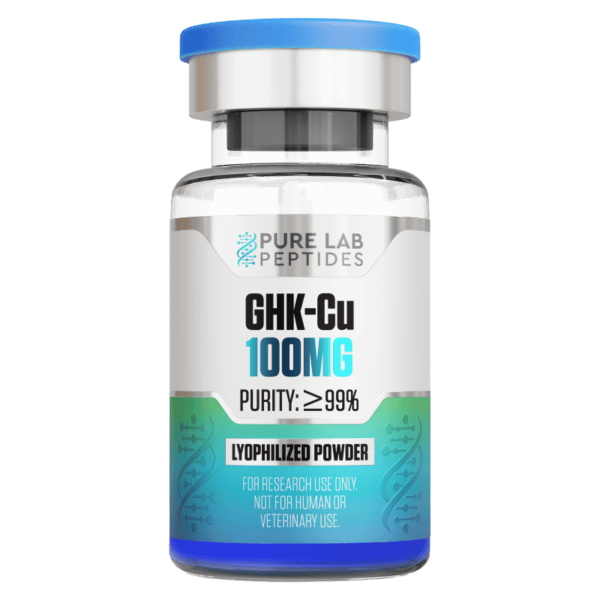

Researchers searching for buy GHK-Cu online should evaluate GHK-Cu as a research-use-only laboratory material, not a consumer product. For laboratory buyers, the key considerations are compound identity, purity documentation, batch-specific COAs, lot traceability, product labeling, and storage information. This guide explains how to evaluate GHK-Cu for controlled research procurement through Pure Lab Peptides while keeping the inquiry focused on RUO sourcing, analytical documentation, and supplier evaluation.
Fast Answer: buy GHK-Cu online for laboratory research
Researchers can buy GHK-Cu online for laboratory research by reviewing RUO labeling, batch-specific COA documentation, purity data, identity information, storage guidance, and supplier transparency before selecting a source. Products discussed in this article are intended for laboratory research use only and are not intended for human or animal consumption.
What Does “Buy GHK-Cu Online” Mean in a Research Context?
The phrase “buy GHK-Cu online” is addressed here as laboratory research procurement intent, not personal-use intent. In this context, qualified researchers and technical procurement teams are evaluating whether a GHK-Cu research material is clearly labeled for research use only, supported by a batch-specific certificate of analysis, and accompanied by documentation that can be retained in laboratory records.
Research-use-only sourcing should prioritize documentation over marketing language. FDA guidance for RUO-labeled in vitro diagnostic products provides a useful compliance model because it separates laboratory research positioning from clinical or diagnostic use claims [1]. Laboratory buyers should also consider whether test reports, certificates, and supplier records are consistent with competent testing and calibration practices, which ISO/IEC 17025 describes as a framework for reliable laboratory results [2].
For GHK-Cu procurement, the practical review includes RUO labeling, compound identity, GHK-Cu COA access, purity documentation, lot traceability, storage and handling information, and supplier language that avoids product-use claims. This article does not provide use instructions, preparation steps, protocols, or therapeutic guidance.
GHK-Cu Research Material Overview
GHK-Cu is commonly used to describe a copper complex associated with the tripeptide glycyl-L-histidyl-L-lysine, often abbreviated GHK. PubChem identifies a GHK-Cu record and also identifies glycyl-L-histidyl-L-lysine as a parent compound record, which is useful for laboratory identity review and naming consistency [3] [4]. A peptide is a short chain of amino acids linked by peptide bonds, according to the National Human Genome Research Institute definition [5].
DrugBank describes prezatide as a tripeptide consisting of glycine, histidine, and lysine that readily forms a complex with copper ions [6]. In research procurement language, that means buyers should confirm the listed compound name, formula or molecular category, and supplier documentation rather than relying on abbreviated naming alone.
The GHK sequence has a long research history. A 1977 paper identified the growth-modulating serum tripeptide as glycyl-histidyl-lysine [7]. Earlier publications reported GHK-related activity in cell-culture research settings, but those publications should be treated as historical scientific context, not as product-use guidance for an RUO material [8] [9].
GHK-Cu fits the copper peptide research category. Research literature related to cellular pathways should not be converted into product-use claims for RUO materials. For procurement, the safer and more relevant focus is compound characterization, GHK-Cu identity testing, analytical documentation, and lot-level traceability.
Why Researchers Search “Buy GHK-Cu Online”
Researchers search “buy GHK-Cu online” to compare RUO product availability, identity documentation, purity data, COA access, label consistency, and supplier transparency. A qualified laboratory buyer may also need to confirm that the product form, stated purity, product name, and lot number align across the product page, label, packing documentation, and batch-specific COA.
The commercial phrase buy GHK-Cu should not be interpreted as consumer buying advice. In a research procurement workflow, it means identifying a supplier that presents GHK-Cu research-use-only material with clear documentation, avoids unsupported outcome claims, and provides records that can be retained for internal laboratory review. Procurement teams may also compare shipping policies, storage language, and documentation access before placing a laboratory order.
Research Procurement Checklist for GHK-Cu
- Verify that GHK-Cu is labeled for research use only.
- Review the batch-specific certificate of analysis before procurement.
- Confirm that the GHK-Cu COA includes identity and purity documentation.
- Check whether HPLC, LC-MS, mass spectrometry, or another analytical method is listed.
- Compare the product name, lot number, and documentation for consistency.
- Assess whether the supplier avoids dosing, therapeutic, or personal-use claims.
- Document storage and handling information in laboratory records.
- Evaluate whether lyophilized powder form matches the research workflow.
- Confirm that the product is not marketed for human or animal consumption.
GHK-Cu Quality Signals to Review Before Buying Online
Researchers planning to buy GHK-Cu online for laboratory research should evaluate quality signals as documentation signals, not as personal-use claims. A complete review considers RUO labeling, batch-specific COA availability, GHK-Cu purity documentation, GHK-Cu identity testing, product form, and lot traceability together.
| Evaluation Area | What Researchers Should Review | Why It Matters for RUO Procurement |
| RUO labeling | Confirm the product is clearly labeled for research use only | Helps separate research procurement from human-use positioning |
| COA availability | Review the batch-specific certificate of analysis | Supports lot-level documentation and quality review |
| Purity data | Look for analytical support for the stated purity | Helps evaluate material consistency |
| Identity testing | Review HPLC, LC-MS, mass spectrometry, or related identity data | Helps confirm the material matches the listed compound |
| Lot traceability | Match lot numbers across product and documentation | Supports research recordkeeping |
| Product form | Confirm whether the material is supplied as lyophilized powder or another documented form | Supports laboratory planning |
| Storage information | Review storage and handling documentation | Helps maintain material integrity in laboratory settings |
| Supplier language | Confirm the supplier avoids dosing, therapeutic, or personal-use claims | Supports research-use-only positioning |
COA, Purity, and Identity Documentation
A GHK-Cu supplier documentation review should include compound name, lot number, test date, purity percentage, analytical method, identity confirmation, molecular weight or related identity information, product form, and storage documentation. A purity percentage alone does not establish complete compound identity; researchers should evaluate purity, identity, method, lot number, and documentation together.
Analytical method context matters because different methods answer different questions. LC-MS and other mass spectrometry approaches can support identity and molecular characterization, while chromatographic methods may support purity or quantitation depending on how the method is designed and validated. GHK-Cu has appeared in analytical work using electrospray ionization mass spectrometry, glow discharge mass spectrometry, and HILIC-UV quantitation approaches [18] [19] [20].
General analytical guidance also supports reviewing method suitability, specificity, validation characteristics, and lifecycle controls. FDA guidance on ICH Q2(R2) describes validation principles for analytical procedures, while Q14 addresses science-based analytical procedure development [21] [22].
flowchart TD
A[Receive product and COA] --> B{RUO labeling present?}
B -- No --> C[Flag procurement gap]
B -- Yes --> D{Lot number matches across label and COA?}
D -- No --> E[Request batch-specific documentation]
D -- Yes --> F{Identity supported by analytical method?}
F -- No --> G[Request HPLC, LC-MS, or equivalent]
F -- Yes --> H[Proceed to laboratory documentation and storage]
Research Literature Context
Published GHK and GHK-Cu literature spans compound identity, peptide sequence determination, cell-culture research, copper coordination chemistry, computational binding studies, and analytical detection. The evidence landscape is mixed: some sources are database records, some are early experimental studies, some are coordination chemistry papers, and some are method-development studies. None of those categories should be interpreted as instructions for use of an RUO product.
Historical studies reported GHK-related observations in cell-culture settings and discussed the relationship between the tripeptide and metal ions [8] [9] [11]. Coordination chemistry work examined interactions between copper(II) and glycyl-L-histidyl-L-lysine through approaches such as titration, spectroscopy, EPR, and structural analysis [12] [13] [14] [15] [16]. Computational literature has also modeled copper binding to the GHK peptide [17].
Published clinical literature should not be interpreted as use guidance for RUO materials. Research literature related to cellular pathways should not be converted into product-use claims for RUO materials. For this page, the relevant takeaway is narrower: literature can help define the compound and research category, while procurement decisions should be based on RUO labeling, COA documentation, identity testing, purity data, and supplier transparency.
Evidence Landscape
| Research Area | What Literature Examines | Evidence Type | RUO Interpretation |
| Compound identity | Molecular structure, sequence, formula, or classification | Database / analytical | Supports identification, not product-use claims |
| Pathway or category context | Copper peptide chemistry, peptide-metal complex research, and model-specific cellular pathway literature | Review / in vitro / preclinical | Useful for research context, not therapeutic claims |
| Analytical testing | Purity, identity, and batch verification | HPLC / LC-MS / mass spectrometry / COA | Supports documentation review |
| Storage and stability | Material form and handling considerations | Laboratory documentation | Supports research workflow planning |
For GHK-Cu research material, evidence should be read through the lens of documentation and characterization. PubChem and DrugBank records support naming and identity review; coordination chemistry studies support compound-class context; analytical studies support method awareness; and RUO procurement records support laboratory documentation [3] [6] [12] [20].
Claim Boundary Table
| Research-Safe Statement | Why It Is Acceptable | Non-Compliant Version to Avoid |
| “GHK-Cu is discussed in published research related to copper peptide chemistry and cellular pathway models.” | Describes literature context without making a product claim | “GHK-Cu helps with a human outcome.” |
| “Researchers should review COA and identity data before procurement.” | Focuses on documentation and quality review | “Users should buy GHK-Cu for results.” |
| “Pure Lab Peptides supplies GHK-Cu as a research-use-only material.” | Clarifies intended use | “Pure Lab Peptides supplies GHK-Cu for therapy.” |
| “The phrase buy GHK-Cu online is addressed as research procurement intent.” | Qualifies commercial search intent | “Buy GHK-Cu online for personal use.” |
| “GHK-Cu supplier documentation should include purity, identity, and lot-level information.” | Centers the review on analytical records | “Supplier claims can replace analytical documentation.” |
How Pure Lab Peptides Presents GHK-Cu
Pure Lab Peptides presents GHK-Cu 50mg as a research-use-only material for qualified laboratory procurement. The product is supplied as lyophilized powder, carries a ≥99% purity claim, and has a batch-specific COA available for review. Researchers should review the product page, RUO labeling, purity information, storage and handling documentation, and lot-level traceability before adding the material to internal procurement records.
Review the Pure Lab Peptides GHK-Cu research-use-only product page for RUO labeling, product details, purity information, and batch-specific documentation. Researchers comparing broader sourcing options can also review the Pure Lab Peptides research peptide collection, the Pure Lab Peptides blogs, and shipping and returns information for procurement planning.
Common Misunderstandings About Buying GHK-Cu Online
Misunderstanding: “Buy GHK-Cu online” means personal use
Buy GHK-Cu online should not be interpreted as personal-use guidance on this page. The phrase is addressed as laboratory procurement intent for qualified researchers reviewing RUO labeling, documentation, purity data, identity information, and supplier transparency.
Misunderstanding: Published literature equals product-use guidance
Published GHK-Cu literature can provide research context, compound-class context, or analytical context. It does not provide directions for RUO materials. Research literature related to cellular pathways should not be converted into product-use claims for RUO materials.
Misunderstanding: Purity percentage alone proves identity
Purity is only one quality signal. A GHK-Cu purity documentation review should also consider identity testing, lot number, method description, product name, test date, and whether the COA matches the material received.
Misunderstanding: COA documentation does not need to be batch-specific
For research procurement, a batch-specific COA is more useful than generic quality language because it connects the documentation to a lot number. Lot-level traceability supports internal laboratory recordkeeping and procurement review.
Misunderstanding: RUO labeling supports human or animal use
RUO labeling supports laboratory research positioning only. It does not convert GHK-Cu into a consumer product, clinical product, diagnostic product, or veterinary product. The intended context is controlled laboratory research procurement.
FAQs About Buying GHK-Cu Online for Research
Where can researchers buy GHK-Cu online for laboratory research?
Researchers can buy GHK-Cu online for laboratory research from an RUO supplier that provides clear product labeling, batch-specific COA access, purity documentation, identity information, storage guidance, and supplier transparency. Pure Lab Peptides provides a GHK-Cu 50mg product page for research procurement review.
What should researchers check before buying GHK-Cu online?
Before buying GHK-Cu online, researchers should check RUO labeling, batch-specific COA status, GHK-Cu purity documentation, GHK-Cu identity testing, product form, lot number consistency, storage information, and supplier language. The review should focus on documentation rather than consumer-style claims.
Why does a COA matter when buying GHK-Cu?
A COA matters when buying GHK-Cu because it links the research material to batch-level documentation. A strong review looks at compound name, lot number, purity, method, identity information, and documentation consistency. A GHK-Cu COA supports procurement records, but it should be reviewed alongside labeling and storage information.
Is GHK-Cu intended for human or animal consumption?
GHK-Cu discussed here is not intended for human or animal consumption. This article addresses GHK-Cu research-use-only sourcing for qualified researchers, laboratory buyers, technical procurement teams, and research institutions evaluating documentation, identity, purity, and supplier transparency.
What does research use only mean for GHK-Cu?
Research use only means GHK-Cu is positioned as a laboratory research material, not as a consumer, clinical, diagnostic, therapeutic, or veterinary product. For procurement, RUO review should include labeling, COA documentation, identity testing, purity support, lot traceability, and storage documentation.
How should published literature about GHK-Cu be interpreted?
Published literature about GHK-Cu should be interpreted as scientific context for compound identity, copper peptide chemistry, cellular pathway models, or analytical methods. It should not be interpreted as product-use guidance, protocol guidance, or evidence of intended use for an RUO material.
Next Steps
Qualified researchers evaluating GHK-Cu should review product labeling, COA status, identity documentation, storage information, purity information, and supplier transparency. Review the GHK-Cu product page for RUO labeling, purity information, and available batch-specific documentation.
References
- U.S. Food and Drug Administration. “Distribution of In Vitro Diagnostic Products Labeled for Research Use Only or Investigational Use Only.” FDA Guidance Document. 2013. fda.gov
- International Organization for Standardization. “ISO/IEC 17025 – Testing and calibration laboratories.” ISO. 2017. iso.org
- National Center for Biotechnology Information. “GHK-Cu.” PubChem Compound Summary. 2025. pubchem.ncbi.nlm.nih.gov/compound/GHK-Cu
- National Center for Biotechnology Information. “glycyl-L-histidyl-L-lysine.” PubChem Compound Summary. 2025. pubchem.ncbi.nlm.nih.gov/compound/73587
- National Human Genome Research Institute. “Peptide.” Talking Glossary of Genomic and Genetic Terms. 2026. genome.gov/genetics-glossary/Peptide
- DrugBank. “Prezatide.” DrugBank Online. 2015. go.drugbank.com/drugs/DB11296
- Schlesinger DH, Pickart L, Thaler MM. “Growth-modulating serum tripeptide is glycyl-histidyl-lysine.” Experientia. 1977;33:324-325. doi.org/10.1007/BF02002806
- Pickart L, Thaler MM. “Tripeptide in human serum which prolongs survival of normal liver cells and stimulates growth in neoplastic liver.” Nature New Biology. 1973;243(124):85-87. pubmed.ncbi.nlm.nih.gov/4349963
- Pickart L, Thayer L, Thaler MM. “A synthetic tripeptide which increases survival of normal liver cells, and stimulates growth in hepatoma cells.” Biochemical and Biophysical Research Communications. 1973;54(2):562-566. doi.org/10.1016/0006-291X(73)91459-9
- Pickart L, Freedman JH, Loker WJ, Peisach J, Perkins CM, Stenkamp RE, Weinstein B. “Growth-modulating plasma tripeptide may function by facilitating copper uptake into cells.” Nature. 1980;288:715-717. pubmed.ncbi.nlm.nih.gov/7453802
- Pickart L, Thaler MM. “Growth-modulating tripeptide (glycylhistidyllysine): association with copper and iron in plasma, and stimulation of adhesiveness and growth of hepatoma cells in culture by tripeptide-metal ion complexes.” Journal of Cellular Physiology. 1980;102(2):129-139. pubmed.ncbi.nlm.nih.gov/6246126
- Lau SJ, Sarkar B. “The interaction of copper(II) and glycyl-L-histidyl-L-lysine, a growth-modulating tripeptide from plasma.” Biochemical Journal. 1981;199(3):649-656. doi.org/10.1042/bj1990649
- Freedman JH, Pickart L, Weinstein B, Mims WB, Peisach J. “Structure of the glycyl-L-histidyl-L-lysine-copper(II) complex in solution.” Biochemistry. 1982;21(19):4540-4544. doi.org/10.1021/bi00262a004
- Laussac JP, Haran R, Sarkar B. “N.m.r. and e.p.r. investigation of the interaction of copper(II) and glycyl-L-histidyl-L-lysine, a growth-modulating tripeptide from plasma.” Biochemical Journal. 1983;209(2):533-539. pubmed.ncbi.nlm.nih.gov/6303307
- Hureau C, Eury H, Guillot R, Bijani C, Sayen S, Solari PL, Guillon E, Faller P, Dorlet P. “X-ray and solution structures of Cu(II) GHK and Cu(II) DAHK complexes: influence on their redox properties.” Chemistry – A European Journal. 2011;17(36):10151-10160. pubmed.ncbi.nlm.nih.gov/21780203
- Conato C, Gavioli R, Guerrini R, Kozlowski H, Mlynarz P, Pasti C, Pulidori F, Remelli M. “Copper complexes of glycyl-histidyl-lysine and two of its synthetic analogues: chemical behaviour and biological activity.” Biochimica et Biophysica Acta. 2001;1526:199-210. doi.org/10.1016/S0304-4165(01)00127-1
- Alshammari N, Platts JA. “Theoretical study of copper binding to GHK peptide.” Computational Biology and Chemistry. 2020;86:107265. doi.org/10.1016/j.compbiolchem.2020.107265
- Mazurowska L, Mojski M. “ESI-MS Study of the Mechanism of glycyl-l-histidyl-l-lysine-Cu(II) Complex Transport Through Model Membrane of Stratum Corneum.” Talanta. 2007;72(2):650-654. pubmed.ncbi.nlm.nih.gov/19071668
- Xu X, Pan Y, King F. “Extending the applicability of pulsed glow discharge mass spectrometry to GHK-Cu determination.” International Journal of Mass Spectrometry. 2020;449:116274. doi.org/10.1016/j.ijms.2019.116274
- Pingou P, Parla A, Kabir A, Furton KG, Samanidou V, Papageorgiou S, Tsirivas E, Varvaresou A, Panderi I. “Quantitation of Copper Tripeptide in Cosmetics via Fabric Phase Sorptive Extraction Combined with Zwitterionic Hydrophilic Interaction Liquid Chromatography and UV/Vis Detection.” Separations. 2024;11(10):293. doi.org/10.3390/separations11100293
- U.S. Food and Drug Administration. “Q2(R2) Validation of Analytical Procedures.” FDA Guidance Document. 2024. fda.gov
- U.S. Food and Drug Administration. “Q14 Analytical Procedure Development.” FDA Guidance Document. 2024. fda.gov
There are no reviews yet.