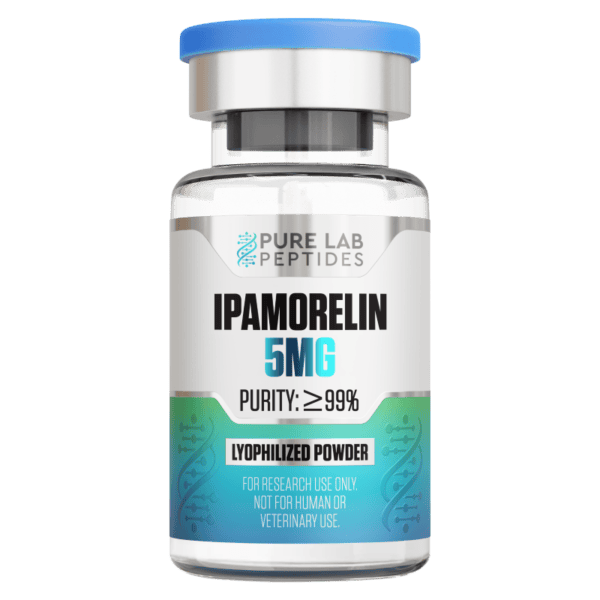

...

Ipamorelin 10mg

$59.99

(5.0) (40 customer reviews)

Research Studies:

  • Stimulates natural growth hormone release
  • Enhances muscle growth and recovery
  • Supports fat loss and metabolic function
  • Improves sleep quality and overall well-being

Quantity:

Free Shipping
Buy Peptides with confidence: Stripe-powered secure checkout and major cards accepted.
Secure payment methods for buying peptides: Visa, MasterCard, AMEX, and more.
Buy Peptides with confidence: Stripe-powered secure checkout and major cards accepted.
Secure payment methods for buying peptides: Visa, MasterCard, AMEX, and more.

FREE Shipping on 

orders over $200

ALL ARTICLES AND PRODUCT INFORMATION PROVIDED ON THIS WEBSITE ARE FOR INFORMATIONAL AND EDUCATIONAL PURPOSES ONLY. The products offered on this website are intended solely for research and laboratory use. These products are not intended for human or animal consumption. They are not medicines or drugs and have not been evaluated or approved by the FDA to diagnose, treat, cure, or prevent any disease or medical condition. Any form of bodily introduction is strictly prohibited by law.

Description

Ipamorelin 10mg is a research-use-only laboratory material supplied for controlled research workflows, compound characterization, and analytical documentation review. It is manufactured under rigorous quality standards to support consistency, traceability, and batch-specific verification for qualified laboratory settings.

Key Product Details

  • Manufactured in accordance with rigorous quality standards to support ≥99% purity, as reflected in batch-specific documentation where available.
  • Every batch is third-party analyzed for identity, assay/potency, and sterility documentation where applicable.
  • Supplied in lyophilized powder form to help preserve stability throughout transport and storage.
  • Produced with lot-level traceability to support research documentation and laboratory recordkeeping.

Research Documentation Context

  • Supports compound characterization in controlled laboratory settings.
  • Provides batch-specific identity and purity documentation for research review.
  • Allows lot-level traceability across laboratory documentation workflows.
  • Supports comparison of product labeling, analytical documentation, and storage information during research planning.
  • Supports analytical review of peptide research materials within a strictly laboratory-focused context.

Specifications and Documentation

  • Certificate of Analysis: Available with batch-specific documentation where applicable.
  • Material Safety Data Sheet: Coming Soon.
  • Handling and Storage Instructions: Coming Soon.
  • Product Form: Lyophilized powder.
  • Purity Specification: ≥99% purity.
  • Intended Use: Laboratory research use only.

Ipamorelin 10mg is intended strictly for laboratory research use only. This product is not intended for human or animal consumption, therapeutic use, diagnostic use, clinical use, veterinary use, or as a food, drug, cosmetic, dietary supplement, or household product.

Additional information

CAS No.

170851-70-4

Purity

≥99%

Sequence

Aib-His-D-2-Nal-D-Phe-Lys-NH2

Molecular Formula

C38H49N9O5

Molecular Weight

711.85 g/mol

Applications

Muscle growth research, metabolic studies, aging research

Synthesis

Solid-phase synthesis

Format

Lyophilized powder

Solubility

Soluble in water or 1% acetic acid

Stability & Storage

Stable for up to 24 months at -20°C. After reconstitution, may be stored at 4°C for up to 4 weeks or at -20°C for up to 6 months.

Appearance

White lyophilized powder

Shipping Conditions

Shipped at ambient temperature; once received, store at -20°C

Regulatory/Compliance

Manufactured in a facility that adheres to cGMP guidelines

Safety Information

Refer to provided MSDS

There are no reviews yet.

We value your feedback. Please leave a review below:

Research Procurement Information

Buy Ipamorelin Online for Research | RUO COA Guide

Researchers searching for buy Ipamorelin online should evaluate Ipamorelin as a research-use-only laboratory material, not a consumer product. For laboratory buyers, the key considerations are compound identity, purity documentation, batch-specific COAs, lot traceability, product labeling, storage information, and supplier evaluation. This guide explains how to evaluate Ipamorelin for controlled research procurement through Pure Lab Peptides while keeping the discussion limited to documentation, analytical review, and RUO compliance.

Fast Answer: buy Ipamorelin online for research

Researchers can buy Ipamorelin online for laboratory research by reviewing RUO labeling, batch-specific COA documentation, purity data, identity information, storage guidance, and supplier transparency before selecting a source. Products discussed in this article are intended for laboratory research use only and are not intended for human or animal consumption.

What Does “Buy Ipamorelin Online” Mean in a Research Context?

The phrase “buy Ipamorelin online” is addressed here as laboratory research procurement intent, not personal-use intent. In an RUO context, the phrase refers to qualified laboratory buyers comparing supplier documentation, compound identity information, lot-level traceability, analytical testing, and storage records before selecting a research material.

Research-use-only sourcing requires clear separation between laboratory procurement and consumer positioning. FDA guidance for products labeled for research use only in the in vitro diagnostic context emphasizes that labeling and surrounding promotional context must be consistent with research-only intent.[1] Federal labeling rules for in vitro diagnostic products also illustrate the importance of clear identifying information, including lot or control numbers, in regulated documentation systems.[2] While Ipamorelin research material is not being discussed here as an IVD product, those documentation principles are useful for laboratory procurement: the label, COA, lot number, and supplier language should all point to the same research-use-only purpose.

Researchers searching for buy Ipamorelin online for laboratory research should therefore focus on the evidence package around the material. That package includes the Ipamorelin COA, Ipamorelin purity documentation, Ipamorelin identity testing, storage and handling information, and Ipamorelin supplier documentation. It does not include personal-use instructions, therapeutic positioning, or outcome claims.

Ipamorelin Research Material Overview

Ipamorelin is generally described in scientific databases as a synthetic pentapeptide associated with ghrelin or growth-hormone-secretagogue receptor research. The NIH NCATS Inxight Drugs record lists Ipamorelin under UNII Y9M3S784Z6, identifies the molecular formula as C38H49N9O5, and lists molecular weight information used for compound identity review.[3] The NCI Drug Dictionary describes Ipamorelin as a pentapeptide with the sequence Aib-His-D-2-Nal-D-Phe-Lys-NH2 and places it in ghrelin mimetic and GHSR-related research context.[4]

Database records can support identity review, but they do not replace batch-specific supplier documentation. PubChem lists Ipamorelin as compound CID 9831659 and provides formula, synonym, and molecular weight information that can help researchers compare public database identifiers with supplier records.[5] ChEMBL also lists Ipamorelin under CHEMBL58547, supporting cross-checking of molecular identifiers in laboratory records.[6]

Published reviews discuss the growth hormone secretagogue receptor as a research target and describe ghrelin receptor biology across model systems.[7] Other reviews summarize GHS-R1a biology and ghrelin signaling pathways.[8] The early Ipamorelin literature characterized it as a selective growth hormone secretagogue in controlled research settings.[9] Pathway relevance in published literature does not establish product-use guidance for RUO materials.

Why Researchers Search “Buy Ipamorelin Online”

Researchers search “buy Ipamorelin online” when they need to evaluate RUO product availability and supplier documentation for a specific laboratory workflow. A qualified procurement team may need to confirm that a supplier presents Ipamorelin as a research-use-only compound, provides batch-specific COA access, states product form, and offers enough documentation for internal laboratory records.

The decision to buy Ipamorelin for research procurement should not be based on promotional language. A stronger evaluation process reviews whether the product name, lot number, COA, purity statement, identity documentation, product page, and storage guidance are consistent. For an Ipamorelin research material, that consistency matters because compound identity and documentation integrity are central to controlled research planning.

Research Procurement Checklist for Ipamorelin

  • Verify that Ipamorelin is labeled for research use only.
  • Review the batch-specific certificate of analysis before procurement.
  • Confirm that the COA includes identity and purity documentation.
  • Check whether HPLC, LC-MS, mass spectrometry, or another analytical method is listed.
  • Compare the product name, lot number, and documentation for consistency.
  • Assess whether the supplier avoids dosing, therapeutic, or human-use claims.
  • Document storage and handling information in laboratory records.
  • Evaluate whether the lyophilized powder form matches the research workflow.
  • Confirm that the product is not marketed for human or animal consumption.

Ipamorelin Quality Signals to Review Before Buying Online

Researchers planning to buy Ipamorelin online for laboratory research should review quality signals before selecting a supplier. The strongest signals are not sales claims; they are documentation signals. These include RUO labeling, a batch-specific COA, identity testing, purity documentation, lot traceability, product form, and supplier language that stays within research-only boundaries.

Evaluation Area What Researchers Should Review Why It Matters for RUO Procurement
RUO labeling Confirm the product is clearly labeled for research use only Helps separate research procurement from human-use positioning
COA availability Review the batch-specific certificate of analysis Supports lot-level documentation and quality review
Purity data Look for analytical support for the stated purity Helps evaluate material consistency
Identity testing Review HPLC, LC-MS, mass spectrometry, or related identity data Helps confirm the material matches the listed compound
Lot traceability Match lot numbers across product and documentation Supports research recordkeeping
Product form Confirm whether the material is supplied as lyophilized powder or another documented form Supports laboratory planning
Storage information Review storage and handling documentation Helps maintain material integrity in laboratory settings
Supplier language Confirm the supplier avoids dosing, therapeutic, or personal-use claims Supports research-use-only positioning

COA, Purity, and Identity Documentation

A certificate of analysis is one of the most important documents in research procurement. In API quality guidance, ICH Q7 describes certificate content such as the material name, batch number, date, tests performed, acceptance limits, numerical results, and authorized quality approval.[10] RUO peptide procurement is not the same as API release for regulated medicines, but the documentation logic is useful: the laboratory buyer should know what material is being reviewed, which lot it belongs to, and which analytical results support the supplier statement.

For Ipamorelin purity documentation, researchers should review the stated purity percentage, the testing method, the lot number, and the relationship between the COA and the product label. A purity percentage alone does not establish complete compound identity; researchers should evaluate purity, identity, method, lot number, and documentation together. ICH Q2(R2) discusses validation characteristics for analytical procedures and recognizes identity, assay, purity, and impurity measurements as distinct analytical purposes.[11] ICH Q14 also emphasizes that analytical procedures should be developed with a clear intended purpose and appropriate scientific rationale.[12]

For peptide research materials, mass spectrometry and LC-MS are widely used for molecular characterization and identity confirmation. Synthetic peptide characterization literature describes MALDI-TOF-MS and LC-MS approaches for peptide analysis.[13] LC-MS workflow literature also discusses characterization of synthetic peptide impurities and related analytical challenges.[14] HPLC remains a core chromatographic method for peptide analysis and purification in laboratory contexts.[15] Impurity profiling literature further illustrates why peptide quality review often combines chromatographic and mass spectrometric data rather than relying on a single number.[16]

Storage documentation should also be reviewed because peptide materials can be sensitive to chemical and physical degradation pathways in solid state or stored formats. Reviews of solid-state peptide and protein stability discuss how formulation, environment, and storage conditions can affect material integrity.[17] Researchers should place storage and handling documentation in laboratory records alongside the Ipamorelin COA and supplier documentation.

flowchart TD A[Receive product and COA] --> B{RUO labeling present?} B -- No --> C[Flag procurement gap] B -- Yes --> D{Lot number matches across label and COA?} D -- No --> E[Request batch-specific documentation] D -- Yes --> F{Identity supported by analytical method?} F -- No --> G[Request HPLC, LC-MS, or equivalent] F -- Yes --> H[Proceed to laboratory documentation and storage]

Research Literature Context

Published literature mentions Ipamorelin in secretagogue receptor, ghrelin mimetic, pharmacodynamic, and gastrointestinal motility research contexts. Early controlled research characterized Ipamorelin as a new growth-hormone-releasing peptide in model systems.[18] A pharmacokinetic-pharmacodynamic modeling publication examined Ipamorelin in human volunteer research settings, but that literature is outside the scope of RUO product use.[19]

Additional publications examined Ipamorelin in preclinical postoperative ileus models and related ghrelin mimetic research areas.[20] A later open-access experimental pharmacology article examined gastric dysmotility endpoints in a rodent model, again as published research context rather than product-use guidance.[21] Published clinical literature has also examined Ipamorelin in proof-of-concept study settings related to postoperative ileus.[22] Published clinical literature should not be interpreted as use guidance for RUO materials.

Broader ghrelin literature explains why Ipamorelin appears in discussions of GHSR and ghrelin-pathway research. A major physiological review discusses ghrelin as the endogenous ligand of the growth hormone secretagogue receptor and places the receptor pathway in a wider biological context.[23] More recent review literature discusses the growth hormone secretagogue receptor, endogenous ligands, and receptor biology as an evolving research area.[24] These sources help define the research landscape. They do not convert Ipamorelin research-use-only material into a therapeutic, diagnostic, wellness, or personal-use product.

Evidence Landscape

Research Area What Literature Examines Evidence Type RUO Interpretation
Compound identity Molecular structure, sequence, formula, and classification Database / analytical Supports identification, not product-use claims
Pathway or category context Ghrelin receptor, GHSR, and secretagogue receptor research area Review / in vitro / preclinical Useful for research context, not therapeutic claims
Analytical testing Purity, identity, and batch verification HPLC / LC-MS / mass spectrometry / COA Supports documentation review
Storage and stability Material form and handling considerations Laboratory documentation Supports research workflow planning

Claim Boundary Table

Research-Safe Statement Why It Is Acceptable Non-Compliant Version to Avoid
“Ipamorelin is discussed in published research related to secretagogue receptor biology.” Describes literature context without making a product claim “Ipamorelin helps with a human outcome.”
“Researchers should review COA and identity data before procurement.” Focuses on documentation and quality review “Users should buy Ipamorelin for results.”
“Pure Lab Peptides supplies Ipamorelin as a research-use-only material.” Clarifies intended use “Pure Lab Peptides supplies Ipamorelin for therapy.”
“The phrase buy Ipamorelin online is addressed as research procurement intent.” Qualifies commercial search intent “Buy Ipamorelin online for personal use.”
“Ipamorelin supplier documentation should be reviewed with lot-level records.” Centers the procurement process on documentation “Supplier claims can replace analytical documentation.”

How Pure Lab Peptides Presents Ipamorelin

Pure Lab Peptides presents Ipamorelin as a research-use-only material for qualified laboratory procurement. The product page for Ipamorelin 10mg research-use-only product details should be reviewed for RUO labeling, product details, purity information, storage information, and batch-specific documentation. Pure Lab Peptides states a >=99% purity claim, supplies the product as lyophilized powder, and makes a batch-specific COA available for lot-level review.

Researchers should use the product page and the Ipamorelin COA together. The product page helps confirm the listed material, form, brand, and intended research-only positioning. The COA supports lot-level traceability, identity review, purity documentation, and supplier transparency. For broader research peptide browsing, qualified buyers can also review the Pure Lab Peptides research peptide collection, the Pure Lab Peptides research blog, and shipping and returns information.

Common Misunderstandings About Buying Ipamorelin Online

Misunderstanding: “Buy Ipamorelin online” means personal use

Buy Ipamorelin online should not be interpreted as personal-use guidance on this page. The phrase is addressed as laboratory procurement intent for qualified researchers reviewing RUO labeling, documentation, purity data, identity information, storage records, and supplier transparency.

Misunderstanding: Published literature equals product-use guidance

Published literature can help researchers understand why Ipamorelin appears in secretagogue receptor research, but literature context is not product-use guidance. RUO procurement should remain focused on compound identity, analytical documentation, COA review, and controlled laboratory recordkeeping.

Misunderstanding: Purity percentage alone proves identity

Purity is important, but it is not the whole documentation package. Ipamorelin identity testing should be evaluated alongside purity percentage, analytical method, chromatographic or mass data, product name, molecular information, and lot number consistency. A single purity number should not replace complete review.

Misunderstanding: COA documentation does not need to be batch-specific

A COA is most useful when it is tied to the actual lot under review. Batch-specific documentation helps researchers connect the label, lot number, analytical results, and supplier record. For Pure Lab Peptides, the batch-specific COA is available for Ipamorelin documentation review.

Misunderstanding: RUO labeling supports human or animal use

RUO labeling does the opposite. It identifies the material as intended for laboratory research use only. Researchers evaluating Ipamorelin research-use-only materials should confirm that supplier pages, product documentation, and surrounding language avoid therapeutic, diagnostic, veterinary, or consumer positioning.

Misunderstanding: Pathway relevance equals a product claim

Ipamorelin appears in published research related to ghrelin and GHSR pathways, but pathway relevance does not establish a claim for an RUO material. Pathway relevance in published literature does not establish product-use guidance for RUO materials.

FAQs About Buying Ipamorelin Online for Research

Where can researchers buy Ipamorelin online for laboratory research?

Researchers can buy Ipamorelin online for laboratory research by reviewing suppliers that clearly present the material as research-use-only, provide batch-specific COA access, state product form, and support lot-level documentation. Pure Lab Peptides provides an Ipamorelin 10mg product page for qualified laboratory procurement review.

What should researchers check before buying Ipamorelin online?

Before buying Ipamorelin online, researchers should check RUO labeling, the batch-specific COA, purity documentation, identity information, lot number consistency, storage guidance, product form, and supplier language. The procurement review should focus on documentation, not personal-use claims or expected outcomes.

Why does a COA matter when buying Ipamorelin?

A COA matters when buying Ipamorelin because it connects a specific lot to analytical documentation. Researchers should review the compound name, lot number, purity data, identity method, testing date, and documentation consistency. The Ipamorelin COA should be kept with internal laboratory procurement records.

Is Ipamorelin intended for human or animal consumption?

Ipamorelin discussed on this page is not intended for human or animal consumption. This article addresses Ipamorelin research material as an RUO laboratory compound. It does not provide dosing, preparation, therapeutic, diagnostic, veterinary, or personal-use guidance.

What does research use only mean for Ipamorelin?

Research use only means Ipamorelin is presented for controlled laboratory research procurement and documentation review. For an Ipamorelin research-use-only material, the evaluation should center on supplier transparency, compound identity, purity documentation, lot traceability, product form, and storage information.

How should published literature about Ipamorelin be interpreted?

Published literature about Ipamorelin should be interpreted as scientific context, not product-use guidance. Research papers may describe receptor biology, analytical context, preclinical models, or clinical study settings, but those publications do not change the RUO status of a research material or create use instructions.

Next Steps

For research teams comparing Ipamorelin suppliers, prioritize COA availability, transparent RUO labeling, purity documentation, identity testing, storage information, and lot-level traceability. Review the Ipamorelin product page for RUO labeling, purity information, and available batch-specific documentation.

References

  1. U.S. Food and Drug Administration. “Distribution of In Vitro Diagnostic Products Labeled for Research Use Only or Investigational Use Only.” FDA Guidance Document. 2013. https://www.fda.gov/regulatory-information/search-fda-guidance-documents/distribution-in-vitro-diagnostic-products-labeled-research-use-only-or-investigational-use-only
  2. Electronic Code of Federal Regulations. “21 CFR 809.10 – Labeling for in vitro diagnostic products.” eCFR. https://www.ecfr.gov/current/title-21/chapter-I/subchapter-H/part-809/subpart-B/section-809.10
  3. National Center for Advancing Translational Sciences. “IPAMORELIN.” Inxight Drugs. 2025. https://drugs.ncats.io/drug/Y9M3S784Z6
  4. National Cancer Institute. “Ipamorelin.” NCI Drug Dictionary. https://www.cancer.gov/publications/dictionaries/cancer-drug/def/ipamorelin
  5. National Center for Biotechnology Information. “Ipamorelin.” PubChem Compound Summary, CID 9831659. https://pubchem.ncbi.nlm.nih.gov/compound/Ipamorelin
  6. European Bioinformatics Institute. “CHEMBL58547 – Ipamorelin.” ChEMBL. https://www.ebi.ac.uk/chembl/explore/compound/CHEMBL58547
  7. Cruz CRY, Smith RG. “The growth hormone secretagogue receptor.” Vitamins and Hormones. 2008;77:47-88. https://pubmed.ncbi.nlm.nih.gov/17983853/
  8. Laviano A, Molfino A, Rianda S, Rossi Fanelli F. “The growth hormone secretagogue receptor (Ghs-R).” Current Pharmaceutical Design. 2012;18(31):4749-4754. https://pubmed.ncbi.nlm.nih.gov/22632856/
  9. Raun K, Hansen BS, Johansen NL, Thogersen H, Madsen K, Ankersen M, Andersen PH. “Ipamorelin, the first selective growth hormone secretagogue.” European Journal of Endocrinology. 1998;139(5):552-561. https://pubmed.ncbi.nlm.nih.gov/9849822/
  10. U.S. Food and Drug Administration. “Q7 Good Manufacturing Practice Guidance for Active Pharmaceutical Ingredients.” FDA Guidance for Industry. 2016. https://www.fda.gov/files/drugs/published/Q7-Good-Manufacturing-Practice-Guidance-for-Active-Pharmaceutical-Ingredients-Guidance-for-Industry.pdf
  11. International Council for Harmonisation. “ICH Q2(R2) Validation of Analytical Procedures.” ICH Harmonised Guideline. 2023. https://database.ich.org/sites/default/files/ICH_Q2%28R2%29_Guideline_2023_1130.pdf
  12. International Council for Harmonisation. “ICH Q14 Analytical Procedure Development.” ICH Harmonised Guideline. 2023. https://database.ich.org/sites/default/files/ICH_Q14_Guideline_2023_1116.pdf
  13. Prabhala BK, Mirza O, Hojrup P, Hansen PR. “Characterization of Synthetic Peptides by Mass Spectrometry.” Methods in Molecular Biology. 2015;1348:77-82. https://pubmed.ncbi.nlm.nih.gov/26424265/
  14. Lian Z, Wang N, Tian Y, Huang L. “Characterization of Synthetic Peptide Therapeutics Using Liquid Chromatography-Mass Spectrometry: Challenges, Solutions, Pitfalls, and Future Perspectives.” Journal of the American Society for Mass Spectrometry. 2021;32(8):1852-1860. https://pubmed.ncbi.nlm.nih.gov/34110145/
  15. Mant CT, Hodges RS. “HPLC Analysis and Purification of Peptides.” Methods in Molecular Biology. 2007. https://pmc.ncbi.nlm.nih.gov/articles/PMC7119934/
  16. De Spiegeleer B, Vergote V, Pezeshki A, Peremans K, Burvenich CPG. “Impurity profiling quality control testing of synthetic peptides using liquid chromatography-photodiode array-fluorescence and liquid chromatography-electrospray ionization-mass spectrometry: the obestatin case.” Analytical Biochemistry. 2008;376(2):229-234. https://pubmed.ncbi.nlm.nih.gov/18342612/
  17. Lai MC, Topp EM. “Solid-state chemical stability of proteins and peptides.” Journal of Pharmaceutical Sciences. 1999;88(5):489-500. https://pubmed.ncbi.nlm.nih.gov/10229638/
  18. Johansen PB, Nowak J, Skjaerbaek C, Flyvbjerg A, Andreassen TT, Wilken M, Orskov H. “Ipamorelin, a new growth-hormone-releasing peptide, induces longitudinal bone growth in rats.” Growth Hormone & IGF Research. 1999;9(2):106-113. https://pubmed.ncbi.nlm.nih.gov/10373343/
  19. Gobburu JVS, Agerso H, Jusko WJ, Ynddal L. “Pharmacokinetic-pharmacodynamic modeling of ipamorelin, a growth hormone releasing peptide, in human volunteers.” Pharmaceutical Research. 1999;16(9):1412-1416. https://pubmed.ncbi.nlm.nih.gov/10496658/
  20. Venkova K, Mann W, Nelson R, Greenwood-Van Meerveld B. “Efficacy of ipamorelin, a novel ghrelin mimetic, in a rodent model of postoperative ileus.” Journal of Pharmacology and Experimental Therapeutics. 2009;329(3):1110-1116. https://pubmed.ncbi.nlm.nih.gov/19289567/
  21. Greenwood-Van Meerveld B, Tyler K, Mohammadi E, Pietra C. “Efficacy of ipamorelin, a ghrelin mimetic, on gastric dysmotility in a rodent model of postoperative ileus.” Journal of Experimental Pharmacology. 2012;4:149-155. https://pmc.ncbi.nlm.nih.gov/articles/PMC4863553/
  22. Beck DE, Sweeney WB, McCarter MD, Ipamorelin 201 Study Group. “Prospective, randomized, controlled, proof-of-concept study of the Ghrelin mimetic ipamorelin for the management of postoperative ileus in bowel resection patients.” International Journal of Colorectal Disease. 2014;29(12):1527-1534. https://pubmed.ncbi.nlm.nih.gov/25331030/
  23. Muller TD, Nogueiras R, Andermann ML, Andrews ZB, Anker SD, Argente J, Batterham RL, Benoit SC, Bowers CY, Broglio F, et al. “Ghrelin.” Physiological Reviews. 2015;95(2):495-547. https://pmc.ncbi.nlm.nih.gov/articles/PMC4443295/
  24. Cornejo MP, Mustafá ER, Cassano D, et al. “The ups and downs of growth hormone secretagogue receptor.” Frontiers in Endocrinology. 2021. https://pubmed.ncbi.nlm.nih.gov/33460513/

Have Questions?

Our team is ready to assist you with any inquiries regarding our catalogue of peptides and their applications.

0