
HPLC vs LC-MS vs NMR: What Each Test Tells You
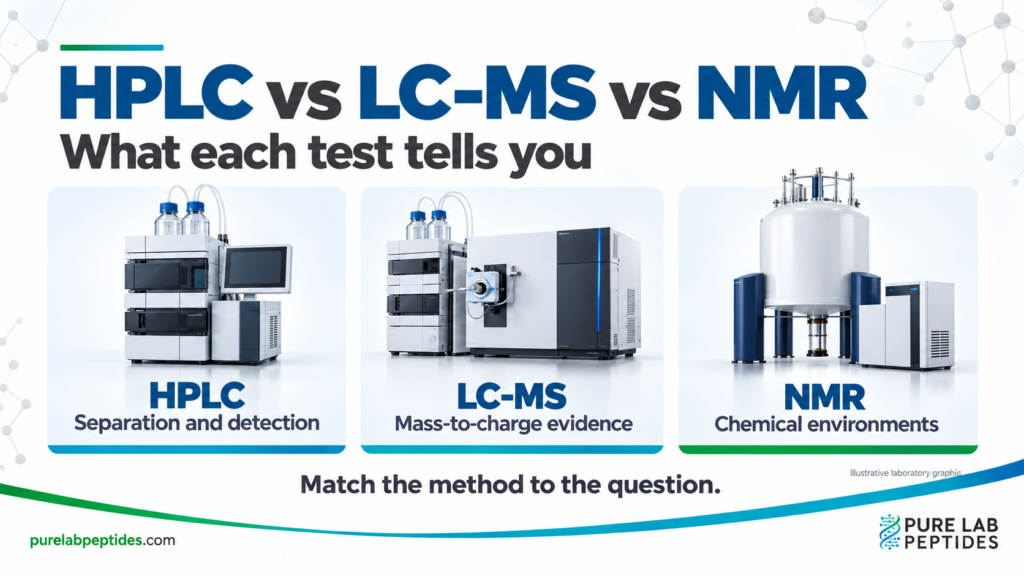
Three technique names can appear on the same report without answering the same question. Here is what to look for behind each one.


You must be 21 or older to enter.

Pure Lab Research Library
Research Library
Explore practical articles on analytical methods, peptide documentation, quality review, and research-use-only laboratory standards.
Find an Article
Three technique names can appear on the same report without answering the same question. Here is what to look for behind each one.
Latest Research
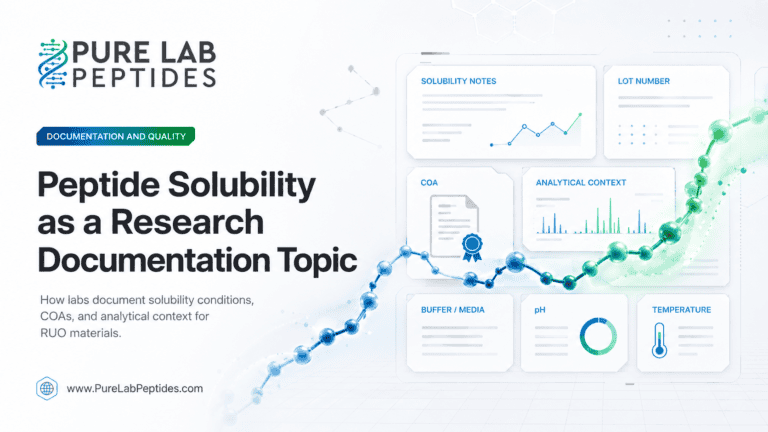
Peptide solubility depends on the exact material and conditions. A clear solution or a tested concentration is not necessarily a measured saturation limit. Record solvent,…
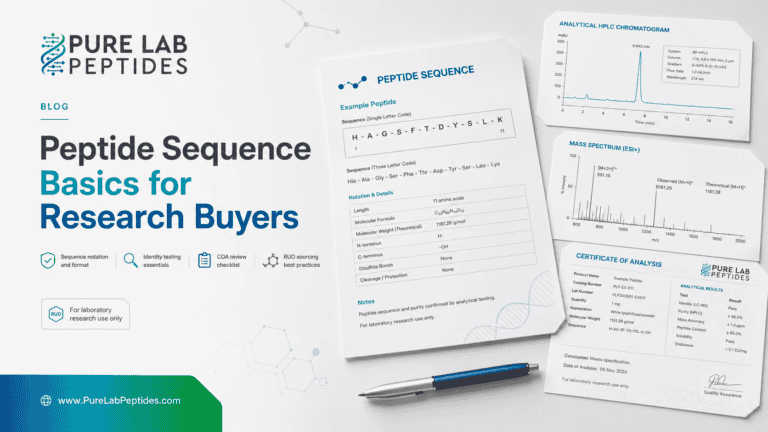
Read articleA peptide sequence records residue order, usually from the N-terminus to the C-terminus. Keep stereochemistry, terminal groups and other modifications with it. A listed sequence…
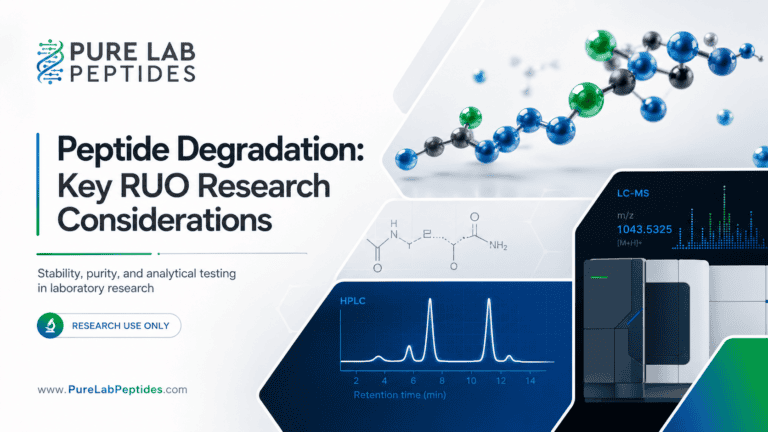
Read articlePeptide degradation changes the molecule. A lower measured signal may instead reflect adsorption, precipitation, recovery losses or instrument response. Interpret the endpoint and controls before…
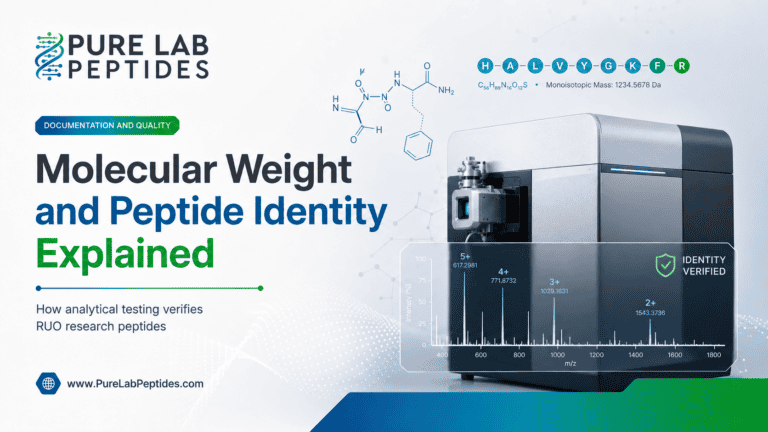
Read articleBefore comparing peptide molecular weight values, align the entity and convention. Average mass, monoisotopic mass, molar mass and an ion’s m/z are different entries. Include…
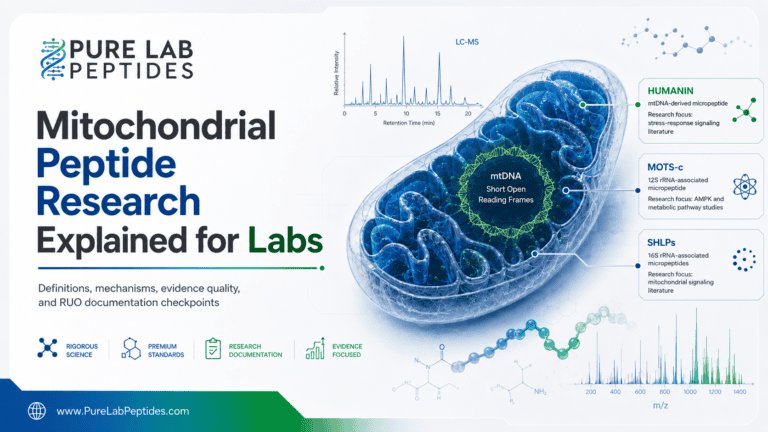
Read articleMitochondrial-derived peptides include Humanin, MOTS-c and SHLPs. The name refers to sequence origin; it does not mean every step occurs inside mitochondria. Detection, location and…
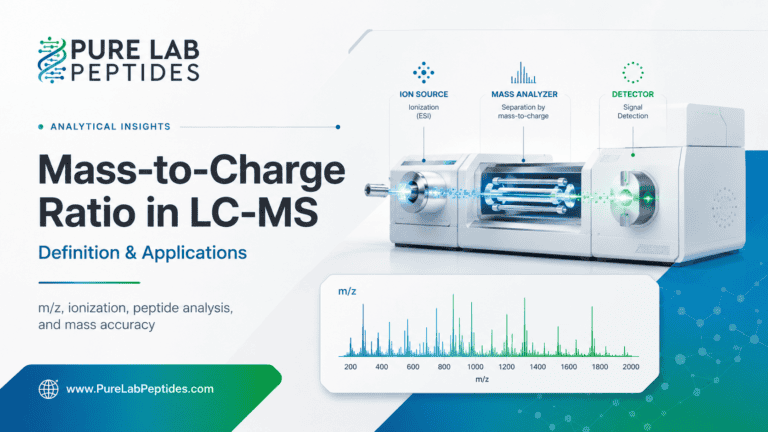
Read articleMass-to-charge ratio, m/z, describes an ion rather than necessarily the neutral molecule. For a protonated positive ion, m/z = (M + z × h) ÷…
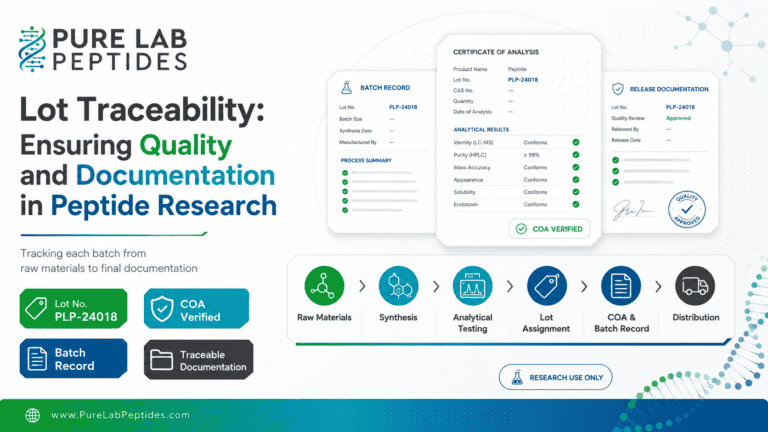
Read articlePeptide lot traceability links the received vial, the relevant laboratory report and later preparations. Supplier lots, laboratory sample IDs and inventory codes can differ legitimately.…
Read articlePeptide photostability concerns change under defined light exposure. Material state, container, wavelength, intensity, time and temperature affect interpretation. A clear-looking sample is not a complete…
Read articleCopper peptide complexes characterization separates peptide identity, total copper and coordination state. No single measurement establishes all three. Crystal and solution findings may differ, so…
Read articleContinue Your Research
Use the code from the Certificate of Authenticity included with an order to confirm that the order came from Pure Lab Peptides.
Verify order authenticityScientists, researchers, and industry experts may submit an article or study for editorial consideration.
Contact the editorial teamDiscount Applied Successfully!
Your savings have been added to the cart.