



Chonluten Research: EDG Identity and Cell-Model Evidence

TL;DR · The short version
Chonluten research discussed here tested the EDG tripeptide in a defined cell system. Cell state and comparison group affected the interpretation. Cytokine and signaling results do not, by themselves, establish improved lung function or a treatment effect.
An article calls a peptide “respiratory,” but the experiment used immune cells. What was actually measured?
That is a useful question to bring to Chonluten research. Chonluten is the synthetic tripeptide Glu-Asp-Gly, abbreviated EDG. The study examined below measured responses in THP-1 cells, including cytokine release and signaling. Read those results at the cell-model level before attaching a broader organ or health claim to them.
What the THP-1 model represents
TL;DR: THP-1 is a human-derived monocytic cell line. Its origin does not make an experiment a clinical trial.
ATCC’s THP-1 record identifies it as a human monocytic cell line originating from a patient with acute monocytic leukemia. Culture conditions can change its differentiation state. Human-derived cells provide a controlled experimental system; they are not equivalent to healthy tissue or participants in a clinical trial.
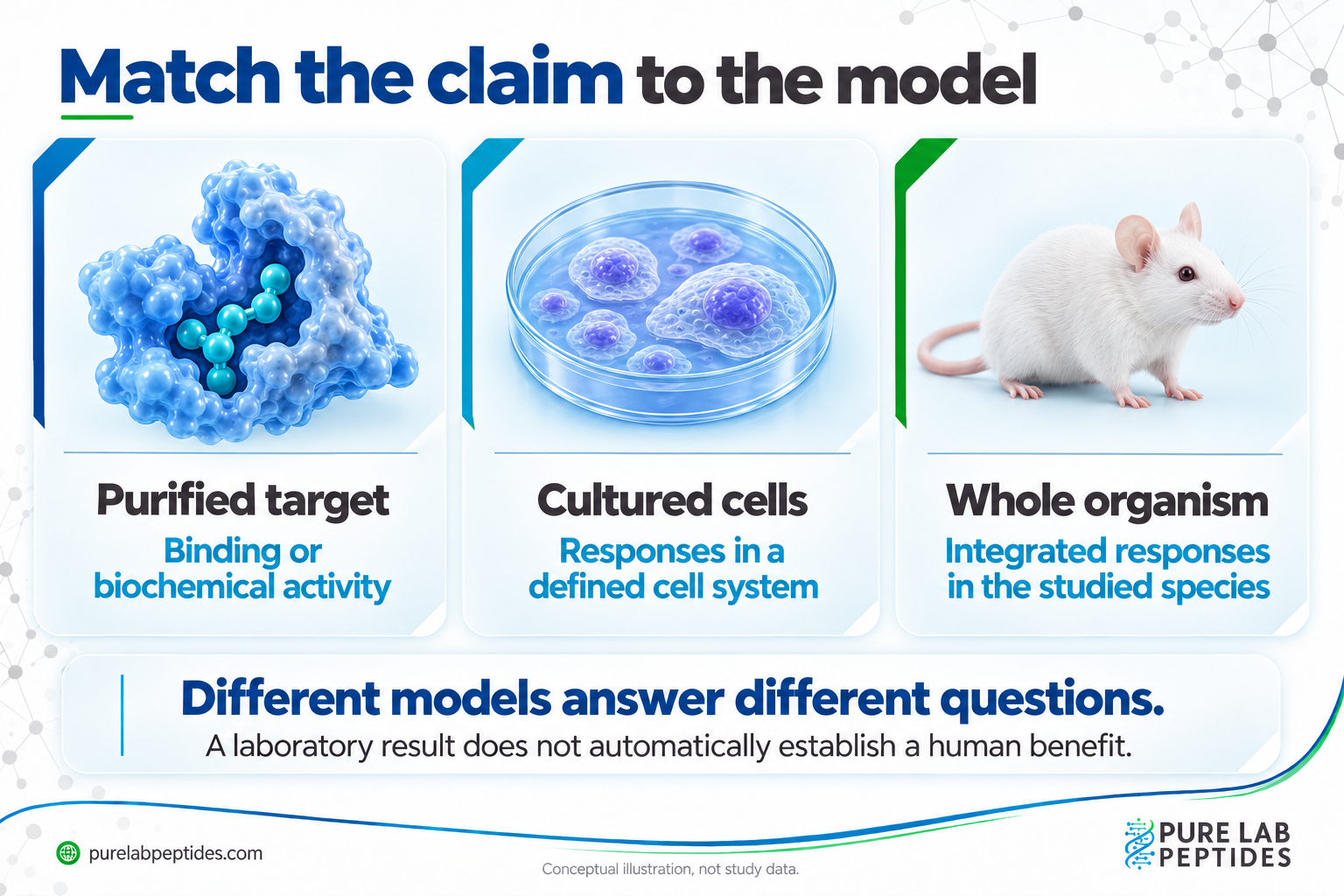
That distinction matters when a peptide is described using the name of an organ. A respiratory association does not tell you whether an experiment measured airway function, an epithelial response or signaling in a different cell type. Check the methods before using the organ label to interpret the result.
What the Chonluten experiment measured
TL;DR: Keep undifferentiated and differentiated-cell findings separate, and inspect the relevant comparison group.
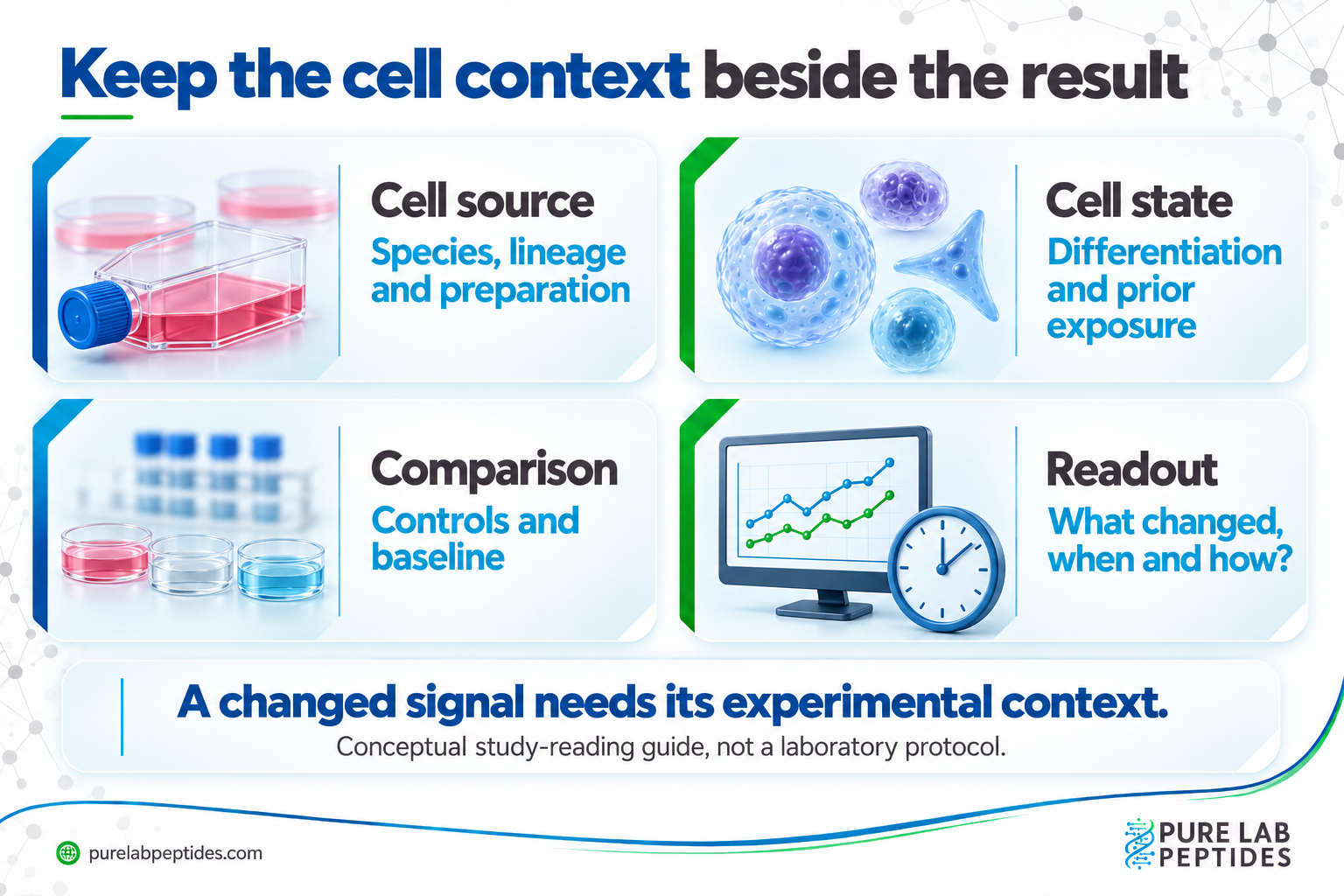
Avolio and colleagues’ 2022 study compared five peptide preparations in THP-1 cells. Chonluten was designated P5 and identified as Glu-Asp-Gly. The study included undifferentiated monocytes and cells differentiated with PMA into a macrophage-like state, with bacterial lipopolysaccharide (LPS) used as an inflammatory stimulus.
The results require more care than the abstract’s broad inhibition language suggests. Section 2.3 describes a slight TNF release in Chonluten-treated monocytes. The differentiated-cell experiments reported reduced LPS-stimulated TNF and IL-6 responses with the tested preparations. These observations should stay attached to their cell state and comparison group, rather than become a universal claim that Chonluten suppresses inflammation.
The paper also examined phosphorylation-related signaling and adhesion to activated endothelial cells. Those are separate endpoints; they do not demonstrate a complete mechanism or a respiratory benefit. Findings for Epitalon, Vilon, Thymogen or the Thymalin mixture should not automatically be assigned to EDG.
Keep the measurement and the explanation separate
TL;DR: A changed culture measurement can have more than one explanation; cell number and viability matter.
A cytokine measurement describes an output from the culture under defined conditions. A proposed explanation for that output needs its own support. For example, a lower amount in the medium could prompt several questions: were there fewer viable cells, less production per cell, or a change in release? The result alone does not choose between those explanations.
Likewise, a phosphorylation signal and a later cytokine response may occur in the same experiment without proving that one caused the other. A useful research summary names the observation first and identifies a pathway explanation as an interpretation unless the study directly tested that link.
A practical checklist for reading the evidence
TL;DR: Check material, cell state, controls, readout and uncertainty alongside the figure.
- Material: locate the sequence and preparation used, rather than relying only on the commercial name.
- Cell state: keep undifferentiated and differentiated cultures separate in your notes.
- Comparison: distinguish peptide-only, stimulus-only and combined conditions from the relevant control.
- Readout: record what was measured and when, including whether results were adjusted for cell number.
- Uncertainty: inspect variability and independent experiments, not just the direction of the reported effect.
This approach is particularly useful when an abstract compresses several conditions into one sentence. The figure, caption and methods need to support the same claim. Our guide to reading a peptide research paper explains that review process.
Biological evidence and sample identity answer different questions
TL;DR: A biological study does not verify a supplied lot, and a COA does not establish a biological effect.
A biological publication describes the material tested in that experiment. A supplied research lot needs its own analytical record; the name EDG alone does not establish its identity, purity, content or formulation. Conversely, analytical testing does not establish the biological effects of a sample.
Use the peptide identity guide for the material question and the in-vitro versus in-vivo guide for model interpretation. The evidence discussed here supports laboratory questions about cell responses, not a human-use protocol.