
Researchers searching for buy TB-500 online should evaluate TB-500 as a research-use-only laboratory material, not a consumer product. For laboratory buyers, the key considerations are compound identity, TB-500 COA review, purity documentation, batch traceability, product labeling, and supplier evaluation. This guide explains how qualified researchers and technical procurement teams can evaluate TB-500 for controlled research procurement through Pure Lab Peptides.
Fast Answer: buy TB-500 online for Laboratory Research
Researchers can buy TB-500 online for laboratory research by reviewing RUO labeling, batch-specific COA documentation, purity data, identity information, storage guidance, and supplier transparency before selecting a source. Products discussed in this article are intended for laboratory research use only and are not intended for human or animal consumption.
What Does “Buy TB-500 Online” Mean in a Research Context?
The phrase “buy TB-500 online” is addressed here as laboratory research procurement intent, not personal-use intent. In an RUO setting, the buyer is evaluating whether TB-500 is suitable as a laboratory research material based on documentation, identity testing, purity support, labeling, and recordkeeping.
Research procurement teams should separate commercial search language from consumer-style claims. FDA guidance on research-use-only labeling for in vitro diagnostic products emphasizes that RUO positioning must align with the intended research purpose, not diagnostic or clinical positioning [1]. For laboratory buyers, that distinction supports a procurement workflow centered on supplier documentation rather than human-use narratives.
Qualified researchers searching for buy TB-500 online for laboratory research should review whether the supplier provides clear RUO labeling, lot-specific documentation, transparent product naming, stated product form, and storage information. Technical teams may also consider whether testing documentation is generated by competent analytical workflows; ISO/IEC 17025 describes general requirements for testing and calibration laboratory competence [2].
TB-500 Research Material Overview
TB-500 is generally identified in chemical databases as a synthetic peptide material associated with the sequence Ac-LKKTETQ, with PubChem listing TB-500-related synonyms and molecular information for CID 62707662 [3]. FDA’s Global Substance Registration System identifies TB-500 as the N-terminal acetylated 17-23 fragment of thymosin beta-4 [4]. A 2012 analytical paper reported synthesis and characterization of this N-terminal acetylated fragment identified in TB-500 [5].
TB-500 should not be treated as interchangeable with full-length thymosin beta-4 in procurement records. Full-length thymosin beta-4, also known as timbetasin, is listed separately in PubChem [6], and the human TMSB4X gene record describes thymosin beta-4 as an actin-sequestering protein involved in regulation of actin polymerization [7]. These records help frame the research category but do not establish product-use guidance for an RUO material.
Research literature has examined thymosin beta-4 and related beta-thymosin/WH2 domains in actin-binding models. Mutational analysis mapped the actin-binding site of thymosin beta-4 [8], while structural and biochemical studies described thymosin beta-4 interactions with actin [9]. Other published studies have evaluated actin polymerization and nucleotide exchange mechanisms in laboratory models [10] [11].
For RUO procurement, this literature should be used only as scientific context. Research literature related to cellular pathways should not be converted into product-use claims for RUO materials.
Why Researchers Search “Buy TB-500 Online”
Researchers may search “buy TB-500 online” to compare RUO product availability, TB-500 supplier documentation, product form, identity data, and batch-specific COA access. A laboratory buyer is not looking for consumer use guidance; the proper procurement question is whether the TB-500 research material is documented clearly enough for controlled laboratory records.
Teams looking to buy TB-500 should compare the product name, amount, lot number, COA, purity documentation, analytical method, label language, and storage information. A supplier’s strongest signal is not promotional language but consistent documentation that allows a laboratory to match the ordered material to the received material and the corresponding batch record.
Research Procurement Checklist for TB-500
- Verify that TB-500 is labeled for research use only.
- Review the batch-specific certificate of analysis before procurement.
- Confirm that the TB-500 COA includes identity and purity documentation.
- Check whether HPLC, LC-MS, mass spectrometry, or another analytical method is listed.
- Compare the product name, lot number, and documentation for consistency.
- Assess whether the supplier avoids dosing, injection, therapeutic, or human-use claims.
- Document storage and handling information in laboratory records.
- Evaluate whether the lyophilized powder form matches the research workflow.
- Confirm that the product is not marketed for human or animal consumption.
TB-500 Quality Signals to Review Before Buying Online
Researchers evaluating where to buy TB-500 online for laboratory research should prioritize documentation over promotional language. Analytical chemistry literature supports the use of chromatographic and mass spectrometric approaches for peptide separation, identity review, and impurity characterization [12] [13].
| Evaluation Area | What Researchers Should Review | Why It Matters for RUO Procurement |
| RUO labeling | Confirm the product is clearly labeled for research use only | Helps separate research procurement from human-use positioning |
| COA availability | Review the batch-specific certificate of analysis | Supports lot-level documentation and quality review |
| Purity data | Look for analytical support for the stated purity | Helps evaluate material consistency |
| Identity testing | Review HPLC, LC-MS, mass spectrometry, or related identity data where available | Helps confirm the material matches the listed compound |
| Lot traceability | Match lot numbers across product and documentation | Supports research recordkeeping |
| Product form | Confirm whether the material is supplied as lyophilized powder or another documented form | Supports laboratory planning |
| Storage information | Review storage and handling documentation | Helps maintain material integrity in laboratory settings |
| Supplier language | Confirm the supplier avoids dosing, therapeutic, or personal-use claims | Supports research-use-only positioning |
COA, Purity, and Identity Documentation
A TB-500 COA should be reviewed as a batch record, not as a generic quality statement. Researchers should look for the compound name, lot number, test date, purity percentage, analytical method, identity confirmation, molecular weight where relevant, sequence where relevant, product form, and storage documentation. A purity percentage alone does not establish complete compound identity; researchers should evaluate purity, identity, method, lot number, and documentation together.
LC-MS workflows are widely discussed for characterization of synthetic peptide materials and related impurities [14]. LC-HRMS methods have also been reported for identifying and quantifying structurally related peptide impurities [15], while mass-balance approaches illustrate why multiple analytical inputs may be needed when assigning purity to peptide reference materials [16]. NIST peptide spectral resources further show how LC separation and tandem mass spectrometry support peptide identification workflows [17].
flowchart TD
A[Receive product and COA] --> B{RUO labeling present?}
B -- No --> C[Flag procurement gap]
B -- Yes --> D{Lot number matches across label and COA?}
D -- No --> E[Request batch-specific documentation]
D -- Yes --> F{Identity supported by analytical method?}
F -- No --> G[Request HPLC, LC-MS, or equivalent]
F -- Yes --> H[Proceed to laboratory documentation and storage]
Analytical validation concepts also matter when procurement teams interpret testing language. ICH Q2(R2) describes validation principles for analytical procedures used for identity, purity, impurity, and quantitative or qualitative measurements [18]. NIST reference-material documentation for synthetic peptides illustrates that peptide materials may be assessed for identity, purity, chromatographic behavior, and mass spectrometric behavior [19].
Research Literature Context
Published TB-500 literature is weighted toward analytical identification, synthesis, characterization, and sport-control detection rather than RUO product-use guidance. Esposito and colleagues reported synthesis and characterization of the N-terminal acetylated 17-23 fragment identified in TB-500 [5]. Ho and colleagues described liquid chromatography-mass spectrometry methods for detecting TB-500-related material in equine matrices in a sport-control research setting [20].
Thymosin beta-4 literature is broader than TB-500 literature and includes actin-binding, structural, and mechanistic studies. Researchers have investigated beta-thymosin/WH2 domain structure and actin assembly mechanisms [21], and later structural work examined thymosin beta-4/profilin exchange in actin-related models [22]. These sources are useful for understanding research context, but they should not be converted into claims about an RUO product.
Published clinical literature should not be interpreted as use guidance for RUO materials. A Journal of Sports Sciences article discussing thymosin beta-4 in sport and exercise science reflects a separate literature context and does not change the procurement standard for TB-500 research-use-only materials [23]. Evidence should be interpreted according to compound identity, model system, analytical method, and scope.
Evidence Landscape
| Research Area | What Literature Examines | Evidence Type | RUO Interpretation |
| Compound identity | Molecular structure, sequence, formula, or classification | Database / analytical | Supports identification, not product-use claims |
| Pathway or category context | Actin-binding and beta-thymosin/WH2 domain research areas | Review / in vitro / preclinical | Useful for research context, not therapeutic claims |
| Analytical testing | Purity, identity, and batch verification | HPLC / LC-MS / mass spectrometry / COA | Supports documentation review |
| Storage and stability | Material form and handling considerations | Laboratory documentation | Supports research workflow planning |
Claim Boundary Table
| Research-Safe Statement | Why It Is Acceptable | Non-Compliant Version to Avoid |
| “TB-500 is discussed in published research related to peptide identity and actin-binding research context.” | Describes literature context without making a product claim | “TB-500 helps with a human outcome.” |
| “Researchers should review COA and identity data before procurement.” | Focuses on documentation and quality review | “Users should buy TB-500 for results.” |
| “Pure Lab Peptides supplies TB-500 as a research-use-only material.” | Clarifies intended use | “Pure Lab Peptides supplies TB-500 for therapy.” |
| “The phrase buy TB-500 online is addressed as research procurement intent.” | Qualifies commercial search intent | “Buy TB-500 online for personal use.” |
| “TB-500 purity documentation should be reviewed alongside identity testing.” | Connects procurement to analytical review | “A purity percentage alone proves suitability for any use.” |
How Pure Lab Peptides Presents TB-500
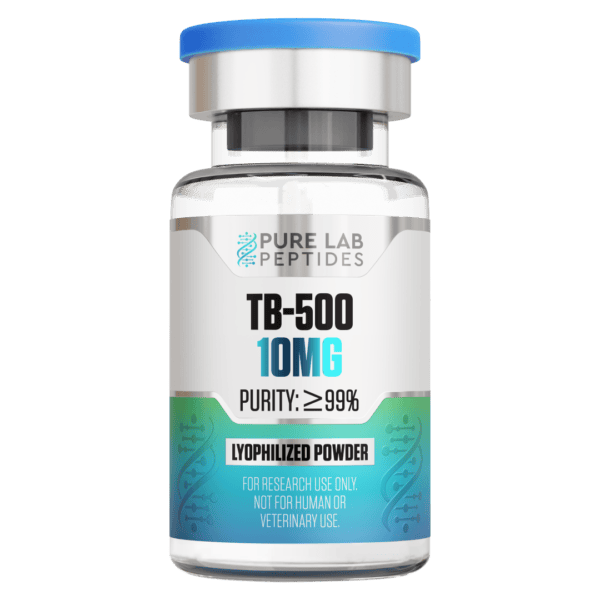
Pure Lab Peptides presents TB-500 5mg as a research-use-only material for laboratory settings. The product is positioned with a ≥99% purity claim, lyophilized powder form, and batch-specific COA availability. Laboratory buyers should review the product page, RUO labeling, purity information, product form, storage and handling documentation, and lot-level traceability before adding the material to procurement records.
Review the Pure Lab Peptides TB-500 research-use-only product details for RUO labeling, product details, purity information, and batch-specific documentation. Researchers comparing related laboratory materials can also review the research peptide collection, the research documentation blog, and the shipping and returns information for operational context.
Common Misunderstandings About Buying TB-500 Online
Misunderstanding: “Buy TB-500 online” means personal use
Buy TB-500 online should not be interpreted as personal-use guidance on this page. The phrase is addressed as laboratory procurement intent for qualified researchers reviewing RUO labeling, documentation, purity data, identity information, and supplier transparency.
Misunderstanding: Published literature equals product-use guidance
Published literature may describe TB-500 identity, thymosin beta-4-related pathways, or analytical detection methods. That literature does not provide instructions for using an RUO product. Research literature related to cellular pathways should not be converted into product-use claims for RUO materials.
Misunderstanding: Purity percentage alone proves identity
Purity documentation is important, but it should be read with identity testing, method details, product name, lot number, and supplier documentation. TB-500 purity documentation is strongest when it is traceable to a specific batch and supported by an appropriate analytical method.
Misunderstanding: COA documentation does not need to be batch-specific
A generic COA is less useful for research procurement than a batch-specific COA. Researchers should match the TB-500 COA to the product label and lot number so that laboratory records connect the received material to the correct analytical documentation.
Misunderstanding: RUO labeling supports human or animal use
RUO labeling does not support human or animal consumption. It clarifies that the material is intended for controlled laboratory research only. Supplier language should remain consistent with research procurement, analytical documentation, and responsible laboratory recordkeeping.
FAQs About Buying TB-500 Online for Research
Where can researchers buy TB-500 online for laboratory research?
Researchers can buy TB-500 online for laboratory research from an RUO supplier that provides clear labeling, product details, batch-specific COA access, purity documentation, identity information, and storage guidance. Pure Lab Peptides provides a TB-500 5mg product page for qualified laboratory buyers reviewing RUO documentation.
What should researchers check before buying TB-500 online?
Before buying TB-500 online, researchers should check RUO labeling, the batch-specific COA, product name consistency, purity data, identity testing, lot number alignment, product form, storage information, and supplier language. The procurement review should focus on documentation, not personal-use claims.
Why does a COA matter when buying TB-500?
A COA matters when buying TB-500 because it supports batch-level review of identity, purity, analytical method, test information, and lot traceability. Researchers should not rely on a purity percentage alone; the TB-500 COA should be evaluated with product labeling and supplier documentation.
Is TB-500 intended for human or animal consumption?
TB-500 discussed here is not intended for human or animal consumption. It is addressed only as a research-use-only laboratory material. Qualified researchers should keep procurement records aligned with RUO labeling, supplier documentation, and controlled laboratory handling requirements.
What does research use only mean for TB-500?
Research use only for TB-500 means the material is supplied for laboratory research activities, not for consumer use, clinical use, diagnostic use, or veterinary use. The buyer’s evaluation should center on COA access, identity testing, purity documentation, lot traceability, and research documentation.
How should published literature about TB-500 be interpreted?
Published literature about TB-500 should be interpreted as scientific context, not product-use guidance. Analytical papers, database records, and thymosin beta-4-related studies can help researchers understand identity and research category, but they should not be converted into human-use or animal-use claims.
Next Steps
For research teams comparing TB-500 suppliers, prioritize COA availability, transparent labeling, purity documentation, identity testing, and lot-level traceability. Review the TB-500 product page for RUO labeling, purity information, and available batch-specific documentation.
References
- U.S. Food and Drug Administration. “Distribution of In Vitro Diagnostic Products Labeled for Research Use Only or Investigational Use Only.” FDA Guidance Document. 2013/2018. fda.gov
- International Organization for Standardization. “ISO/IEC 17025 Testing and Calibration Laboratories.” ISO. 2017. iso.org
- National Center for Biotechnology Information. “Unii-qhk6Z47gtg.” PubChem Compound Summary. Accessed 2026. pubchem.ncbi.nlm.nih.gov
- U.S. Food and Drug Administration. “TB-500.” Global Substance Registration System. Accessed 2026. precision.fda.gov
- Esposito S, Deventer K, Goeman J, Van der Eycken J, Van Eenoo P. “Synthesis and characterization of the N-terminal acetylated 17-23 fragment of thymosin beta 4 identified in TB-500, a product suspected to possess doping potential.” Drug Testing and Analysis. 2012;4(9):733-738. doi.org/10.1002/dta.1402
- National Center for Biotechnology Information. “Timbetasin.” PubChem Compound Summary. Accessed 2026. pubchem.ncbi.nlm.nih.gov
- National Center for Biotechnology Information. “TMSB4X thymosin beta 4 X-linked.” NCBI Gene. Accessed 2026. ncbi.nlm.nih.gov/gene/7114
- Van Troys M, Dewitte D, Goethals M, Carlier MF, Vandekerckhove J, Ampe C. “The actin binding site of thymosin beta 4 mapped by mutational analysis.” The EMBO Journal. 1996;15(2):201-210. pmc.ncbi.nlm.nih.gov
- Safer D, Sosnick TR, Elzinga M. “Thymosin beta 4 binds actin in an extended conformation and contacts both the barbed and pointed ends.” Biochemistry. 1997;36(19):5806-5816. pubmed.ncbi.nlm.nih.gov/9153421
- Sanders MC, Goldstein AL, Wang YL. “Thymosin beta 4 (Fx peptide) is a potent regulator of actin polymerization in living cells.” Proceedings of the National Academy of Sciences. 1992;89(10):4678-4682. doi.org/10.1073/pnas.89.10.4678
- Goldschmidt-Clermont PJ, Furman MI, Wachsstock D, Safer D, Nachmias VT, Pollard TD. “The control of actin nucleotide exchange by thymosin beta 4 and profilin.” Molecular Biology of the Cell. 1992. pmc.ncbi.nlm.nih.gov
- Mant CT, Hodges RS. “HPLC Analysis and Purification of Peptides.” Methods in Molecular Biology. 2007. pmc.ncbi.nlm.nih.gov
- Zeng K, Geerlof-Vidavisky I, Gucinski A, Jiang X, Boyne MT. “Liquid Chromatography-High Resolution Mass Spectrometry for Peptide Drug Quality Control.” The AAPS Journal. 2015;17(3):643-651. pmc.ncbi.nlm.nih.gov
- Lian Z, Wang N, et al. “Characterization of Synthetic Peptide Therapeutics Using Liquid Chromatography-Mass Spectrometry: Challenges, Solutions, Pitfalls, and Future Perspectives.” Journal of the American Society for Mass Spectrometry. 2021;32(8):1852-1860. pubmed.ncbi.nlm.nih.gov/34110145
- Li M, et al. “Identification and accurate quantification of structurally related peptide impurities.” Rapid Communications in Mass Spectrometry. 2018. pubmed.ncbi.nlm.nih.gov/29862433
- Stoppacher N, et al. “Accurate quantification of impurities in pure peptide material.” Rapid Communications in Mass Spectrometry. 2015. pubmed.ncbi.nlm.nih.gov/26467117
- National Institute of Standards and Technology. “NIST Libraries of Peptide Tandem Mass Spectra.” NIST. 2022. chemdata.nist.gov
- International Council for Harmonisation. “ICH Q2(R2) Guideline: Validation of Analytical Procedures.” ICH. 2023. database.ich.org
- National Institute of Standards and Technology. “Report of Investigation: Synthetic Peptide Reference Material.” NIST. 2017. tsapps.nist.gov
- Ho ENM, Kwok WH, Lau MY, Wong AS, Wan TSM, Lam KKH, Schiff PJ, Stewart BD. “Doping control analysis of TB-500, a synthetic version of an active region of thymosin beta 4, in equine urine and plasma by liquid chromatography-mass spectrometry.” Journal of Chromatography A. 2012;1265:57-69. pubmed.ncbi.nlm.nih.gov/23084823
- Hertzog M, van Heijenoort C, Didry D, et al. “The beta-thymosin/WH2 domain; structural basis for the switch from inhibition to promotion of actin assembly.” Cell. 2004;117(5):611-623. pubmed.ncbi.nlm.nih.gov/15163409
- Xue B, Leyrat C, Grimes JM, Robinson RC. “Structural basis of thymosin-beta4/profilin exchange leading to actin filament polymerization.” Proceedings of the National Academy of Sciences. 2014;111(43):E4596-E4605. pubmed.ncbi.nlm.nih.gov/25313062
- Davison GW, Brown S. “The potential use and abuse of thymosin beta-4 in sport and exercise science.” Journal of Sports Sciences. 2013;31(9):917-918. pubmed.ncbi.nlm.nih.gov/23421910
There are no reviews yet.