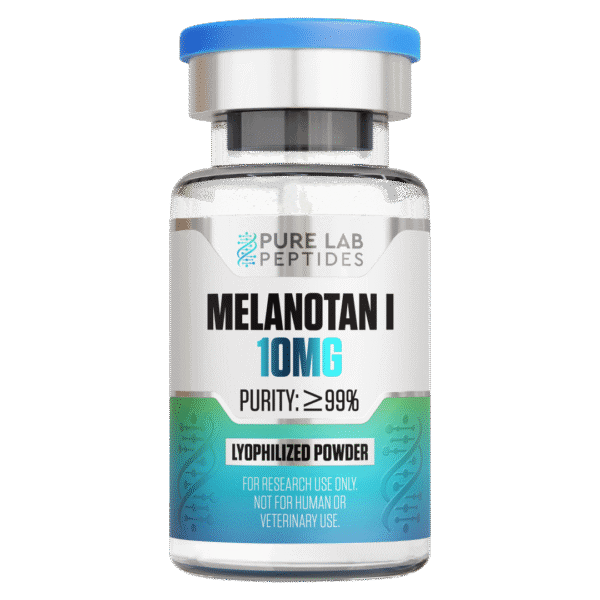


Researchers searching for buy Melanotan 2 online should evaluate Melanotan 2 as a research-use-only laboratory material, not a consumer product. For laboratory buyers, the key considerations are compound identity, purity documentation, batch-specific COAs, lot traceability, product labeling, and storage information. This guide explains how technical procurement teams can evaluate Melanotan 2 through Pure Lab Peptides with emphasis on RUO labeling, COA review, identity confirmation, and supplier transparency.
Fast Answer: buy Melanotan 2 online for laboratory research
Researchers can buy Melanotan 2 online for laboratory research by reviewing RUO labeling, batch-specific COA documentation, purity data, identity information, storage guidance, and supplier transparency before selecting a source. Products discussed in this article are intended for laboratory research use only and are not intended for human or animal consumption. The procurement decision should remain documentation-led.
What Does “Buy Melanotan 2 Online” Mean in a Research Context?
The phrase “buy Melanotan 2 online” is addressed here as laboratory research procurement intent, not personal-use intent. In a research setting, online procurement means evaluating whether a supplier presents Melanotan 2 as an RUO compound, provides batch-specific documentation, states product form clearly, and avoids claims that would shift the material into consumer, clinical, veterinary, or therapeutic positioning.
For qualified researchers, technical buyers, and institutional procurement teams, the online evaluation process should focus on documentation rather than expected outcomes. Key review points include RUO labeling, the Melanotan 2 COA, identity testing, purity documentation, lot number consistency, storage information, and Melanotan 2 supplier documentation. U.S. regulatory labeling language for research-use-only in vitro diagnostic products provides a useful example of how RUO language separates research materials from diagnostic positioning, even though Melanotan 2 procurement is not an IVD claim [1]. FDA guidance on RUO-labeled products also emphasizes that research-use positioning must be consistent with the way a product is promoted and distributed [2].
In practical terms, a laboratory buyer should treat a product page as the starting point for review, not the full record. The product page should identify the compound, amount, form, intended use, and documentation path. The batch-specific COA should then connect those product details to the lot received by the laboratory. This documentation-first approach supports internal recordkeeping and helps procurement teams distinguish research-use-only sourcing from unsupported product claims.
Melanotan 2 Research Material Overview
Melanotan 2 appears in scientific databases under names such as Melanotan II and MT-II. PubChem identifies melanotan-II as a defined chemical entry and lists molecular formula information for the compound [3]. The FDA UNII record for Melanotan II identifies the UNII code UPF5CJ93X7 and includes synonym and formula information, while noting that UNII availability does not imply regulatory review or approval [4]. These database records are useful for identity review, but they are not substitutes for a batch-specific COA.
The IUPHAR/BPS Guide to Pharmacology identifies MT-II as a peptide ligand entry and classifies it in a pharmacology database context [5]. The same resource describes the melanocortin receptor family as a group of G protein-coupled receptors, which provides neutral context for why Melanotan 2 appears in melanocortin receptor literature [6]. The Guide to Pharmacology database is maintained as an expert-curated ligand and receptor resource, making it useful for cross-checking naming, classification, and receptor-family context [7].
Published reviews describe the melanocortin receptor system as a receptor family studied across multiple research areas, and they discuss melanocortin ligands in broad scientific context [8]. A wider review of melanocortin ligands from 1954 to 2016 places MT-II within a long-running research literature on melanocortin ligand design and receptor-related investigation [9]. More recent work on melanocortin receptor tool compounds highlights the continued use of defined ligands for receptor research, while also underscoring the need to distinguish research context from product-use claims [10].
Melanotan 2 is therefore best described here as a Melanotan 2 research material connected to melanocortin receptor research, peptide identity review, analytical documentation, and RUO procurement. Published synthesis literature has described preparative solution-phase synthesis of Melanotan II, which is relevant to scientific characterization but not to product-use guidance [11]. Melanocortin pathway literature should not be presented as personal-use, cosmetic, or therapeutic guidance.
Why Researchers Search “Buy Melanotan 2 Online”
Researchers search “buy Melanotan 2 online” because online product pages often provide the first layer of procurement information: compound name, amount, product form, RUO status, and documentation access. The search phrase does not need to imply consumer intent. In this article, buy Melanotan 2 means evaluating Melanotan 2 research-use-only sourcing through a laboratory documentation lens.
A qualified procurement review should ask whether the supplier clearly identifies Melanotan 2 as an RUO material, whether the Melanotan 2 COA is batch-specific, whether the product name and lot number match across records, and whether the supplier provides appropriate storage and handling information. The review should also assess whether the supplier avoids unsupported claims and keeps the product positioned as a research compound.
Search intent is commercial, but the compliant response is technical. A research buyer is not looking for personal guidance; the buyer is confirming whether the material, documentation, labeling, and supplier language fit internal laboratory standards. For Melanotan 2, that means prioritizing COA access, purity documentation, identity testing, lot traceability, product form, and transparent supplier records over promotional language.
Research Procurement Checklist for Melanotan 2
- Verify that Melanotan 2 is labeled for research use only.
- Review the batch-specific certificate of analysis before procurement.
- Confirm that the COA includes identity and purity documentation for the listed lot.
- Check whether HPLC, LC-MS, mass spectrometry, or another analytical method is listed.
- Compare the product name, amount, lot number, and documentation for consistency.
- Assess whether the supplier avoids dosing, therapeutic, diagnostic, personal-use, or animal-use claims.
- Document storage and handling information in laboratory procurement records.
- Evaluate whether the lyophilized powder form matches the needs of the research workflow.
- Confirm that the product is not marketed for human or animal consumption.
Melanotan 2 Quality Signals to Review Before Buying Online
Researchers who search buy Melanotan 2 online should compare suppliers by documentation quality, not by promotional claims. A strong RUO procurement record connects the product page, label, COA, analytical method, lot number, and storage information into one consistent documentation trail. For Melanotan 2, that review should include the following quality signals.
| Evaluation Area | What Researchers Should Review | Why It Matters for RUO Procurement |
| RUO labeling | Confirm the product is clearly labeled for research use only | Helps separate research procurement from human-use positioning |
| COA availability | Review the batch-specific certificate of analysis | Supports lot-level documentation and quality review |
| Purity data | Look for analytical support for the stated purity | Helps evaluate material consistency |
| Identity testing | Review HPLC, LC-MS, mass spectrometry, or related identity data | Helps confirm the material matches the listed compound |
| Lot traceability | Match lot numbers across product and documentation | Supports research recordkeeping |
| Product form | Confirm whether the material is supplied as lyophilized powder or another documented form | Supports laboratory planning |
| Storage information | Review storage and handling documentation | Helps maintain material integrity in laboratory settings |
| Supplier language | Confirm the supplier avoids dosing, therapeutic, or personal-use claims | Supports research-use-only positioning |
COA, Purity, and Identity Documentation
The Melanotan 2 COA should be reviewed as a batch-specific document, not a generic quality statement. Researchers should look for the compound name, lot number, test date, stated purity percentage, testing method, identity confirmation, product form, and documentation that can be matched to the material received. A purity percentage alone does not establish complete compound identity; researchers should evaluate purity, identity, method, lot number, and documentation together.
Analytical procedure validation guidance from ICH explains that an analytical procedure should be fit for its intended purpose and addresses characteristics relevant to identity, impurity, and quantitative procedures [12]. FDA guidance on analytical procedures and methods validation similarly frames analytical methods as part of demonstrating identity, strength, quality, purity, and potency for regulated drug and biologic contexts; the same general principle helps research buyers understand why method documentation matters, even when evaluating RUO materials rather than regulated finished products [13].
Peptide-focused analytical literature supports the use of chromatographic and mass spectrometric methods for peptide characterization. HPLC is widely discussed as a method for peptide analysis and purification [14]. LC-MS literature describes the value and challenges of characterizing synthetic peptide materials using liquid chromatography-mass spectrometry [15]. High-resolution LC-MS has also been used to identify and quantify structurally related peptide impurities in synthetic peptide work, illustrating why purity and identity data should be reviewed together [16].
Reference-standard literature for synthetic peptide therapeutics discusses orthogonal methods, including mass spectrometry, chromatography, and other techniques, as part of identity and quality assessment [17]. A peptide quantification case study also shows that method selection and reproducibility can affect peptide measurement, reinforcing the need to document analytical methods rather than relying on a single headline value [18]. For Melanotan 2 identity testing, researchers should therefore review the COA, method, lot number, and Melanotan 2 purity documentation as a combined record.
flowchart TD
A[Receive product and COA] --> B{RUO labeling present?}
B -- No --> C[Flag procurement gap]
B -- Yes --> D{Lot number matches across label and COA?}
D -- No --> E[Request batch-specific documentation]
D -- Yes --> F{Identity supported by analytical method?}
F -- No --> G[Request HPLC, LC-MS, or equivalent]
F -- Yes --> H[Proceed to laboratory documentation and storage]
Research Literature Context
Published literature on Melanotan 2 should be read as scientific context, not as product-use guidance. Some published clinical literature has examined Melanotan-II outside the scope of RUO product use; that literature should not be interpreted as use guidance for research-use-only materials [19]. Published clinical literature should not be interpreted as use guidance for RUO materials.
Other literature focuses on peptide structure, receptor selectivity, or melanocortin ligand design. Structure-function work on cyclic peptide MT-II examined relationships between peptide structure and receptor-related research questions [20]. Research on prototype peptidomimetic melanocortin receptor agonists further demonstrates the use of defined ligands in receptor-model investigation [21]. Earlier alpha-melanotropin analog work provides historical context for melanocortin peptide design and structure-activity research [22].
Review literature on melanocortin receptor structure, function, and regulation provides receptor-family context without establishing product-use instructions for any RUO material [23]. MC1R-focused review literature discusses receptor biology and regulation as a scientific topic [24]. Alpha-MSH review literature addresses biology and translational research context for melanocortin-related science, but it should not be converted into claims for Melanotan 2 research-use-only materials [25].
The evidence landscape is therefore mixed by type: database records support identity review; analytical chemistry literature supports COA interpretation; receptor literature provides scientific context; and clinical publications, where present, remain outside the scope of RUO procurement guidance. None of these sources should be used to imply that an RUO Melanotan 2 material is intended for human use, animal use, diagnostic use, therapeutic use, or consumer application.
Evidence Landscape
| Research Area | What Literature Examines | Evidence Type | RUO Interpretation |
| Compound identity | Molecular structure, sequence, formula, synonym records, or classification | Database / analytical | Supports identification, not product-use claims |
| Pathway or category context | Melanocortin receptor signaling literature and ligand classification | Review / in vitro / preclinical / database | Useful for research context, not therapeutic claims |
| Analytical testing | Purity, identity, and batch verification | HPLC / LC-MS / mass spectrometry / COA | Supports documentation review |
| Storage and stability | Material form and handling considerations | Laboratory documentation | Supports research workflow planning |
Claim Boundary Table
| Research-Safe Statement | Why It Is Acceptable | Non-Compliant Version to Avoid |
| “Melanotan 2 is discussed in published research related to melanocortin receptor signaling.” | Describes literature context without making a product claim | “Melanotan 2 helps with a human outcome.” |
| “Researchers should review COA and identity data before procurement.” | Focuses on documentation and quality review | “Users should buy Melanotan 2 for results.” |
| “Pure Lab Peptides supplies Melanotan 2 as a research-use-only material.” | Clarifies intended use | “Pure Lab Peptides supplies Melanotan 2 for therapy.” |
| “The phrase buy Melanotan 2 online is addressed as research procurement intent.” | Qualifies commercial search intent | “Buy Melanotan 2 online for personal use.” |
| “Melanotan 2 purity documentation should be reviewed with identity testing and lot traceability.” | Connects quality review to analytical documentation | “A purity number alone proves the product is suitable for any purpose.” |
How Pure Lab Peptides Presents Melanotan 2
Pure Lab Peptides presents Melanotan 2 as a research-use-only material for qualified laboratory procurement. The product is positioned for controlled research settings, not for human or animal consumption. Procurement review should focus on the product page, RUO labeling, purity information, batch-specific COA availability, storage and handling documentation, lot-level traceability, and supplier transparency.
For Melanotan 2 10mg, Pure Lab Peptides states a ≥99% purity claim and supplies the material in lyophilized powder form. A batch-specific COA is available for review. Laboratory buyers should compare the product name, lot number, purity statement, analytical method information, product form, and storage details against the corresponding documentation. This helps ensure that Melanotan 2 supplier documentation supports the laboratory record.
Review the Pure Lab Peptides Melanotan 2 research-use-only product details for RUO labeling, product details, purity information, and batch-specific documentation. Researchers comparing broader RUO options may also review the Pure Lab Peptides research peptide collection, the Pure Lab Peptides research documentation blog, and the shipping and returns information for procurement planning.
Common Misunderstandings About Buying Melanotan 2 Online
Misunderstanding: “Buy Melanotan 2 online” means personal use
Buy Melanotan 2 online should not be interpreted as personal-use guidance on this page. The phrase is addressed as laboratory procurement intent for qualified researchers reviewing RUO labeling, documentation, purity data, identity information, storage information, and supplier transparency.
Misunderstanding: Published literature equals product-use guidance
Published literature can explain compound identity, receptor-family context, analytical methods, or historical research models. It does not convert a Melanotan 2 research material into a human-use, animal-use, therapeutic, diagnostic, or consumer product. Melanocortin pathway literature should remain scientific context only.
Misunderstanding: Purity percentage alone proves identity
A purity percentage is only one part of quality review. Researchers should evaluate Melanotan 2 purity documentation together with identity testing, analytical method information, lot number matching, product form, storage records, and batch-specific COA documentation. Identity and purity are related, but they are not identical.
Misunderstanding: COA documentation does not need to be batch-specific
A useful Melanotan 2 COA should match the specific lot under review. Batch-specific documentation helps the laboratory connect the received material to the supplier record. Generic documentation may not provide enough traceability for procurement files, internal review, or controlled research recordkeeping.
Misunderstanding: Supplier claims can replace analytical documentation
Supplier transparency depends on documentation, not unsupported claims. Researchers should prioritize COA availability, identity testing, purity documentation, lot traceability, storage information, and RUO labeling. Marketing language cannot replace method-supported documentation for Melanotan 2 research procurement.
FAQs About Buying Melanotan 2 Online for Research
Where can researchers buy Melanotan 2 online for laboratory research?
Researchers can buy Melanotan 2 online for laboratory research from an RUO supplier that provides clear labeling, batch-specific COA documentation, purity information, identity documentation, storage guidance, and lot traceability. Pure Lab Peptides presents Melanotan 2 as a research-use-only material with product documentation available for procurement review.
What should researchers check before buying Melanotan 2 online?
Before buying Melanotan 2 online, researchers should check RUO labeling, product name consistency, lot number matching, COA availability, purity data, identity testing, analytical method information, storage guidance, and supplier language. The supplier should avoid human-use, animal-use, diagnostic, therapeutic, and consumer positioning.
Why does a COA matter when buying Melanotan 2?
A COA matters when buying Melanotan 2 because it connects the listed compound to batch-level quality documentation. Researchers should review the compound name, lot number, test method, purity statement, identity information, and date information. The COA supports procurement records but should be evaluated alongside labeling and storage documentation.
Is Melanotan 2 intended for human or animal consumption?
Melanotan 2 discussed here is not intended for human or animal consumption. It is addressed as a research-use-only material for qualified laboratories and technical procurement teams. The procurement focus is documentation review, identity confirmation, purity data, RUO labeling, lot traceability, and supplier transparency.
What does research use only mean for Melanotan 2?
Research use only means Melanotan 2 is positioned for controlled laboratory research workflows, not for consumer, clinical, veterinary, diagnostic, or therapeutic use. Researchers should keep procurement records tied to RUO labeling, batch-specific documentation, analytical testing, storage information, and internal laboratory review procedures.
How should published literature about Melanotan 2 be interpreted?
Published literature about Melanotan 2 should be interpreted as scientific context for compound identity, melanocortin receptor research, analytical characterization, or historical research models. It should not be interpreted as product-use guidance for RUO materials. Literature context does not replace batch-specific COA review or supplier documentation.
Next Steps
Qualified researchers evaluating Melanotan 2 should review product labeling, COA status, identity documentation, purity information, storage guidance, and supplier transparency before selecting any research-use-only material. Review the Melanotan 2 product page for RUO labeling, purity information, and available batch-specific documentation.
References
- Legal Information Institute. “21 CFR § 809.10 – Labeling for in vitro diagnostic products.” Electronic Code of Federal Regulations. Current eCFR text. https://www.law.cornell.edu/cfr/text/21/809.10
- U.S. Food and Drug Administration. “Distribution of In Vitro Diagnostic Products Labeled for Research Use Only or Investigational Use Only.” FDA Guidance Document. 2013, content current 2018. https://www.fda.gov/regulatory-information/search-fda-guidance-documents/distribution-in-vitro-diagnostic-products-labeled-research-use-only-or-investigational-use-only
- National Center for Biotechnology Information. “Melanotan-II.” PubChem Compound Summary. CID 92432. https://pubchem.ncbi.nlm.nih.gov/compound/melanotan-II
- U.S. Food and Drug Administration. “UNII – UPF5CJ93X7.” FDA UNII Search Service. https://precision.fda.gov/uniisearch/srs/unii/UPF5CJ93X7
- IUPHAR/BPS Guide to Pharmacology. “MT-II.” Guide to Pharmacology Ligand Database. Ligand ID 1323. https://www.guidetopharmacology.org/GRAC/LigandDisplayForward?ligandId=1323&tab=biology
- IUPHAR/BPS Guide to Pharmacology. “Melanocortin receptors.” Guide to Pharmacology Family Introduction. https://www.guidetopharmacology.org/GRAC/FamilyIntroductionForward?familyId=38
- Harding SD, et al. “The IUPHAR/BPS Guide to PHARMACOLOGY in 2026.” Nucleic Acids Research. 2026. https://academic.oup.com/nar/article/54/D1/D1446/8306131
- Cai M, Hruby VJ. “The Melanocortin Receptor System: A Target for Multiple Degenerative Diseases.” Current Protein & Peptide Science. 2016;17(5):488-496. https://doi.org/10.2174/1389203717666160226145330
- Ericson MD, Lensing CJ, Fleming KA, Schlasner KN, Doering SR, Haskell-Luevano C. “Bench-top to clinical therapies: A review of melanocortin ligands from 1954 to 2016.” Biochimica et Biophysica Acta – Molecular Basis of Disease. 2017;1863(10 Pt A):2414-2435. https://doi.org/10.1016/j.bbadis.2017.03.020
- Weirath NA, et al. “Recommended Tool Compounds for the Melanocortin Receptor (MCR) G Protein-Coupled Receptors (GPCRs).” ACS Pharmacology & Translational Science. 2024;7(9):2706-2724. https://doi.org/10.1021/acsptsci.4c00129
- Ryakhovsky VV, Khachiyan GA, Kosovova NF, Isamiddinova EF, Ivanov AS. “The first preparative solution phase synthesis of melanotan II.” Beilstein Journal of Organic Chemistry. 2008;4:39. https://doi.org/10.3762/bjoc.4.39
- International Council for Harmonisation of Technical Requirements for Pharmaceuticals for Human Use. “Q2(R2) Validation of Analytical Procedures.” ICH Harmonised Guideline. 2023. https://database.ich.org/sites/default/files/ICH_Q2%28R2%29_Guideline_2023_1130.pdf
- U.S. Food and Drug Administration. “Analytical Procedures and Methods Validation for Drugs and Biologics.” FDA Guidance for Industry. 2015. https://www.fda.gov/regulatory-information/search-fda-guidance-documents/analytical-procedures-and-methods-validation-drugs-and-biologics
- Mant CT, Chen Y, Yan Z, Popa TV, Kovacs JM, Mills JB, Tripet BP, Hodges RS. “HPLC Analysis and Purification of Peptides.” Methods in Molecular Biology. 2007;386:3-55. https://doi.org/10.1007/978-1-59745-430-8_1
- Lian Z, Wang N, Tian Y, Huang L. “Characterization of Synthetic Peptide Therapeutics Using Liquid Chromatography-Mass Spectrometry: Challenges, Solutions, Pitfalls, and Future Perspectives.” Journal of the American Society for Mass Spectrometry. 2021;32(8):1852-1860. https://doi.org/10.1021/jasms.0c00479
- Li M, et al. “Identification and accurate quantification of structurally related peptide impurities in synthetic human C-peptide by liquid chromatography-high resolution mass spectrometry.” Analytical and Bioanalytical Chemistry. 2018. https://doi.org/10.1007/s00216-018-1155-y
- McCarthy D, et al. “Reference Standards to Support Quality of Synthetic Peptide Therapeutics.” Pharmaceutical Research. 2023;40(6):1317-1328. https://doi.org/10.1007/s11095-023-03493-0
- Li C, Bhavaraju S, Melanson J, Blomgren A, Rundlöf T, Kilpatrick EL, et al. “Survey of peptide quantification methods and comparison of their reproducibility: A case study using oxytocin.” Journal of Pharmaceutical and Biomedical Analysis. 2019;166:105-112. https://doi.org/10.1016/j.jpba.2018.12.028
- Dorr RT, Lines R, Levine N, Brooks C, Xiang L, Hruby VJ, Hadley ME. “Evaluation of melanotan-II, a superpotent cyclic melanotropic peptide in a pilot phase-I clinical study.” Life Sciences. 1996;58(20):1777-1784. https://doi.org/10.1016/0024-3205(96)00160-9
- Bednarek MA, Silva MV, Arison B, MacNeil T, Kalyani RN, Huang RRC, Weinberg DH. “Structure-function studies on the cyclic peptide MT-II, lactam derivative of alpha-melanotropin.” Peptides. 1999;20(3):401-409. https://doi.org/10.1016/S0196-9781(99)00048-0
- Haskell-Luevano C, Hendrata S, North C, Sawyer TK, Hadley ME, Hruby VJ, Dickinson C, Gantz I. “Discovery of prototype peptidomimetic agonists at the human melanocortin receptors MC1R and MC4R.” Journal of Medicinal Chemistry. 1997;40(14):2133-2139. https://doi.org/10.1021/jm960840h
- Sawyer TK, Sanfilippo PJ, Hruby VJ, Engel MH, Heward CB, Burnett JB, Hadley ME. “4-Norleucine, 7-D-phenylalanine-alpha-melanocyte-stimulating hormone: a highly potent alpha-melanotropin with ultralong biological activity.” Proceedings of the National Academy of Sciences of the United States of America. 1980;77(10):5754-5758. https://doi.org/10.1073/pnas.77.10.5754
- Yang Y. “Structure, function and regulation of the melanocortin receptors.” European Journal of Pharmacology. 2011;660(1):125-130. https://pmc.ncbi.nlm.nih.gov/articles/PMC3095696/
- Wolf Horrell EM, Boulanger MC, D’Orazio JA. “Melanocortin 1 Receptor: Structure, Function, and Regulation.” Frontiers in Genetics. 2016;7:95. https://doi.org/10.3389/fgene.2016.00095
- Dall’Olmo L, Papa N, Surdo NC, Marigo I, Mocellin S. “Alpha-melanocyte stimulating hormone (alpha-MSH): biology, clinical relevance and implication in melanoma.” Journal of Translational Medicine. 2023;21(1):562. https://doi.org/10.1186/s12967-023-04405-y
There are no reviews yet.