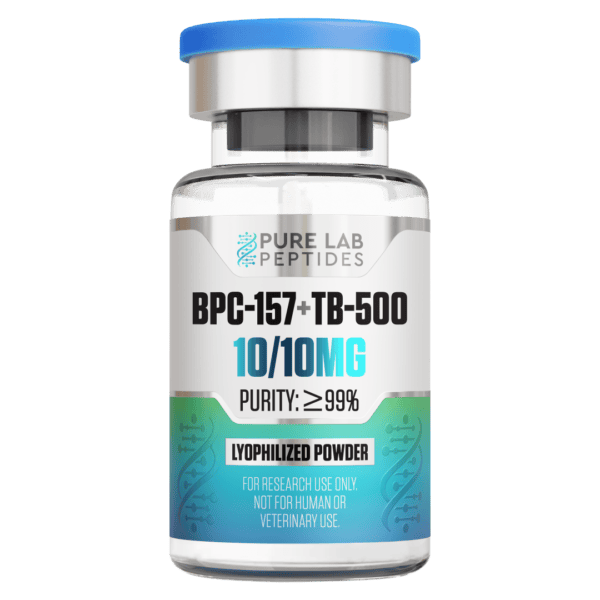

KLOW (TB-500 10mg + BPC-157 10mg + KPV 10mg + GHK-Cu 50mg)

$199.99

(5.0) (18 customer reviews)

Research Studies:

  • Facilitates synergistic interrogation of actin-sequestering protein 4 isoforms and stable gastric pentadecapeptide-mediated intracellular signaling pathways.
  • Enables high-resolution mapping of melanocortin receptor antagonism and systemic anti-inflammatory peptide signaling in diverse cell cultures.
  • Supports experimental analysis of copper-dependent tripeptide GHK-Cu in modulating collagen synthesis and extracellular matrix remodeling kinetics.
  • Probes the biochemical integration of multiple growth factors on mesenchymal stem cell differentiation and migratory potential in vitro.

Quantity:

Free Shipping
Buy Peptides with confidence: Stripe-powered secure checkout and major cards accepted.
Secure payment methods for buying peptides: Visa, MasterCard, AMEX, and more.
Buy Peptides with confidence: Stripe-powered secure checkout and major cards accepted.
Secure payment methods for buying peptides: Visa, MasterCard, AMEX, and more.

FREE Shipping on 

orders over $200

ALL ARTICLES AND PRODUCT INFORMATION PROVIDED ON THIS WEBSITE ARE FOR INFORMATIONAL AND EDUCATIONAL PURPOSES ONLY. The products offered on this website are intended solely for research and laboratory use. These products are not intended for human or animal consumption. They are not medicines or drugs and have not been evaluated or approved by the FDA to diagnose, treat, cure, or prevent any disease or medical condition. Any form of bodily introduction is strictly prohibited by law.

Description

KLOW (TB-500 10mg + BPC-157 10mg + KPV 10mg + GHK-Cu 50mg) is a research-use-only peptide blend supplied for controlled laboratory workflows, multi-compound documentation review, and analytical characterization. This blend is manufactured under rigorous quality standards to support consistency, traceability, and batch-specific verification for qualified laboratory settings.

Key Product Details

  • Manufactured in accordance with rigorous quality standards to support ≥99% purity, as reflected in batch-specific documentation where available.
  • Every batch is third-party analyzed for identity, assay/potency, and sterility documentation where applicable.
  • Supplied in lyophilized powder form to help preserve stability throughout transport and storage.
  • Produced with lot-level traceability to support research documentation and laboratory recordkeeping.
  • Formulated as a multi-compound research blend containing TB-500 10mg, BPC-157 10mg, KPV 10mg, and GHK-Cu 50mg.

Research Documentation Context

  • Supports review of multi-compound blend composition in controlled laboratory settings.
  • Provides batch-specific identity and purity documentation for research review.
  • Allows lot-level traceability across laboratory documentation workflows.
  • Supports comparison of product labeling, analytical documentation, and storage information during research planning.
  • Assists researchers in evaluating individual component amounts within a clearly disclosed peptide blend.

Specifications and Documentation

  • Blend Composition: TB-500 10mg + BPC-157 10mg + KPV 10mg + GHK-Cu 50mg, 80mg total.
  • Certificate of Analysis: Available with batch-specific documentation where applicable.
  • Material Safety Data Sheet: Coming Soon.
  • Handling and Storage Instructions: Coming Soon.
  • Product Form: Lyophilized powder.
  • Purity Specification: ≥99% purity.
  • Intended Use: Laboratory research use only.

KLOW (TB-500 10mg + BPC-157 10mg + KPV 10mg + GHK-Cu 50mg) is intended strictly for laboratory research use only. This product is not intended for human or animal consumption, therapeutic use, diagnostic use, clinical use, veterinary use, or as a food, drug, cosmetic, dietary supplement, or household product.

Additional information

CAS No.

TB-500: 77591-33-4

BPC-157: 137525-51-0

KPV: 113274-56-9

GHK-Cu: 49557-75-7

Purity

≥99%

Sequence

TB-500: Ac-Ser-Asp-Lys-Pro-Asp-Met-Ala-Glu-Ile-Glu-Lys-Phe-Asp-Ile-Thr-His-Gly-Glu-Glu-Asn

BPC-157: Gly-Glu-Pro-Pro-Pro-Gly-Lys-Pro-Ala-Asp-Asp-Ala-Gly-Leu-Val

KPV: Lys-Pro-Val

GHK-Cu: Gly-His-Lys + Cu(2+)

Molecular Formula

Blend of four peptides

Molecular Weight

Blend-dependent; TB-500 ≈ 4963 g/mol, BPC-157 ≈ 1419 g/mol, KPV ≈ 341 g/mol, GHK-Cu ≈ 340 g/mol (excluding copper ion weight adjustment)

Applications

Regenerative medicine research, wound healing, skin health, anti-inflammatory studies, gut and immune function research

Synthesis

Solid-phase synthesis

Solubility

Soluble in water or 1% acetic acid

Stability & Storage

Stable for up to 24 months at -20°C. After reconstitution, may be stored at 4°C for up to 4 weeks or at -20°C for up to 6 months.

Appearance

White lyophilized powder

Shipping Conditions

Shipped at ambient temperature; once received, store at -20°C

Regulatory/Compliance

Manufactured in a facility that adheres to cGMP guidelines

Safety Information

Refer to provided MSDS

There are no reviews yet.

We value your feedback. Please leave a review below:

Research Procurement Information

Buy KLOW Online for Research | COA Supplier Guide

Researchers searching for “buy KLOW online” should evaluate KLOW as a research-use-only laboratory material, not a consumer product. For laboratory buyers, the key considerations are compound identity, purity documentation, batch-specific COAs, lot traceability, product labeling, and storage information. This guide explains how to evaluate KLOW for controlled research procurement through Pure Lab Peptides, with emphasis on supplier documentation, identity testing, and RUO compliance.

Fast Answer: buy KLOW online

Researchers can buy KLOW online for laboratory research by reviewing RUO labeling, batch-specific COA documentation, purity data, identity information, storage guidance, and supplier transparency before selecting a source. Products discussed in this article are intended for laboratory research use only and are not intended for human or animal consumption.

What Does “Buy KLOW Online” Mean in a Research Context?

The phrase “buy KLOW online” is addressed here as laboratory research procurement intent, not personal-use intent. In this context, the buyer is a qualified researcher, laboratory buyer, research institution, or technical procurement team evaluating whether a KLOW research material is appropriately labeled, documented, and traceable.

RUO procurement is not the same as consumer buying. Researchers should review the label language, the certificate of analysis, the product form, the lot number, and the supplier’s documentation practices before selecting a source. The U.S. regulatory phrase “For Research Use Only. Not for use in diagnostic procedures” appears in the IVD labeling context under 21 CFR Part 809, and FDA guidance emphasizes that RUO labeling must align with the way a product is represented and distributed [1] [2]. Although KLOW is not being discussed here as an IVD product, the same documentation principle applies: RUO labeling should clearly separate research procurement from diagnostic, therapeutic, clinical, veterinary, or personal-use positioning.

KLOW Research Material Overview

KLOW is evaluated in this guide as a multi-component peptide blend research material. Pure Lab Peptides presents KLOW 80mg as a blend containing TB-500 10mg, BPC-157 10mg, KPV 10mg, and GHK-Cu 50mg [3]. Because blend names are not always standardized across databases or suppliers, qualified researchers should confirm component identity through the product page, label, batch-specific KLOW COA, and supporting analytical documentation.

Component-level references are useful for identity review. PubChem identifies BPC-157 as a peptide record with molecular formula and structure data, while ChEMBL and FDA GSRS provide additional database context for BPC-157 names and identifiers [4] [5] [6]. PubChem records also identify GHK-Cu, glycyl-L-histidyl-L-lysine, and MSH (11-13), the Lys-Pro-Val tripeptide commonly abbreviated as KPV [7] [8] [9]. Thymosin beta-4 records from PubChem, UniProt, and NCBI Gene provide adjacent identity context for thymosin beta-4-related review, while the exact TB-500 identity supplied in a blend should still be confirmed by the batch-specific COA [10] [11] [12].

Blend composition should be evaluated through documentation and identity review, not expected outcomes or use protocols. Research literature related to cellular pathways should not be converted into product-use claims for RUO materials.

Why Researchers Search “Buy KLOW Online”

Researchers search “buy KLOW online” to compare RUO product availability, supplier documentation, component naming, analytical testing, lot traceability, product form, and COA access. A technical procurement team may also search “buy KLOW” to determine whether a supplier clearly separates research-use-only materials from consumer-oriented claims.

For KLOW research material, the most important procurement question is not whether a page uses commercial language. The key question is whether the supplier provides KLOW supplier documentation that allows a laboratory to verify what is being purchased. That review should include KLOW identity testing, KLOW purity documentation, batch-specific COA availability, label consistency, product form, storage guidance, and whether the supplier avoids therapeutic, diagnostic, dosing, or personal-use claims.

Research Procurement Checklist for KLOW

  • Verify that KLOW is labeled for research use only.
  • Review the batch-specific certificate of analysis before procurement.
  • Confirm that the KLOW COA includes identity and purity documentation.
  • Check whether HPLC, LC-MS, mass spectrometry, or another analytical method is listed.
  • Compare the product name, component names, lot number, and documentation for consistency.
  • Assess whether the supplier avoids dosing, injection, therapeutic, diagnostic, or human-use claims.
  • Document storage and handling information in laboratory records.
  • Evaluate whether the lyophilized powder form matches the needs of the research workflow.
  • Confirm that the product is not marketed for human or animal consumption.

KLOW Quality Signals to Review Before Buying Online

Researchers searching to buy KLOW online for laboratory research should prioritize documentation quality over promotional language. For a blend, the COA should support lot-level review of both the finished material and the component naming used on the product page. Analytical literature supports the use of chromatographic and mass spectrometric methods for peptide identity, purity, and impurity review [13] [14] [15].

Evaluation Area What Researchers Should Review Why It Matters for RUO Procurement
RUO labeling Confirm the product is clearly labeled for research use only Helps separate research procurement from human-use positioning
COA availability Review batch-specific certificate of analysis Supports lot-level documentation and quality review
Purity data Look for analytical support for the stated purity Helps evaluate material consistency
Identity testing Review HPLC, LC-MS, mass spectrometry, or related identity data where available Helps confirm the material matches the listed compound
Lot traceability Match lot numbers across product and documentation Supports research recordkeeping
Product form Confirm whether the material is supplied as lyophilized powder or another documented form Supports laboratory planning
Storage information Review storage and handling documentation Helps maintain material integrity in laboratory settings
Supplier language Confirm the supplier avoids dosing, therapeutic, or personal-use claims Supports research-use-only positioning

COA, Purity, and Identity Documentation

A KLOW COA should be reviewed as a batch-specific record, not as generic marketing copy. Researchers should look for compound or blend name, component identity, lot number, test date, purity percentage, analytical method, identity confirmation, product form, and storage documentation. For component-level review, molecular weight or sequence information may be relevant when the COA provides it.

A purity percentage alone does not establish complete compound identity; researchers should evaluate purity, identity, method, lot number, and documentation together. ICH Q2(R2) describes validation principles for analytical procedures, while ICH Q14 addresses science-based analytical procedure development [16] [17]. For peptide materials, HPLC and mass spectrometry are widely discussed in the analytical literature for separation, characterization, identity review, and impurity profiling [13] [18].

flowchart TD A[Receive product and COA] --> B{RUO labeling present?} B -- No --> C[Flag procurement gap] B -- Yes --> D{Lot number matches across label and COA?} D -- No --> E[Request batch-specific documentation] D -- Yes --> F{Identity supported by analytical method?} F -- No --> G[Request HPLC, LC-MS, or equivalent] F -- Yes --> H[Proceed to laboratory documentation and storage]

Laboratory teams should also evaluate whether testing is performed by a competent laboratory and whether the supplier’s documentation is clear enough for internal recordkeeping. ISO/IEC 17025 is a recognized standard for testing and calibration laboratory competence, while NIST reference material resources illustrate the importance of well-characterized materials and certificates in measurement workflows [19] [20]. ISO Guide 31 also addresses the contents of certificates, labels, and accompanying documentation for reference materials [21].

Research Literature Context

KLOW is a blend name, so researchers should avoid treating it as a single standardized database entry. The literature context is best reviewed at the component and method level: peptide identity records, copper peptide chemistry, MSH-derived tripeptide references, thymosin beta-4 records, and analytical chemistry methods.

GHK-Cu literature includes copper complex chemistry and structural studies. Published work has examined copper complexes of glycyl-histidyl-lysine and related analogues, as well as X-ray and solution structures of Cu(II)-GHK complexes [22] [23]. KPV appears in records and literature as MSH (11-13), a Lys-Pro-Val tripeptide, and has been evaluated in signaling and structural research contexts [9] [24] [25]. Thymosin beta-4 literature identifies beta-thymosins as small acidic peptides and discusses actin-binding behavior in biochemical models [26] [27].

Published clinical literature should not be interpreted as use guidance for RUO materials. Published component literature may include database records, analytical studies, in vitro models, preclinical models, review articles, or clinical publications outside the scope of RUO product use. Those sources can inform scientific context, but they do not establish KLOW product-use guidance, expected outcomes, dosing, administration, or research protocol design.

Evidence Landscape

Research Area What Literature Examines Evidence Type RUO Interpretation
Compound identity Molecular structure, sequence, formula, or classification for component materials Database / analytical Supports identification, not product-use claims
Pathway or category context Relevant peptide class, copper complex chemistry, MSH-derived tripeptide context, or beta-thymosin context Review / in vitro / preclinical Useful for research context, not therapeutic claims
Analytical testing Purity, identity, impurity profiling, and batch verification HPLC / LC-MS / mass spectrometry / COA Supports documentation review
Storage and stability Material form and handling considerations Laboratory documentation Supports research workflow planning

Claim Boundary Table

Research-Safe Statement Why It Is Acceptable Non-Compliant Version to Avoid
“KLOW is discussed here as a multi-component peptide blend research material.” Describes product category without making a product claim “KLOW helps with a human outcome.”
“Researchers should review COA and identity data before procurement.” Focuses on documentation and quality review “Users should buy KLOW for results.”
“Pure Lab Peptides supplies KLOW as a research-use-only material.” Clarifies intended use “Pure Lab Peptides supplies KLOW for therapy.”
“The phrase buy KLOW online is addressed as research procurement intent.” Qualifies commercial search intent “Buy KLOW online for personal use.”
“KLOW purity documentation should be reviewed with identity testing and lot traceability.” Connects quality review to analytical records “A purity number alone proves everything about the blend.”

How Pure Lab Peptides Presents KLOW

Pure Lab Peptides presents KLOW 80mg as a research-use-only material in lyophilized powder form with a ≥99% purity claim and batch-specific COA availability. For procurement review, researchers should evaluate the product page, RUO labeling, product details, purity information, storage and handling documentation, and lot-level traceability.

Review the Pure Lab Peptides KLOW research-use-only product page for RUO labeling, product details, purity information, and batch-specific documentation. Research teams comparing KLOW supplier documentation can also review the broader research peptide collection, Pure Lab Peptides blogs, and shipping and returns information for procurement planning.

Common Misunderstandings About Buying KLOW Online

Misunderstanding: “Buy KLOW online” means personal use

Buy KLOW online should not be interpreted as personal-use guidance on this page. The phrase is addressed as laboratory procurement intent for qualified researchers reviewing RUO labeling, documentation, purity data, identity information, storage guidance, and supplier transparency.

Misunderstanding: Published literature equals product-use guidance

Published literature may provide context for component identity, peptide chemistry, analytical testing, or model-specific research. It should not be translated into product-use instructions, expected outcomes, dosing, administration, or therapeutic claims for a KLOW research-use-only material.

Misunderstanding: Purity percentage alone proves identity

A stated purity value is only one part of KLOW purity documentation. Researchers should evaluate the analytical method, lot number, component identity, chromatographic data, mass data where available, label consistency, and supplier documentation together before procurement.

Misunderstanding: COA documentation does not need to be batch-specific

For research procurement, a COA should match the material being reviewed. Batch-specific documentation helps researchers connect the product label, lot number, analytical testing, and internal laboratory records. A generic document is less useful for lot-level traceability.

Misunderstanding: RUO labeling supports human or animal use

RUO labeling does not support human or animal consumption, clinical use, diagnostic use, therapeutic use, veterinary use, or personal-use positioning. It identifies a material as intended for controlled laboratory research settings and documentation-based procurement review.

Misunderstanding: Supplier claims can replace analytical documentation

Supplier descriptions cannot replace identity testing, purity documentation, and lot traceability. Researchers evaluating KLOW should prioritize batch-specific COA review, product name consistency, analytical method disclosure, and clear research-use-only labeling.

FAQs About Buying KLOW Online for Research

Where can researchers buy KLOW online for laboratory research?

Researchers can buy KLOW online for laboratory research from an RUO supplier that provides clear labeling, product documentation, purity information, identity support, storage guidance, and batch-specific COA access. Pure Lab Peptides provides a KLOW 80mg product page for researchers reviewing product details and batch-specific documentation.

What should researchers check before buying KLOW online?

Before buying KLOW online, researchers should check RUO labeling, COA availability, lot number consistency, product form, stated purity, component naming, identity testing, storage guidance, and supplier language. The supplier should avoid dosing, administration, diagnostic, therapeutic, veterinary, or personal-use positioning.

Why does a COA matter when buying KLOW?

A COA matters when buying KLOW because it connects the product to batch-level documentation. Researchers should review the COA for product name, lot number, purity data, identity method, test date, and documentation consistency. The COA supports procurement review but should be considered alongside labels and supplier records.

Is KLOW intended for human or animal consumption?

KLOW is not intended for human or animal consumption. This article addresses KLOW research-use-only procurement for laboratory buyers and research teams. It does not provide personal-use advice, clinical guidance, veterinary guidance, dosing information, administration instructions, or therapeutic claims.

What does research use only mean for KLOW?

Research use only means KLOW should be evaluated as a laboratory research material for controlled research settings. RUO positioning requires clear separation from consumer, clinical, diagnostic, therapeutic, veterinary, or personal-use claims. Researchers should document labeling, COA review, lot traceability, and storage information.

How should published literature about KLOW be interpreted?

Published literature about KLOW components should be interpreted as scientific context, not product-use guidance. Component records and analytical studies can help researchers understand identity, classification, and testing methods. They do not establish expected outcomes, dosing, administration, or clinical relevance for RUO materials.

Next Steps

Qualified researchers evaluating KLOW should review product labeling, COA status, identity documentation, storage information, and supplier transparency before selecting any research-use-only material. Review the KLOW product page for RUO labeling, purity information, and available batch-specific documentation.

References

  1. Electronic Code of Federal Regulations. “21 CFR Part 809 – In Vitro Diagnostic Products for Human Use.” eCFR. 2026. https://www.ecfr.gov/current/title-21/chapter-I/subchapter-H/part-809
  2. U.S. Food and Drug Administration. “Distribution of In Vitro Diagnostic Products Labeled for Research Use Only or Investigational Use Only.” FDA Guidance Document. 2013. https://www.fda.gov/regulatory-information/search-fda-guidance-documents/distribution-in-vitro-diagnostic-products-labeled-research-use-only-or-investigational-use-only
  3. Pure Lab Peptides. “Buy KLOW Peptide Blend.” Pure Lab Peptides Product Page. 2026. https://purelabpeptides.com/buy-peptides/buy-klow-80mg/
  4. National Center for Biotechnology Information. “Bpc-157.” PubChem. 2026. https://pubchem.ncbi.nlm.nih.gov/compound/Bpc-157
  5. European Bioinformatics Institute. “Compound: BPC-157 (CHEMBL4297358).” ChEMBL. 2026. https://www.ebi.ac.uk/chembl/explore/compound/CHEMBL4297358
  6. U.S. Food and Drug Administration. “BPC-157.” Global Substance Registration System, precisionFDA. 2026. https://precision.fda.gov/ginas/app/ui/substances/4e592d61-f6dd-428c-96e9-5e56148614e4
  7. National Center for Biotechnology Information. “GHK-Cu.” PubChem. 2026. https://pubchem.ncbi.nlm.nih.gov/compound/GHK-Cu
  8. National Center for Biotechnology Information. “glycyl-L-histidyl-L-lysine.” PubChem. 2026. https://pubchem.ncbi.nlm.nih.gov/compound/glycyl-L-histidyl-L-lysine
  9. National Center for Biotechnology Information. “Msh (11-13).” PubChem. 2026. https://pubchem.ncbi.nlm.nih.gov/compound/Msh-_11-13
  10. National Center for Biotechnology Information. “Thymosin Beta 4.” PubChem. 2026. https://pubchem.ncbi.nlm.nih.gov/compound/Thymosin-Beta-4
  11. UniProt Consortium. “P62328 – Thymosin beta-4 – Homo sapiens.” UniProtKB. 2026. https://www.uniprot.org/uniprotkb/P62328/entry
  12. National Center for Biotechnology Information. “TMSB4X thymosin beta 4 X-linked.” NCBI Gene. 2026. https://www.ncbi.nlm.nih.gov/datasets/gene/7114/
  13. Mant CT, Hodges RS. “HPLC Analysis and Purification of Peptides.” Methods in Molecular Biology. 2007. https://pmc.ncbi.nlm.nih.gov/articles/PMC7119934/
  14. Prabhala BK, et al. “Characterization of Synthetic Peptides by Mass Spectrometry.” Methods in Molecular Biology. 2015. https://pubmed.ncbi.nlm.nih.gov/26424265/
  15. Lian Z, et al. “Characterization of Synthetic Peptide Therapeutics Using LC-MS.” Journal of Pharmaceutical Analysis. 2021. https://pubmed.ncbi.nlm.nih.gov/34110145/
  16. U.S. Food and Drug Administration. “Q2(R2) Validation of Analytical Procedures.” FDA Guidance Document. 2024. https://www.fda.gov/regulatory-information/search-fda-guidance-documents/q2r2-validation-analytical-procedures
  17. U.S. Food and Drug Administration. “Q14 Analytical Procedure Development.” FDA Guidance Document. 2024. https://www.fda.gov/regulatory-information/search-fda-guidance-documents/q14-analytical-procedure-development
  18. De Spiegeleer B, et al. “Impurity profiling quality control testing of synthetic peptides using liquid chromatography-photodiode array fluorescence and mass spectrometry.” Journal of Pharmaceutical and Biomedical Analysis. 2008. https://pubmed.ncbi.nlm.nih.gov/18342612/
  19. International Organization for Standardization. “ISO/IEC 17025 – Testing and calibration laboratories.” ISO. 2017. https://www.iso.org/ISO-IEC-17025-testing-and-calibration-laboratories.html
  20. National Institute of Standards and Technology. “Standard Reference Materials.” NIST. 2026. https://www.nist.gov/srm
  21. International Organization for Standardization. “ISO Guide 31:2015 – Reference materials – Contents of certificates, labels and accompanying documentation.” ISO. 2015. https://www.iso.org/standard/52468.html
  22. Conato C, et al. “Copper complexes of glycyl-histidyl-lysine and two of its synthetic analogues: chemical behaviour and biological activity.” Biochimica et Biophysica Acta. 2001. https://pubmed.ncbi.nlm.nih.gov/11325542/
  23. Hureau C, et al. “X-ray and solution structures of Cu(II) GHK and Cu(II) DAHK complexes: influence on their redox properties.” Chemistry – A European Journal. 2011. https://pubmed.ncbi.nlm.nih.gov/21780203/
  24. Elliott RJ, et al. “Alpha-Melanocyte-stimulating hormone, MSH 11-13 KPV and adrenocorticotropic hormone signaling in human keratinocyte cells.” Journal of Investigative Dermatology. 2004. https://pubmed.ncbi.nlm.nih.gov/15102092/
  25. Catania A, et al. “Three-dimensional structure of the alpha-MSH-derived tripeptide KPV.” Peptides. 2005. https://pubmed.ncbi.nlm.nih.gov/15946192/
  26. Huff T, Muller CS, Otto AM, Netzker R, Hannappel E. “Beta-Thymosins, small acidic peptides with multiple functions.” International Journal of Biochemistry and Cell Biology. 2001. https://pubmed.ncbi.nlm.nih.gov/11311852/
  27. Safer D, et al. “Thymosin beta 4 binds actin in an extended conformation and contacts both the barbed and pointed ends.” Biochemistry. 1997. https://pubmed.ncbi.nlm.nih.gov/9153421/

Have Questions?

Our team is ready to assist you with any inquiries regarding our catalogue of peptides and their applications.

0