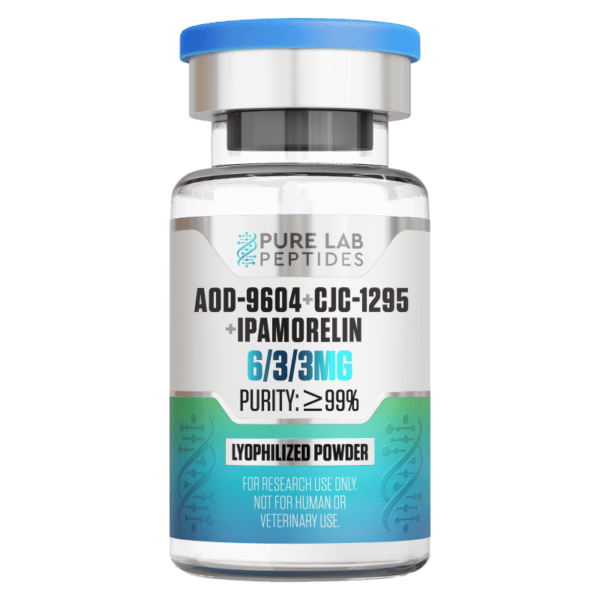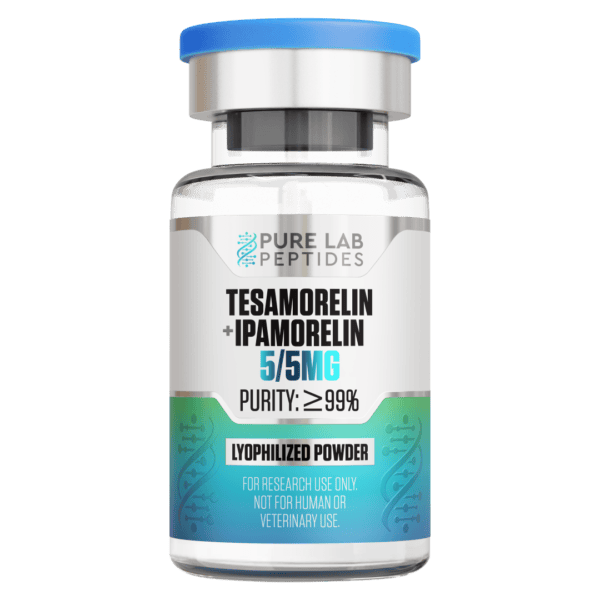

...

CJC-1295 NO DAC + Ipamorelin (10mg Blend)

$84.99

(5.0) (44 customer reviews)

Research Studies:

  • Facilitates dual-receptor investigation of growth hormone secretagogue and GHRH signaling
  • Supports analysis of pulsatile growth hormone secretion in controlled models
  • Enables comparative modeling of somatotroph-specific cAMP and calcium flux
  • Useful for evaluating synergistic ghrelin-mimetic and GHRH-analogous metabolic pathways

Blend Specification:

  • CJC-1295 No Dac 5mg
  • Ipamorelin 5mg

Quantity:

Free Shipping
Buy Peptides with confidence: Stripe-powered secure checkout and major cards accepted.
Secure payment methods for buying peptides: Visa, MasterCard, AMEX, and more.
Buy Peptides with confidence: Stripe-powered secure checkout and major cards accepted.
Secure payment methods for buying peptides: Visa, MasterCard, AMEX, and more.

FREE Shipping on 

orders over $200

ALL ARTICLES AND PRODUCT INFORMATION PROVIDED ON THIS WEBSITE ARE FOR INFORMATIONAL AND EDUCATIONAL PURPOSES ONLY. The products offered on this website are intended solely for research and laboratory use. These products are not intended for human or animal consumption. They are not medicines or drugs and have not been evaluated or approved by the FDA to diagnose, treat, cure, or prevent any disease or medical condition. Any form of bodily introduction is strictly prohibited by law.

Description

CJC-1295 No DAC + Ipamorelin (10mg Blend) is a research-use-only peptide blend supplied for controlled laboratory workflows, multi-compound documentation review, and analytical characterization. This blend is manufactured under rigorous quality standards to support consistency, traceability, and batch-specific verification for qualified laboratory settings.

Key Product Details

  • Manufactured in accordance with rigorous quality standards to support ≥99% purity, as reflected in batch-specific documentation where available.
  • Every batch is third-party analyzed for identity, assay/potency, and sterility documentation where applicable.
  • Supplied in lyophilized powder form to help preserve stability throughout transport and storage.
  • Produced with lot-level traceability to support research documentation and laboratory recordkeeping.
  • Formulated as a multi-compound research blend containing CJC-1295 No DAC and Ipamorelin, 10mg total.

Research Documentation Context

  • Supports review of multi-compound blend composition in controlled laboratory settings.
  • Provides batch-specific identity and purity documentation for research review.
  • Allows lot-level traceability across laboratory documentation workflows.
  • Supports comparison of product labeling, analytical documentation, and storage information during research planning.
  • Assists researchers in evaluating individual component amounts within a clearly disclosed peptide blend.

Specifications and Documentation

  • Blend Composition: CJC-1295 No DAC + Ipamorelin, 10mg total.
  • Certificate of Analysis: Available with batch-specific documentation where applicable.
  • Material Safety Data Sheet: Coming Soon.
  • Handling and Storage Instructions: Coming Soon.
  • Product Form: Lyophilized powder.
  • Purity Specification: ≥99% purity.
  • Intended Use: Laboratory research use only.

CJC-1295 No DAC + Ipamorelin (10mg Blend) is intended strictly for laboratory research use only. This product is not intended for human or animal consumption, therapeutic use, diagnostic use, clinical use, veterinary use, or as a food, drug, cosmetic, dietary supplement, or household product.

Additional information

CAS No.

CJC-1295 NO DAC: 863288-34-0
Ipamorelin: 170851-70-4

Sequence

CJC-1295 NO DAC: Tyr-D-Ala-Asp-Ala-Ile-Phe-Thr-Gln-Ser-Tyr-Arg-Lys-Val-Leu-Gly-Gln-Leu-Ser-Ala-Arg-Lys-Leu-Leu-Gln-Asp-Ile-Met-Gln-Arg-Gly-Ala-Gln-Gly

Ipamorelin: Aib-His-D-2-Nal-D-Phe-Lys-NH2

Molecular Formula

Varies (peptide blend)

Molecular Weight

CJC-1295 NO DAC: 3367.96 g/mol, Ipamorelin: 711.91 g/mol

Applications

Growth hormone research, muscle regeneration studies, metabolic function research

Purity

≥99%

Synthesis

Solid-phase synthesis

Solubility

Soluble in water or 1% acetic acid

Stability & Storage

Stable for up to 24 months at -20°C. After reconstitution, may be stored at 4°C for up to 4 weeks or at -20°C for up to 6 months.

Appearance

White lyophilized powder

Shipping Conditions

Shipped at ambient temperature; once received, store at -20°C

Regulatory/Compliance

Manufactured in a facility that adheres to cGMP guidelines

Safety Information

Refer to provided MSDS

There are no reviews yet.

We value your feedback. Please leave a review below:

Research Procurement Information

Buy CJC-1295 No DAC+Ipamorelin Blend Online | RUO COA Guide

Researchers searching for buy CJC-1295 No DAC+Ipamorelin Blend online should evaluate this material as research procurement, not as a consumer product. For laboratory buyers, the key considerations are compound identity, purity documentation, batch-specific COAs, lot traceability, product labeling, and storage information. This guide explains how qualified research teams can evaluate CJC-1295 No DAC+Ipamorelin 10mg Blend through Pure Lab Peptides while keeping the discussion limited to research-use-only documentation and supplier review.

Fast Answer: buy CJC-1295 No DAC+Ipamorelin Blend online

Researchers can buy CJC-1295 No DAC+Ipamorelin Blend online for laboratory research by reviewing RUO labeling, batch-specific COA documentation, purity data, identity information, storage guidance, and supplier transparency before selecting a source. Products discussed in this article are intended for laboratory research use only and are not intended for human or animal consumption.

What Does “Buy CJC-1295 No DAC+Ipamorelin Blend Online” Mean in a Research Context?

The phrase `buy CJC-1295 No DAC+Ipamorelin Blend online` is addressed here as laboratory research procurement intent, not personal-use intent. In this context, the search is about whether a research-use-only material is documented clearly enough for a qualified laboratory buyer, technical procurement team, or research institution to evaluate it before purchase.

Research procurement is different from consumer shopping. A laboratory buyer should look for RUO labeling, lot-level traceability, batch-specific documentation, product-form consistency, storage information, and supplier language that avoids therapeutic, diagnostic, veterinary, or personal-use positioning. FDA materials on RUO and IUO labeling for in vitro diagnostic products emphasize that research labeling must be tied to research intent rather than diagnostic representation, and 21 CFR 809.10 describes the statement used for certain research-phase laboratory products in the IVD context.[1] [2]

A strong procurement record should be specific enough for another laboratory reviewer to understand what was ordered, which lot was received, and which documents supported acceptance into the research inventory. That record may include the supplier name, product display name, lot number, COA identifier, stated product form, storage note, and date of documentation review. For peptide blends, the record should also clarify that the material is a blend and that the review was based on supplier documentation rather than assumptions drawn from single-component literature.

For CJC-1295 No DAC+Ipamorelin Blend research-use-only sourcing, the buying decision should center on documentation. Researchers should confirm that the product name, lot number, stated form, and CJC-1295 No DAC+Ipamorelin Blend COA align. They should also review whether the supplier presents the blend as a laboratory research material rather than a product for human or animal application.

CJC-1295 No DAC+Ipamorelin Blend Research Material Overview

CJC-1295 No DAC+Ipamorelin Blend is best described, for procurement purposes, as a two-component peptide blend intended for controlled laboratory research. Public chemical databases list CJC1295 without DAC as a peptide compound record and list ipamorelin as a defined peptide compound record.[3] [4] The product display name from Pure Lab Peptides is CJC-1295 No DAC+Ipamorelin 10mg Blend, supplied as lyophilized powder with a stated ≥99% purity claim and batch-specific COA availability.

The word “blend” matters for documentation. A single-component peptide record can focus on one compound identity, while a blend record must support the listed composition as a combined research material. Procurement teams should therefore look for CJC-1295 No DAC+Ipamorelin Blend identity testing that is appropriate to the product description, and they should confirm that the COA and product page use consistent naming. When documentation is unclear, the appropriate procurement response is to request clarification before relying on the material for laboratory planning.

Published scientific context for the two components is pathway-oriented. GHRHR is identified by UniProt as a receptor for growth-hormone-releasing factor, and GHSR is identified as a ghrelin-associated G-protein-coupled receptor.[5] [6] This receptor terminology is included only to describe research classification. It is not a product-use claim, and it should not be converted into expected outcomes for any RUO material.

The CJC-1295 literature includes work on hGRF(1-29) analog design and albumin-binding approaches. A 2005 Endocrinology paper identified CJC-1295 as a long-lasting GRF analog in a research model.[7] Product names that include “No DAC” should therefore be read carefully: procurement teams should not assume that every CJC-1295 article applies directly to a no-DAC material, and they should rely on the product page and batch-specific documentation for identity review.

Ipamorelin appears in peptide-secretagogue literature as a pentapeptide, and review literature discusses ghrelin receptor ligands as a broader research class.[8] [9] For this article, those sources are scientific context only. Blend composition should be evaluated through documentation and identity review, not expected outcomes or use protocols.

Why Researchers Search “Buy CJC-1295 No DAC+Ipamorelin Blend Online”

Researchers search “buy CJC-1295 No DAC+Ipamorelin Blend online” to compare RUO availability, product documentation, identity testing, purity data, COA access, lot number matching, supplier transparency, and product form. The search phrase may look commercial, but on this page it is treated as a research-procurement query for qualified laboratory buyers.

A procurement team may need a CJC-1295 No DAC+Ipamorelin Blend research material for compound characterization, assay development planning, reference comparison, or other controlled laboratory workflows. Before they buy CJC-1295 No DAC+Ipamorelin Blend, the team should ask whether the supplier provides clear RUO labeling, whether the COA is batch-specific, whether the stated material is a lyophilized powder, and whether the documentation connects to the same lot that will be received.

Different laboratory roles may review the same source from different angles. A scientific lead may focus on compound identity and research category, a procurement specialist may focus on supplier records and order traceability, and a quality reviewer may focus on whether the COA, label, and internal inventory entry all match. A useful online listing supports each of those roles without drifting into use instructions or outcome language.

Supplier language is also part of the quality review. A research-use-only supplier should describe identity, purity, analytical documentation, storage information, and traceability. It should not position the material for personal use, clinical use, veterinary use, diagnostic use, or outcome-based claims. This distinction is especially important for peptide blends because a blend name can tempt readers to focus on combined expectations rather than documentation. For RUO procurement, the responsible approach is to review the CJC-1295 No DAC+Ipamorelin Blend supplier documentation and keep the evaluation anchored to laboratory records.

Research Procurement Checklist for CJC-1295 No DAC+Ipamorelin Blend

  • Verify that CJC-1295 No DAC+Ipamorelin Blend is labeled for research use only.
  • Review the batch-specific certificate of analysis before procurement.
  • Confirm that the COA includes CJC-1295 No DAC+Ipamorelin Blend purity documentation and identity information.
  • Check whether HPLC, LC-MS, mass spectrometry, or another analytical method is listed.
  • Compare the product name, lot number, and documentation for consistency.
  • Assess whether the supplier avoids dosing, injection, therapeutic, diagnostic, or human-use claims.
  • Document storage and handling information in laboratory records.
  • Evaluate whether the lyophilized powder form matches the needs of the research workflow.
  • Confirm that the product is not marketed for human or animal consumption.

CJC-1295 No DAC+Ipamorelin Blend Quality Signals to Review Before Buying Online

Qualified researchers evaluating where to buy CJC-1295 No DAC+Ipamorelin Blend online should prioritize documentation over promotional language. The following table summarizes procurement signals that help separate RUO research sourcing from non-compliant consumer positioning.

Evaluation Area What Researchers Should Review Why It Matters for RUO Procurement
RUO labeling Confirm the product is clearly labeled for research use only Helps separate research procurement from human-use positioning
COA availability Review batch-specific certificate of analysis Supports lot-level documentation and quality review
Purity data Look for analytical support for the stated purity Helps evaluate material consistency
Identity testing Review HPLC, LC-MS, mass spectrometry, or related identity data where available Helps confirm the material matches the listed compound
Lot traceability Match lot numbers across product and documentation Supports research recordkeeping
Product form Confirm whether the material is supplied as lyophilized powder or another documented form Supports laboratory planning
Storage information Review storage and handling documentation Helps maintain material integrity in laboratory settings
Supplier language Confirm the supplier avoids dosing, therapeutic, or personal-use claims Supports research-use-only positioning

COA, Purity, and Identity Documentation

A useful CJC-1295 No DAC+Ipamorelin Blend COA should connect the documented lot to the material received by the laboratory. Researchers should review the compound name, lot number, test date, purity percentage, test method, identity confirmation, product form, and any chromatographic or mass data included in the batch-specific record. FDA analytical-method guidance discusses analytical procedures in relation to identity, quality, purity, and potency documentation, while ICH Q2(R2) and ICH Q14 describe principles for analytical validation and analytical procedure development.[10] [11] [12]

A purity percentage alone does not establish complete compound identity; researchers should evaluate purity, identity, method, lot number, and documentation together. This is especially important for peptide materials because analytical literature describes peptide-related impurities, structurally related peptide impurity assessment, and LC-HRMS approaches for peptide quality control.[13] [14] [15] Reference-standard literature for synthetic peptides also emphasizes vialing, lyophilization, analytical testing, and stability studies as part of a broader quality framework.[16]

For a blend, documentation review should consider both blend-level naming and component-level identity. Researchers should not rely on the product name alone. CJC-1295 No DAC+Ipamorelin Blend identity testing is stronger when the COA, label, product page, and laboratory records all support the same material description.

For CJC-1295 No DAC+Ipamorelin Blend, the documentation package should be read as a set. The product page identifies the catalog-level material, the label identifies what the laboratory receives, the COA records batch-level analytical information, and internal laboratory records capture the acceptance decision. Any mismatch among those records can create uncertainty about the material identity. Researchers should preserve documentation in a way that allows later review without depending on memory or informal supplier claims.

flowchart TD A[Receive product and COA] --> B{RUO labeling present?} B -- No --> C[Flag procurement gap] B -- Yes --> D{Lot number matches across label and COA?} D -- No --> E[Request batch-specific documentation] D -- Yes --> F{Identity supported by analytical method?} F -- No --> G[Request HPLC, LC-MS, or equivalent] F -- Yes --> H[Proceed to laboratory documentation and storage]

Research Literature Context

Published literature mentions the CJC-1295 and ipamorelin components in GHRH-pathway, secretagogue-receptor, pharmacokinetic, pharmacodynamic, and analytical-detection contexts. That literature is useful for research classification, but it does not replace lot-specific supplier documentation and it does not create product-use guidance for a research-use-only material.

The evidence landscape is uneven because some publications focus on analog chemistry, some on receptor or pathway models, some on human clinical study settings, and others on analytical detection. None of those evidence types is the same as a COA for the specific lot being procured. Literature can inform terminology and research background, but lot-specific identity and purity review must come from current supplier documentation and laboratory records.

CJC-1295 publications include human-study literature on a long-acting GHRH analog, work on pulsatile secretion during continuous stimulation, preclinical model literature, and proteomic analysis in research settings.[17] [18] [19] [20] Those studies are outside the scope of Pure Lab Peptides RUO product use. Published clinical literature should not be interpreted as use guidance for RUO materials.

Ipamorelin publications include a pharmacokinetic-pharmacodynamic study in volunteers and earlier peptide-secretagogue characterization, while broader ghrelin-receptor reviews describe ligand classes and receptor-focused drug discovery research.[21] [8] [22] Research teams should not translate those studies into dosing, administration, therapeutic, wellness, or performance claims for CJC-1295 No DAC+Ipamorelin Blend research-use-only material.

Analytical literature has also described screening and confirmation approaches for CJC-1295 and related analogs, which reinforces the broader point that peptide identity can require method-specific evidence rather than name-based assumption.[23] Pathway relevance in published literature does not establish product-use guidance for RUO materials. Blend composition should be evaluated through documentation and identity review, not expected outcomes or use protocols.

Evidence Landscape

Research Area What Literature Examines Evidence Type RUO Interpretation
Compound identity Molecular structure, sequence, formula, or classification Database / analytical Supports identification, not product-use claims
Pathway or category context Relevant receptor, pathway, biochemical class, or model-specific research area Review / in vitro / preclinical Useful for research context, not therapeutic claims
Analytical testing Purity, identity, and batch verification HPLC / LC-MS / mass spectrometry / COA Supports documentation review
Storage and stability Material form and handling considerations Laboratory documentation Supports research workflow planning

Claim Boundary Table

Research-Safe Statement Why It Is Acceptable Non-Compliant Version to Avoid
“CJC-1295 No DAC+Ipamorelin Blend is discussed in published research related to peptide pathway and secretagogue-receptor context.” Describes literature context without making a product claim “CJC-1295 No DAC+Ipamorelin Blend helps with a human outcome.”
“Researchers should review COA and identity data before procurement.” Focuses on documentation and quality review “Users should buy CJC-1295 No DAC+Ipamorelin Blend for results.”
“Pure Lab Peptides supplies CJC-1295 No DAC+Ipamorelin Blend as a research-use-only material.” Clarifies intended use “Pure Lab Peptides supplies CJC-1295 No DAC+Ipamorelin Blend for therapy.”
“The phrase buy CJC-1295 No DAC+Ipamorelin Blend online is addressed as research procurement intent.” Qualifies commercial search intent “Buy CJC-1295 No DAC+Ipamorelin Blend online for personal use.”
“Blend composition should be checked through supplier documentation and analytical identity review.” Keeps attention on documented composition “The blend should be selected for combined effects.”

How Pure Lab Peptides Presents CJC-1295 No DAC+Ipamorelin Blend

Pure Lab Peptides presents CJC-1295 No DAC+Ipamorelin 10mg Blend as a research-use-only material. The product is supplied as lyophilized powder, carries a ≥99% purity claim, and has a batch-specific COA available for documentation review. Laboratory buyers should review the product page, the COA, the product label, storage and handling documentation, and any lot-level traceability information before adding the material to research procurement records.

Because the COA is available, researchers should review it in present tense as part of procurement due diligence. The review should not be conditional or informal. A laboratory buyer can compare the COA to the product page, confirm that the listed material is CJC-1295 No DAC+Ipamorelin 10mg Blend, and document the stated purity claim, product form, and lot-level information in internal records.

Review the Pure Lab Peptides CJC-1295 No DAC+Ipamorelin Blend research-use-only product details for RUO labeling, product details, purity information, and batch-specific documentation. Researchers comparing related laboratory materials can also review the Pure Lab Peptides research peptide collection. The important procurement question is not whether a product page sounds persuasive; it is whether the CJC-1295 No DAC+Ipamorelin Blend purity documentation, identity information, COA, product form, storage details, and supplier transparency support controlled laboratory recordkeeping.

Common Misunderstandings About Buying CJC-1295 No DAC+Ipamorelin Blend Online

Misunderstanding: “Buy CJC-1295 No DAC+Ipamorelin Blend online” means personal use

Buy CJC-1295 No DAC+Ipamorelin Blend online should not be interpreted as personal-use guidance on this page. The phrase is addressed as laboratory procurement intent for qualified researchers reviewing RUO labeling, documentation, purity data, identity information, lot traceability, and supplier transparency.

Misunderstanding: Published literature equals product-use guidance

Published literature may describe receptor systems, peptide analogs, model-based findings, or analytical methods. That literature should not be translated into guidance for RUO materials. A CJC-1295 No DAC+Ipamorelin Blend research material should be evaluated through documentation, not through clinical, wellness, or outcome-based assumptions.

Misunderstanding: Purity percentage alone proves identity

A purity percentage is only one data point. Researchers should review the analytical method, identity evidence, lot number, product name, and COA consistency together. For peptide blends, identity review should account for the component naming and the blend-level documentation rather than relying only on a headline purity claim.

Misunderstanding: COA documentation does not need to be batch-specific

COA documentation is most useful when it is batch-specific and tied to the lot received by the laboratory. A general specification sheet cannot replace lot-level documentation. Procurement records should connect the CJC-1295 No DAC+Ipamorelin Blend COA, label, and product page to the same research material.

Misunderstanding: RUO labeling supports human or animal use

RUO labeling does not support human use, animal use, clinical use, diagnostic use, veterinary use, or consumer use. It narrows the intended context to controlled laboratory research. Qualified buyers should confirm that supplier language remains consistent with the research-use-only label.

Misunderstanding: Supplier claims can replace analytical documentation

Supplier transparency is valuable only when it is supported by documentation. Researchers should look for CJC-1295 No DAC+Ipamorelin Blend supplier documentation that includes COA access, purity information, identity testing, lot traceability, product form, and storage information. Claims without documentation should not drive procurement decisions.

FAQs About Buying CJC-1295 No DAC+Ipamorelin Blend Online for Research

Where can researchers buy CJC-1295 No DAC+Ipamorelin Blend online for laboratory research?

Researchers can buy CJC-1295 No DAC+Ipamorelin Blend online for laboratory research from an RUO supplier that provides clear labeling, batch-specific COA documentation, purity information, identity review materials, storage details, and lot-level traceability. Pure Lab Peptides provides a product page for qualified research procurement review.

What should researchers check before buying CJC-1295 No DAC+Ipamorelin Blend online?

Before buying CJC-1295 No DAC+Ipamorelin Blend online, researchers should check RUO labeling, the batch-specific COA, product-form description, stated purity, identity testing method, lot number consistency, supplier documentation, and storage information. The review should remain focused on laboratory procurement rather than any personal-use interpretation.

Why does a COA matter when buying CJC-1295 No DAC+Ipamorelin Blend?

A COA matters when buying CJC-1295 No DAC+Ipamorelin Blend because it connects the research material to batch-specific documentation. Researchers should use the COA to review purity, identity, test method, lot number, and product-name consistency. The COA should be read with the label and product page.

Is CJC-1295 No DAC+Ipamorelin Blend intended for human or animal consumption?

CJC-1295 No DAC+Ipamorelin Blend is not intended for human or animal consumption. In this article, the material is discussed only as a research-use-only compound for laboratory procurement review. It is not presented for clinical, diagnostic, veterinary, personal, therapeutic, wellness, or consumer use.

What does research use only mean for CJC-1295 No DAC+Ipamorelin Blend?

Research use only means CJC-1295 No DAC+Ipamorelin Blend should be evaluated as a laboratory research material. The procurement focus is documentation: RUO labeling, batch-specific COA availability, purity support, identity testing, lot traceability, supplier transparency, and storage information. RUO language does not create permission for non-research use.

How should published literature about CJC-1295 No DAC+Ipamorelin Blend be interpreted?

Published literature about the components of CJC-1295 No DAC+Ipamorelin Blend should be interpreted as scientific context, not as product-use guidance. Researchers may use literature to understand classification, analytical methods, or receptor-pathway terminology, while keeping procurement decisions anchored to current RUO documentation.

Next Steps

Qualified researchers evaluating CJC-1295 No DAC+Ipamorelin Blend should review product labeling, COA status, identity documentation, storage information, and supplier transparency. Review the CJC-1295 No DAC+Ipamorelin Blend product page for RUO labeling, purity information, and available batch-specific documentation.

References

  1. U.S. Food and Drug Administration. “Distribution of In Vitro Diagnostic Products Labeled for Research Use Only or Investigational Use Only.” FDA Guidance Document. 2013. fda.gov/regulatory-information/search-fda-guidance-documents/distribution-in-vitro-diagnostic-products-labeled-research-use-only-or-investigational-use-only
  2. Electronic Code of Federal Regulations. “21 CFR 809.10 – Labeling for in vitro diagnostic products.” eCFR. Current. ecfr.gov/current/title-21/chapter-I/subchapter-H/part-809/subpart-B/section-809.10
  3. National Center for Biotechnology Information. “CJC1295 Without DAC.” PubChem Compound Summary. Current. pubchem.ncbi.nlm.nih.gov/compound/CJC1295-Without-DAC
  4. National Center for Biotechnology Information. “Ipamorelin.” PubChem Compound Summary. Current. pubchem.ncbi.nlm.nih.gov/compound/Ipamorelin
  5. UniProt Consortium. “GHRHR – Growth hormone-releasing hormone receptor.” UniProtKB. Current. uniprot.org/uniprotkb/Q02643/entry
  6. UniProt Consortium. “GHSR – Growth hormone secretagogue receptor type 1.” UniProtKB. Current. uniprot.org/uniprotkb/Q92847/entry
  7. Jetté L, Léger R, Thibaudeau K, Benquet C, Robitaille M, Pellerin I, Paradis V, van Wyk P, Pham K, Bridon DP. “Human growth hormone-releasing factor (hGRF)1-29-albumin bioconjugates activate the GRF receptor on the anterior pituitary in rats: identification of CJC-1295 as a long-lasting GRF analog.” Endocrinology. 2005. pubmed.ncbi.nlm.nih.gov/15817669
  8. Raun K, Hansen BS, Johansen NL, Thøgersen H, Madsen K, Ankersen M, Andersen PH. “Ipamorelin, the first selective growth hormone secretagogue.” European Journal of Endocrinology. 1998. pubmed.ncbi.nlm.nih.gov/9849822
  9. Moulin A, Demange L, Berge G, Gagne D, Ryan J, Mousseaux D. “Recent Developments in Ghrelin Receptor Ligands.” ChemMedChem. 2007. pubmed.ncbi.nlm.nih.gov/17520591
  10. U.S. Food and Drug Administration. “Analytical Procedures and Methods Validation for Drugs and Biologics.” FDA Guidance Document. 2015. fda.gov/regulatory-information/search-fda-guidance-documents/analytical-procedures-and-methods-validation-drugs-and-biologics
  11. International Council for Harmonisation. “Q2(R2) Validation of Analytical Procedures.” ICH Quality Guideline. 2023. database.ich.org/sites/default/files/ICH_Q2%28R2%29_Guideline_2023_1130.pdf
  12. International Council for Harmonisation. “Q14 Analytical Procedure Development.” ICH Quality Guideline. 2023. database.ich.org/sites/default/files/ICH_Q14_Guideline_2023_1116.pdf
  13. Zeng K, Geerlof-Vidavisky I, Gucinski A, Jiang X, Boyne MT. “Liquid Chromatography-High Resolution Mass Spectrometry for Peptide Drug Quality Control.” AAPS Journal. 2015. pubmed.ncbi.nlm.nih.gov/25716148
  14. Li M, Josephs RD, Daireaux A, et al. “Identification and accurate quantification of structurally related peptide impurities in synthetic human C-peptide by liquid chromatography-high resolution mass spectrometry.” Analytical and Bioanalytical Chemistry. 2018. pubmed.ncbi.nlm.nih.gov/29862433
  15. D’Hondt M, Bracke N, Taevernier L, et al. “Related impurities in peptide medicines.” Journal of Pharmaceutical and Biomedical Analysis. 2014. pubmed.ncbi.nlm.nih.gov/25044089
  16. McCarthy D, Han Y, Carrick K, Schmidt D, Workman W, Matejtschuk P, Duru C, Atouf F. “Reference Standards to Support Quality of Synthetic Peptide Therapeutics.” Pharmaceutical Research. 2023. pubmed.ncbi.nlm.nih.gov/36949371
  17. Teichman SL, Neale AC, Lawrence B, Gagnon C, Castaigne JP, Frohman LA. “Prolonged stimulation of growth hormone (GH) and insulin-like growth factor I secretion by CJC-1295, a long-acting analog of GH-releasing hormone, in healthy adults.” Journal of Clinical Endocrinology and Metabolism. 2006. pubmed.ncbi.nlm.nih.gov/16352683
  18. Ionescu M, Frohman LA. “Pulsatile secretion of growth hormone (GH) persists during continuous stimulation by CJC-1295, a long-acting GH-releasing hormone analog.” Journal of Clinical Endocrinology and Metabolism. 2006. pubmed.ncbi.nlm.nih.gov/17018654
  19. Alba M, Fintini D, Sagazio A, Lawrence B, Castaigne JP, Frohman LA, Salvatori R. “Once-daily administration of CJC-1295, a long-acting growth hormone-releasing hormone (GHRH) analog, normalizes growth in the GHRH knockout mouse.” American Journal of Physiology-Endocrinology and Metabolism. 2006. pubmed.ncbi.nlm.nih.gov/16822960
  20. Sackmann-Sala L, Ding J, Frohman LA, Kopchick JJ. “Activation of the GH/IGF-1 axis by CJC-1295, a long-acting GHRH analog, results in serum protein profile changes in normal adult subjects.” Growth Hormone & IGF Research. 2009. pmc.ncbi.nlm.nih.gov/articles/PMC2787983
  21. Gobburu JV, Agersø H, Jusko WJ, Ynddal L. “Pharmacokinetic-pharmacodynamic modeling of ipamorelin, a growth hormone releasing peptide, in human volunteers.” Pharmaceutical Research. 1999. pubmed.ncbi.nlm.nih.gov/10496658
  22. Vodnik M, Strukelj B, Lunder M. “Ghrelin Receptor Ligands Reaching Clinical Trials: From Peptides to Peptidomimetics; from Agonists to Antagonists.” Hormone and Metabolic Research. 2016. pubmed.ncbi.nlm.nih.gov/26551992
  23. Timms M, Ganio K, Forbes G, Bailey S, Steel R. “An immuno polymerase chain reaction screen for the detection of CJC-1295 and other growth-hormone-releasing hormone analogs in equine plasma.” Drug Testing and Analysis. 2019. pubmed.ncbi.nlm.nih.gov/30489688

Have Questions?

Our team is ready to assist you with any inquiries regarding our catalogue of peptides and their applications.

0