



Peptide Lot Traceability: Following Material Records

TL;DR · The short version
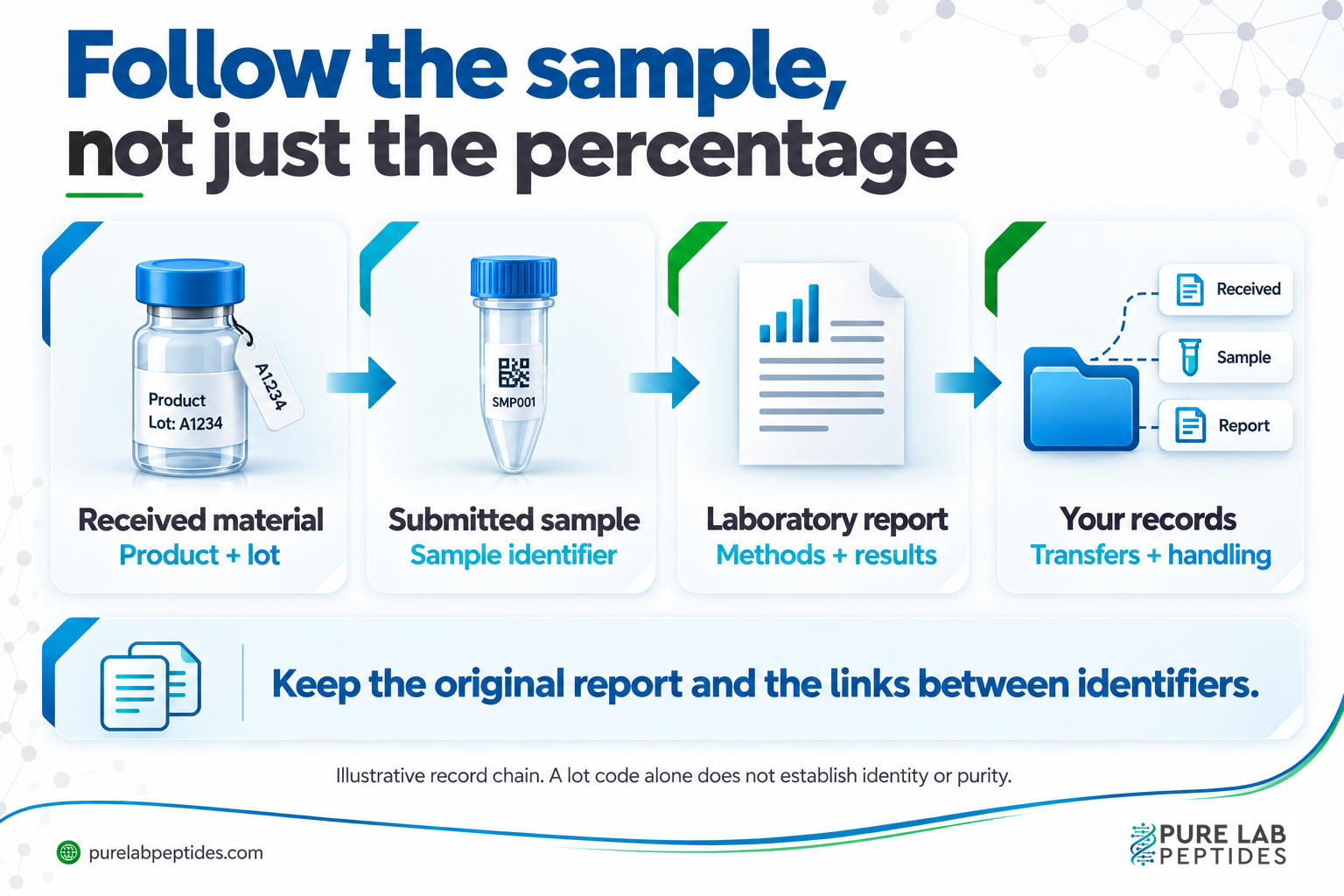
Peptide lot traceability connects the vial you received with its report and later preparations. Supplier lots, laboratory sample IDs and internal inventory codes may differ. Keep their documented mapping and the report version associated with that material.
Different numbers on a vial and report don’t immediately prove a COA mismatch. First check whether one is a supplier lot and the other a laboratory sample identifier.
Peptide lot traceability preserves that link through receipt and experiment. The supplied material, submitted sample and internal inventory may each have a code. Keep the relationship in the vial’s record when the website features a later batch.
Start with the physical label
TL;DR: Start with the vial’s product, presentation and lot, then locate the corresponding report.
Begin with the vial’s presentation, label amount and lot. Locate the original report, saving its identifier and source link. A branded summary should retain that route to the source; order and tracking numbers describe other purchase events.
| Identifier | What it follows | Connection to retain |
|---|---|---|
| Supplier lot | The supplied material group | Vial label and applicable product record |
| Laboratory sample ID | The sample submitted to the laboratory | Its documented relationship to the supplier lot |
| Report number and revision | The analytical document | The version actually reviewed |
| Internal inventory or container ID | Your laboratory’s received material or later preparation | The parent receipt, lot and relevant handling events |
Three common matching situations
TL;DR: A different sample ID or a newer featured batch can be legitimate; retain the documented relationship.
The same lot appears on both records. Confirm that the product and presentation also agree, then keep the report with the receiving entry. A shared number is useful only in the context of the correct material.
Separate laboratory and supplier numbering can be legitimate. Find the documented connection between the codes rather than editing either to force a match.
A newer featured report may apply correctly to new stock. It doesn’t replace the historical report for a vial already in your laboratory. Retain the record tied to the received lot.
Follow material after receipt
TL;DR: Link transfers and preparations back to their parent material and record relevant handling events.
A practical chain is received lot → inventory entry → internal container or preparation → experimental record. Each transfer should keep its parent relationship and the relevant date or event. The Receiving, Storage & Traceability Record offers a printable starting point.
A timestamp establishes delivery, not every earlier temperature. A test date isn’t automatically manufacture or expiry. Record those events separately from assumptions about them.
Resolve a mismatch without erasing it
TL;DR: Preserve conflicting records and ask which identifier maps to which lot; do not silently relabel them.
Keep the label, summary and source report while asking about the disputed field. Identify the product, presentation, lot and report in the question. Save the mapping explanation with the record it resolves.
Another same-name report won’t resolve which lot was tested. Leave the mismatch visible until the responsible reviewer has supporting evidence.
Material history is not metrological traceability
TL;DR: Material history and a measurement’s calibration chain are different forms of traceability.
Tracing a lot follows material and records. Metrological traceability connects a measurement result to a reference through a documented calibration chain. Neither establishes the other. NIST’s traceability guidance explains why the word needs its measurement context.
Once the vial-to-report relationship is clear, read the analytical fields to interpret identity, purity and content. The lot connection answers which material the report concerns; the tests answer what was measured.