
Researchers searching for buy MOTS-c online should evaluate MOTS-c as a research-use-only laboratory material, not a consumer product. For laboratory buyers, the key considerations are compound identity, purity documentation, batch-specific COAs, lot traceability, product labeling, and storage information. This guide explains how to evaluate MOTS-c for controlled research procurement through Pure Lab Peptides while keeping commercial search intent limited to qualified research-use-only sourcing.
Fast Answer: buy MOTS-c online
Researchers can buy MOTS-c online for laboratory research by reviewing RUO labeling, batch-specific COA documentation, purity data, identity information, storage guidance, and supplier transparency before selecting a source. Products discussed in this article are intended for laboratory research use only and are not intended for human or animal consumption.
What Does “Buy MOTS-c Online” Mean in a Research Context?
The phrase `buy MOTS-c online` is addressed here as laboratory research procurement intent, not personal-use intent. In this context, the searcher is presumed to be a qualified researcher, laboratory buyer, technical procurement team, or research institution comparing research-use-only materials, documentation, and supplier practices.
Research procurement is documentation-led. A laboratory buyer should review RUO labeling, product identity, batch-specific COA availability, purity documentation, identity testing, lot traceability, and storage information before selecting a source. FDA guidance on RUO and IUO labeling is specific to in vitro diagnostic contexts, but it illustrates the broader importance of clearly separating research materials from diagnostic or clinical positioning [1]. Federal labeling rules for general laboratory reagents also emphasize identity, purity or quality statements, storage instructions, and lot or control numbers as useful documentation elements [2].
For a MOTS-c research-use-only procurement review, the practical question is not whether a published study describes a biological pathway. The question is whether the supplier presents MOTS-c as a controlled laboratory research material with transparent documentation, consistent labeling, and batch-level records.
MOTS-c Research Material Overview
MOTS-c is commonly described in research literature as a mitochondrial-derived peptide associated with a short open reading frame in the mitochondrial 12S rRNA region. Public chemical databases identify MOTS-c as a peptide compound and list molecular data such as formula and structural descriptors [3]. Protein sequence resources identify the human MOTS-c entry as a mitochondrial-derived peptide and an alternative name as mitochondrial open reading frame of the 12S rRNA-c [4]. NCBI Gene records identify MT-RNR1 as the human mitochondrial 12S rRNA gene, which is relevant to the broader genetic context discussed in MOTS-c literature [5].
Published work from Lee and colleagues introduced MOTS-c in the mitochondrial-derived peptide research literature and examined it in model systems related to metabolic pathways [6]. Later work reported that MOTS-c may translocate to the nucleus in response to metabolic stress in experimental settings, supporting its role as a subject of mitochondrial-nuclear signaling research rather than a basis for product-use claims [7].
For procurement purposes, MOTS-c should be treated as a MOTS-c research material whose value to a laboratory workflow depends on identity confirmation, analytical documentation, batch-specific COA review, storage records, and supplier transparency. Metabolic pathway literature should not be translated into weight-loss, performance, or wellness claims for RUO materials.
Why Researchers Search “Buy MOTS-c Online”
Researchers may search “buy MOTS-c online” to compare RUO product availability, product form, COA access, purity data, supplier documentation, and lot-level traceability. The buying intent is commercial, but the compliant framing is laboratory procurement. A technical buyer searching where to buy MOTS-c should prioritize documentation over promotional language.
Common procurement review questions include whether the MOTS-c COA is batch-specific, whether the stated compound name matches the product label, whether the supplier provides MOTS-c purity documentation, whether MOTS-c identity testing is supported by analytical methods, and whether MOTS-c supplier documentation avoids clinical, diagnostic, veterinary, therapeutic, or personal-use positioning.
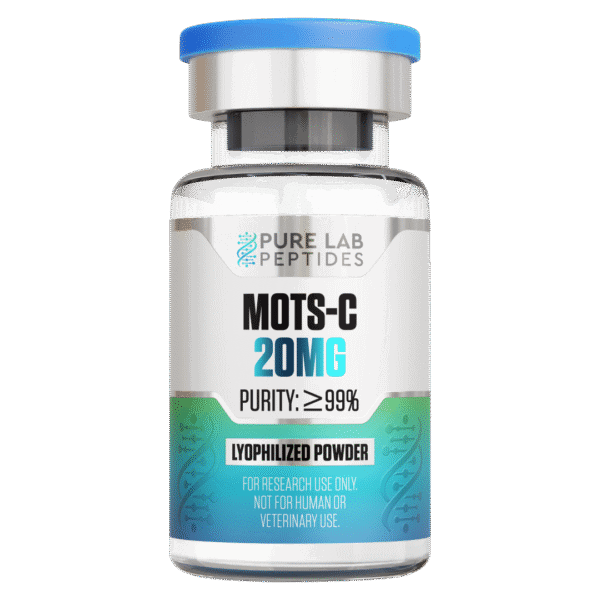
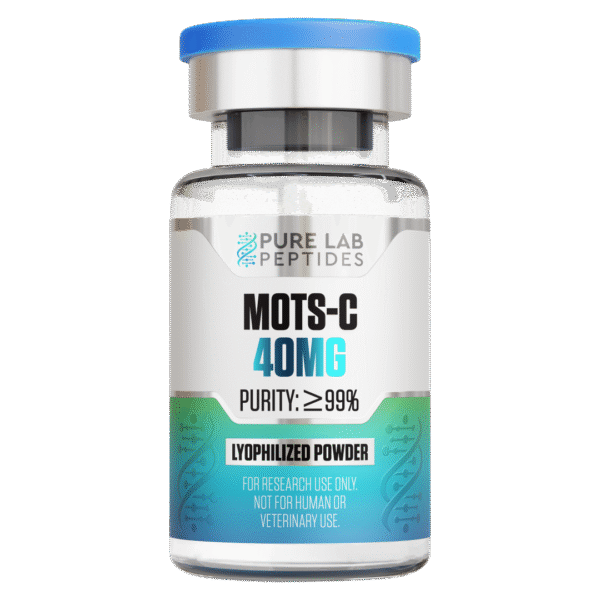
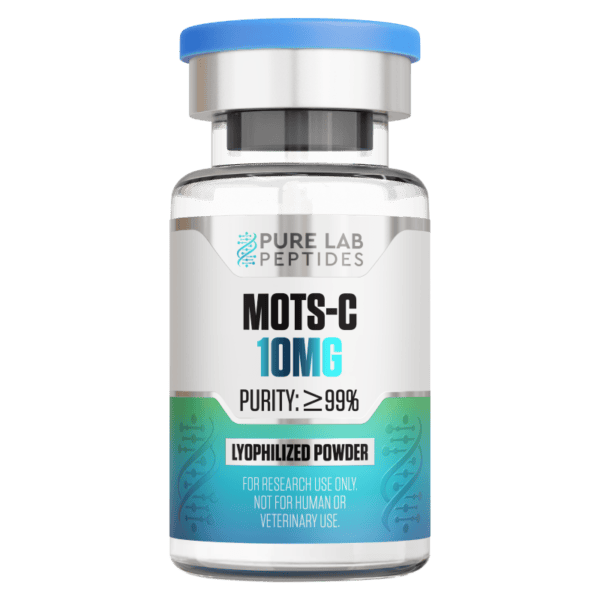
For MOTS-c 5mg from Pure Lab Peptides, the relevant evaluation points are RUO labeling, ≥99% purity claim, lyophilized powder form, batch-specific COA availability, product details, storage documentation, and lot-level traceability.
Research Procurement Checklist for MOTS-c
- Verify that MOTS-c is labeled for research use only.
- Review the batch-specific certificate of analysis before procurement.
- Confirm that the COA includes identity and purity documentation.
- Check whether HPLC, LC-MS, mass spectrometry, or another analytical method is listed.
- Compare the product name, lot number, and documentation for consistency.
- Assess whether the supplier avoids dosing, injection, therapeutic, diagnostic, veterinary, or human-use claims.
- Document storage and handling information in laboratory records.
- Evaluate whether the lyophilized powder form matches the needs of the research workflow.
- Confirm that the product is not marketed for human or animal consumption.
MOTS-c Quality Signals to Review Before Buying Online
Researchers evaluating where to buy MOTS-c online for laboratory research should treat quality signals as documentation checkpoints. A strong procurement review compares supplier language, COA status, analytical testing, product form, lot consistency, and storage information together rather than relying on a single purity claim.
| Evaluation Area | What Researchers Should Review | Why It Matters for RUO Procurement |
| RUO labeling | Confirm the product is clearly labeled for research use only | Helps separate research procurement from human-use positioning |
| COA availability | Review batch-specific certificate of analysis | Supports lot-level documentation and quality review |
| Purity data | Look for analytical support for the stated purity | Helps evaluate material consistency |
| Identity testing | Review HPLC, LC-MS, mass spectrometry, or related identity data where available | Helps confirm the material matches the listed compound |
| Lot traceability | Match lot numbers across product and documentation | Supports research recordkeeping |
| Product form | Confirm whether the material is supplied as lyophilized powder or another documented form | Supports laboratory planning |
| Storage information | Review storage and handling documentation | Helps maintain material integrity in laboratory settings |
| Supplier language | Confirm the supplier avoids dosing, therapeutic, or personal-use claims | Supports research-use-only positioning |
COA, Purity, and Identity Documentation
A MOTS-c COA should be reviewed as part of a complete documentation package. Researchers should look for compound name, lot number, test date, purity percentage, testing method, identity confirmation, molecular weight or sequence information where relevant, chromatogram or mass data where available, product form, and storage documentation. A purity percentage alone does not establish complete compound identity; researchers should evaluate purity, identity, method, lot number, and documentation together.
Analytical procedure validation guidance from FDA and ICH describes validation as a framework for demonstrating that an analytical procedure is fit for its intended purpose [16]. ISO/IEC 17025 addresses competence, impartiality, and consistent operation of testing and calibration laboratories [17]. Eurachem guidance on traceability in chemical measurement emphasizes traceability principles for quantitative chemical analysis [18].
HPLC and mass spectrometry are common analytical concepts in peptide documentation. IUPAC defines liquid chromatography as a separation technique using a liquid mobile phase and notes that modern high-pressure liquid chromatography is often characterized as HPLC [19]. IUPAC defines mass spectrometry as the branch of science dealing with mass spectroscopes and their results [20]. NIST peptide mass spectral library documentation describes peptide MS/MS spectra generated using tandem mass spectrometers with liquid chromatographic separations, supporting the relevance of LC-MS/MS concepts for peptide identification workflows [21]. Eurachem method validation guidance also highlights fitness for purpose, validation and verification, performance characteristics, and analytical method documentation [22].
flowchart TD
A[Receive product and COA] --> B{RUO labeling present?}
B -- No --> C[Flag procurement gap]
B -- Yes --> D{Lot number matches across label and COA?}
D -- No --> E[Request batch-specific documentation]
D -- Yes --> F{Identity supported by analytical method?}
F -- No --> G[Request HPLC, LC-MS, or equivalent]
F -- Yes --> H[Proceed to laboratory documentation and storage]
Research Literature Context
Published MOTS-c literature is best interpreted as scientific context, not as product-use guidance. Reviews describe MOTS-c within mitochondrial-derived peptide and mitochondrial signaling research [8]. Additional reviews summarize model-system literature related to stress, metabolism, and mitochondrial peptide signaling [9]. A Frontiers review identifies MOTS-c as a 16-amino-acid mitochondrial-derived peptide encoded by the 12S rRNA region and summarizes research directions in the field [10].
The evidence landscape includes database records, in vitro studies, preclinical models, review articles, and limited human study settings. Mohtashami and colleagues reviewed MOTS-c as a mitochondrial-derived peptide in a disease-research context [11]. Reynolds and colleagues studied MOTS-c in exercise-related model systems [12]. Dieli-Conwright and colleagues examined MOTS-c measurements in a human exercise-intervention study setting, which should be interpreted as published clinical literature outside the scope of RUO product use [13].
Recent work has continued to investigate molecular targets and pathway models, including a 2024 iScience paper discussing CK2 binding and activation in experimental systems [14]. Other reviews, including Gao and colleagues, discuss metabolic-disorder research areas, but those discussions should not be converted into product claims for MOTS-c research-use-only materials [15]. Published clinical literature should not be interpreted as use guidance for RUO materials.
Evidence Landscape
| Research Area | What Literature Examines | Evidence Type | RUO Interpretation |
| Compound identity | Molecular structure, sequence, formula, or classification | Database / analytical | Supports identification, not product-use claims |
| Pathway or category context | Mitochondrial-derived peptide research, mitochondrial signaling, and model-specific pathway literature | Review / in vitro / preclinical | Useful for research context, not therapeutic claims |
| Analytical testing | Purity, identity, and batch verification | HPLC / LC-MS / mass spectrometry / COA | Supports documentation review |
| Storage and stability | Material form and handling considerations | Laboratory documentation | Supports research workflow planning |
Claim Boundary Table
| Research-Safe Statement | Why It Is Acceptable | Non-Compliant Version to Avoid |
| “MOTS-c is discussed in published research related to mitochondrial-derived peptide and metabolic pathway models.” | Describes literature context without making a product claim | “MOTS-c helps with a human outcome.” |
| “Researchers should review COA and identity data before procurement.” | Focuses on documentation and quality review | “Users should buy MOTS-c for results.” |
| “Pure Lab Peptides supplies MOTS-c as a research-use-only material.” | Clarifies intended use | “Pure Lab Peptides supplies MOTS-c for therapy.” |
| “The phrase buy MOTS-c online is addressed as research procurement intent.” | Qualifies commercial search intent | “Buy MOTS-c online for personal use.” |
| “MOTS-c pathway literature should be reviewed as scientific context.” | Separates literature review from product-use claims | “MOTS-c produces personal outcomes.” |
How Pure Lab Peptides Presents MOTS-c
Pure Lab Peptides presents MOTS-c 5mg as a research-use-only material. The product is supplied as lyophilized powder with a ≥99% purity claim, and a batch-specific COA is available for documentation review. Researchers should review the product page, product labeling, purity information, storage and handling documentation, lot-level traceability, and batch-specific documentation before procurement.
Review the Pure Lab Peptides MOTS-c research-use-only product page for RUO labeling, product details, purity information, and batch-specific documentation. Researchers comparing additional RUO materials can also review the Pure Lab Peptides research peptide collection.
Common Misunderstandings About Buying MOTS-c Online
Misunderstanding: “Buy MOTS-c online” means personal use
Buy MOTS-c online should not be interpreted as personal-use guidance on this page. The phrase is addressed as laboratory procurement intent for qualified researchers reviewing RUO labeling, documentation, purity data, identity information, and supplier transparency.
Misunderstanding: Published literature equals product-use guidance
Published MOTS-c literature may describe databases, cellular models, preclinical models, pathway hypotheses, or limited human study settings. That literature should not be treated as instructions, expected outcomes, or use guidance for MOTS-c research-use-only materials.
Misunderstanding: Purity percentage alone proves identity
A stated purity percentage is only one documentation element. Researchers should evaluate MOTS-c purity documentation together with identity data, analytical method, lot number, product name, molecular information, product form, and supplier records.
Misunderstanding: COA documentation does not need to be batch-specific
Batch-specific documentation matters because research records depend on matching the material received to the COA reviewed. A MOTS-c COA should align with the product label, lot number, and supplier documentation used in laboratory records.
Misunderstanding: RUO labeling supports human or animal use
RUO labeling does not support human use, animal use, clinical use, diagnostic use, veterinary use, or consumer use. RUO labeling limits the procurement discussion to controlled laboratory research settings and documentation review.
FAQs About Buying MOTS-c Online for Research
Where can researchers buy MOTS-c online for laboratory research?
Researchers can buy MOTS-c online for laboratory research by reviewing suppliers that clearly present MOTS-c as an RUO material. Pure Lab Peptides provides a MOTS-c 5mg product page with research-use-only positioning, product form details, purity information, and available batch-specific COA documentation for procurement review.
What should researchers check before buying MOTS-c online?
Before buying MOTS-c online, researchers should check RUO labeling, batch-specific COA availability, MOTS-c purity documentation, MOTS-c identity testing, storage information, lot traceability, supplier language, and product form. The supplier should avoid claims that frame the material for human, animal, clinical, diagnostic, or personal use.
Why does a COA matter when buying MOTS-c?
A COA matters when buying MOTS-c because it supports batch-level review of identity, purity, lot number, testing method, and documentation consistency. Researchers should not treat a COA as a substitute for internal laboratory controls, but it is an important procurement document for technical review and recordkeeping.
Is MOTS-c intended for human or animal consumption?
MOTS-c discussed here is not intended for human or animal consumption. This article addresses MOTS-c research-use-only procurement, not clinical use, veterinary use, consumer use, personal use, or therapeutic use. Qualified laboratory teams should evaluate documentation and labeling within controlled research procurement processes.
What does research use only mean for MOTS-c?
Research use only means MOTS-c is positioned as a laboratory research material for controlled research settings. It does not mean the material is intended for diagnostic procedures, clinical applications, veterinary applications, personal use, or consumer use. RUO procurement should focus on labeling, COA review, analytical documentation, and traceability.
How should published literature about MOTS-c be interpreted?
Published literature about MOTS-c should be interpreted as scientific context for qualified researchers. Database records, reviews, cellular studies, preclinical models, and limited human study settings do not create product-use instructions for RUO materials. Researchers should separate literature review from procurement documentation and supplier evaluation.
Next Steps
Qualified researchers evaluating MOTS-c should review product labeling, COA status, identity documentation, purity information, storage guidance, lot-level traceability, and supplier transparency. Review the MOTS-c product page for RUO labeling, purity information, and available batch-specific documentation.
References
- U.S. Food and Drug Administration. “Distribution of In Vitro Diagnostic Products Labeled for Research Use Only or Investigational Use Only.” FDA Guidance Document. 2013, current page 2018. fda.gov
- Electronic Code of Federal Regulations. “21 CFR 809.10 – Labeling for in vitro diagnostic products.” eCFR. Current. ecfr.gov
- National Center for Biotechnology Information. “Mots-c | C101H152N28O22S2 | CID 146675088.” PubChem Compound Database. Current. pubchem.ncbi.nlm.nih.gov/compound/Mots-c
- UniProt Consortium. “Mitochondrial-derived peptide MOTS-c (human), A0A0C5B5G6.” UniProtKB. Current. uniprot.org/uniprotkb/A0A0C5B5G6/entry
- National Center for Biotechnology Information. “MT-RNR1 mitochondrially encoded 12S RNA [Homo sapiens].” NCBI Gene. Current. ncbi.nlm.nih.gov/gene/4549
- Lee C, Zeng J, Drew BG, Sallam T, Martin-Montalvo A, Wan J, et al. “The mitochondrial-derived peptide MOTS-c promotes metabolic homeostasis and reduces obesity and insulin resistance.” Cell Metabolism. 2015;21(3):443-454. doi.org/10.1016/j.cmet.2015.02.009
- Kim KH, Son JM, Benayoun BA, Lee C. “The mitochondrial-encoded peptide MOTS-c translocates to the nucleus to regulate nuclear gene expression in response to metabolic stress.” Cell Metabolism. 2018;28(4):516-524.e7. doi.org/10.1016/j.cmet.2018.06.008
- Lee C, Kim KH, Cohen P. “MOTS-c: A novel mitochondrial-derived peptide regulating muscle and fat metabolism.” Free Radical Biology and Medicine. 2016;100:182-187. doi.org/10.1016/j.freeradbiomed.2016.05.015
- Wan W, Zhang L, Lin Y, Rao X, Wang X, Hua F, Ying J. “Mitochondria-derived peptide MOTS-c: effects and mechanisms related to stress, metabolism and aging.” Journal of Translational Medicine. 2023;21:36. doi.org/10.1186/s12967-023-03885-2
- Zheng Y, Wei Z, Wang T. “MOTS-c: A promising mitochondrial-derived peptide for therapeutic exploitation.” Frontiers in Endocrinology. 2023;14:1120533. doi.org/10.3389/fendo.2023.1120533
- Mohtashami Z, Singh MK, Salimiaghdam N, Ozgul M, Kenney MC. “MOTS-c, the Most Recent Mitochondrial Derived Peptide in Human Aging and Age-Related Diseases.” International Journal of Molecular Sciences. 2022;23(19):11991. doi.org/10.3390/ijms231911991
- Reynolds JC, Lai RW, Woodhead JST, Joly JH, Mitchell CJ, Cameron-Smith D, et al. “MOTS-c is an exercise-induced mitochondrial-encoded regulator of age-dependent physical decline and muscle homeostasis.” Nature Communications. 2021;12:470. doi.org/10.1038/s41467-020-20790-0
- Dieli-Conwright CM, Sami N, Norris MK, Wan J, Kumagai H, Kim SJ, Cohen P. “Effect of aerobic and resistance exercise on the mitochondrial peptide MOTS-c in Hispanic and Non-Hispanic White breast cancer survivors.” Scientific Reports. 2021;11:16916. doi.org/10.1038/s41598-021-96419-z
- Kumagai H, Kim SJ, Miller B, Zempo H, Tanisawa K, Natsume T, et al. “MOTS-c modulates skeletal muscle function by directly binding and activating CK2.” iScience. 2024;27(11):111212. doi.org/10.1016/j.isci.2024.111212
- Gao Y, Wei X, Wei P, Lu H, Zhong L, Tan J, Liu H, Liu Z. “MOTS-c Functionally Prevents Metabolic Disorders.” Metabolites. 2023;13(1):125. doi.org/10.3390/metabo13010125
- U.S. Food and Drug Administration. “Q2(R2) Validation of Analytical Procedures.” FDA Guidance Document. 2024. fda.gov
- International Organization for Standardization. “ISO/IEC 17025:2017 General requirements for the competence of testing and calibration laboratories.” ISO. 2017, confirmed 2023. iso.org/standard/66912.html
- Ellison SLR, Williams A, editors. “Eurachem/CITAC Guide: Metrological traceability in chemical measurement.” Eurachem. 2019. eurachem.org
- International Union of Pure and Applied Chemistry. “Liquid chromatography.” IUPAC Compendium of Chemical Terminology, Gold Book. 2025 online version. doi.org/10.1351/goldbook.L03578
- International Union of Pure and Applied Chemistry. “Mass spectrometry.” IUPAC Compendium of Chemical Terminology, Gold Book. 2025 online version. doi.org/10.1351/goldbook.M03746
- National Institute of Standards and Technology. “NIST Libraries of Peptide Tandem Mass Spectra.” NIST Mass Spectrometry Data Center. 2022. chemdata.nist.gov
- Cantwell H, editor. “The Fitness for Purpose of Analytical Methods: A Laboratory Guide to Method Validation and Related Topics.” Eurachem Guide, 3rd edition. 2025. eurachem.org
There are no reviews yet.