

...
Analytical Methods

Dual-Receptor Incretin Compounds: GLP-1/GIP Research Peptides

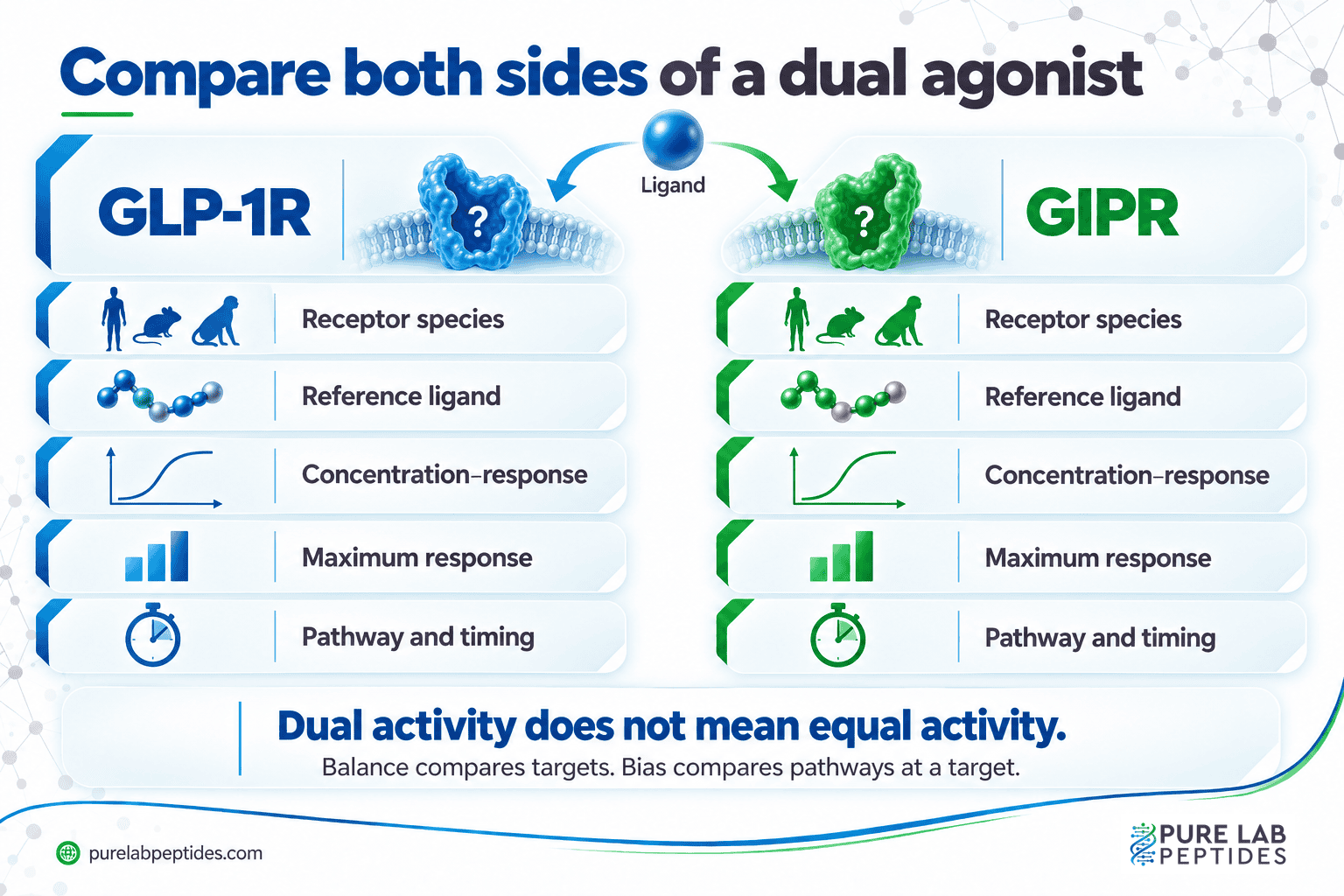
Dual-receptor compounds in incretin research are peptides engineered to stimulate both glucagon-like peptide-1 (GLP-1) and glucose-dependent insulinotropic polypeptide (GIP) receptors. These “dual agonists” (sometimes called twincretins) combine elements of the GLP-1 and GIP hormones into a single molecule. In laboratory studies, GLP-1 and GIP are known to amplify insulin secretion and influence satiety【18†L148-L156】, while modulating glucagon and fat metabolism【3†L337-L342】. Dual agonists aim to harness these combined effects. All such compounds discussed here are intended strictly as research-use-only (RUO) peptides for in vitro or preclinical investigation.

Fast Answer

Products discussed in this article are intended for laboratory research use only and are not intended for human or animal consumption. Dual incretin agonists are peptides that simultaneously activate GLP-1 and GIP receptors, typically leading to enhanced insulinotropic signaling and metabolic effects in experimental models【18†L148-L156】【32†L665-L672】. They are studied as investigational tools in metabolic research, not as therapeutics.

What Are Dual Incretin Receptor Agonists?

Dual incretin receptor agonists are synthetic peptides designed to bind both the GLP-1 receptor (GLP1R) and the GIP receptor (GIPR)【18†L148-L156】【32†L665-L672】. Such peptides often combine amino-acid sequences from GLP-1 and GIP into one molecule, and usually include modifications (e.g. lipidation) to improve stability. Examples include NNC0090-2746 and tirzepatide, which are 40- and 39-amino-acid peptides, respectively, each modified with a fatty-acid side chain【16†L19-L23】【16†L25-L34】. These dual agonists activate both incretin pathways in a more “physiological” manner than single-hormone analogues【32†L665-L672】. Because they engage two receptors, they can amplify the insulin-releasing and metabolic signals that each hormone produces alone. All dual agonists are provided only as RUO peptides for use in preclinical receptor and signaling studies.

Mechanism of Dual Incretin Activation

GLP-1 and GIP receptors are G protein-coupled receptors that influence pancreatic islet function and other metabolic tissues. Activation of GLP1R strongly stimulates insulin secretion from β-cells in a glucose-dependent manner, and suppresses glucagon release during high glucose【3†L337-L342】【18†L148-L156】. GIPR activation also stimulates insulin release (especially during fasting or hypoglycemia) and promotes adipocyte lipid storage【3†L337-L342】【18†L148-L156】. In neural circuits, GLP-1 signaling promotes satiety, while GIP has more nuanced effects on appetite. A dual agonist peptide engages both receptors: the result is increased insulinotropic cAMP signaling and enhanced metabolic regulation. The flowchart below illustrates this simplified mechanism of action in a research context:

flowchart LR A[Dual GLP-1/GIP agonist] --> B[GLP-1 receptor activation] A --> C[GIP receptor activation] B --> D[↑ Insulin secretion (β-cells)] C --> D B --> E[↓ Glucagon secretion (α-cells)] C --> F[↑ Lipid storage (adipocytes)] B --> G[Satiety signaling]

Figure: Flowchart of the action of GLP-1/GIP dual agonists in research models (simplified). Activation of GLP-1 and GIP receptors (central boxes) leads to increased insulin secretion and other downstream effects【3†L337-L342】【18†L148-L156】.

Representative Dual-Incretin Peptides

Several GLP-1/GIP co-agonists have been developed as research compounds.

Peptide Structural features Research findings
NNC0090-2746 40 aa GLP-1/GIP hybrid; acylated with C16 lipid (Lys40); ~20–25 h half-life【16†L19-L23】 In early trials, improved glucose tolerance similar to GLP-1 analogues【16†L19-L23】
Tirzepatide 39 aa GLP-1/GIP hybrid; acylated with C20 diacid (Lys20); ~120 h half-life【16†L25-L34】 Potent GLP-1/GIP co-agonist with biased cAMP signaling at GLP-1R【16†L37-L41】
daLUXendin (+) Fluorescent GLP-1/GIP dual agonist probe (lipidated version)【18†L108-L117】 Labels rodent and human β-cells and GIPR-expressing neurons; used to map dual-agonist targets【18†L108-L117】

Preclinical Evidence and Research Context

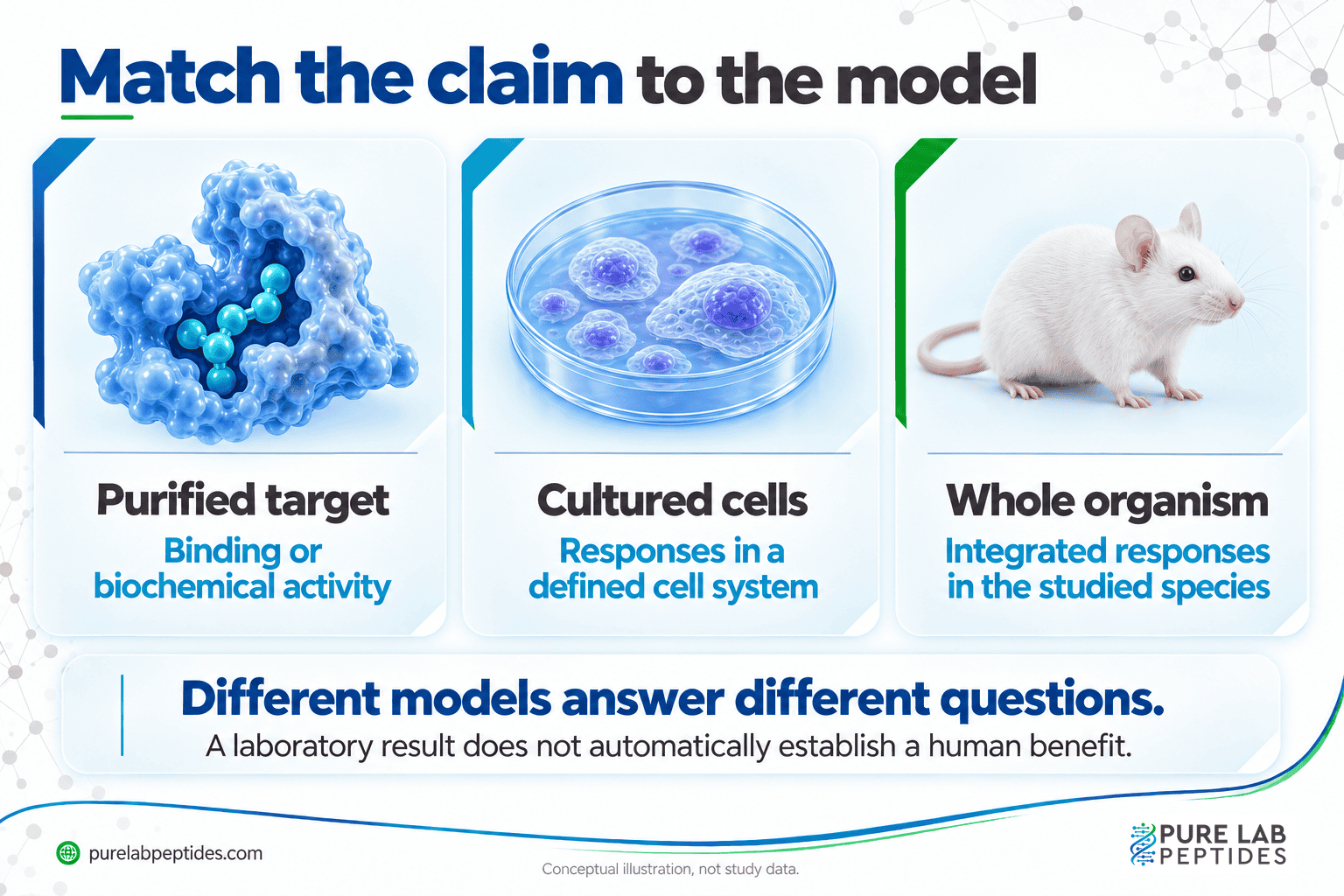
In rodent studies, combining GIP and GLP-1 activity often shows greater metabolic effects than either alone【32†L665-L672】【18†L148-L156】. For example, co-administration of a long-acting GIP agonist with a GLP-1 agonist synergistically enhanced glucose-lowering effects in diabetic mice【32†L665-L672】. Unimolecular co-agonists like NNC0090-2746 and tirzepatide were developed to achieve this in a single peptide. Early-phase research reports noted that these dual agonists produced robust improvements in glycemic control in diabetic subjects【16†L45-L53】【32†L665-L672】. (These observations come from preclinical and phase-1 studies, not intended as endorsements of efficacy.) Overall, evidence suggests dual incretin peptides can amplify insulin release and improve glucose disposal more than GLP-1 mono-agonists in lab models【32†L665-L672】【18†L148-L156】. Researchers use these compounds to probe incretin pathways, compare receptor contributions, and characterize novel analogues. Because clinical data are still emerging, all discussion remains framed as investigative findings, not therapeutic claims.

Analytical and Quality Considerations

Researchers obtaining GLP-1/GIP co-agonists should verify compound identity and purity through analytical testing. Standard practice includes confirming the peptide sequence and mass by mass spectrometry, and measuring chemical purity by reverse-phase HPLC (UV detection) or UPLC. Industry consensus is that research peptides should exceed ~95% purity. Certificates of analysis (COAs) from manufacturers typically include HPLC chromatograms, exact mass data, amino acid analysis, and retention times. For example, liquid chromatography–mass spectrometry is a key method for characterizing peptide impurities【26†L610-L618】. Some peptides incorporate non-natural residues (e.g. Aib) or lipid modifications to extend half-life; these should be noted and verified. Amino acid analysis (e.g. PICAA) or elemental analysis can also assess batch purity【26†L580-L589】【26†L610-L618】. In sum, researchers should review all analytical data (mass spectrometry, HPLC, amino acid composition) to ensure each dual-incretin peptide meets expected specifications as lab-grade material.

FAQs

What is a dual incretin agonist peptide?

A dual incretin agonist is a peptide that activates both the GLP-1 receptor and the GIP receptor. These peptides combine sequences from GLP-1 and GIP into one molecule. In research, they are used to study how simultaneous activation of both receptors affects insulin release and metabolism【18†L148-L156】【32†L665-L672】. They are strictly research-use compounds, not therapeutic drugs.

How do dual GLP-1/GIP agonists work in research models?

Dual agonists bind to both GLP1R and GIPR, triggering the downstream signaling of each. In laboratory models, GLP-1 receptor activation increases insulin secretion and signals satiety, while GIP receptor activation also boosts insulin (especially during fasting) and influences fat metabolism【3†L337-L342】【18†L148-L156】. The combined action leads to greater insulin release than either hormone alone【32†L665-L672】. Researchers use this to investigate combined incretin effects on glucose and lipid pathways.

Which peptides are examples of dual GLP-1/GIP compounds?

Research examples include NNC0090-2746 and tirzepatide, both synthetic peptides with modified GLP-1/GIP sequences【16†L19-L23】【16†L25-L34】. Another example is daLUXendin, a fluorescent GLP-1/GIP co-agonist probe【18†L108-L117】. Each has a unique amino acid sequence and fatty-acid modification. These peptides are studied in cell and animal assays; none are approved for human use.

Can dual incretin peptides be used in humans or animals?

No. Dual incretin receptor agonists discussed here are research-use-only compounds. They have not been approved for therapeutic or veterinary use. All information on these peptides comes from laboratory research or controlled clinical studies. Any human or animal data are in experimental or early-phase contexts, not general use. Researchers should follow RUO guidelines and not administer these peptides as treatments.

How are these peptides tested for quality?

Laboratory peptides should come with a detailed certificate of analysis. Researchers check the COA for HPLC purity (typically ≥95%), MS-confirmed molecular weight, and amino acid analysis. Additional tests might include sequence verification and endotoxin levels. Good lab practice is to confirm a peptide’s identity and purity before experiments. If a COA or analytical data is missing or unclear, it should be requested from the supplier.

Next Steps

Review batch-specific documentation before selecting any research-use-only peptide. Researchers should verify that dual-incretin compounds have transparent labeling and accessible analytical data. Explore Pure Lab Peptides for RUO GLP-1/GIP agonist peptides with clear product information, available certificates of analysis, and detailed handling notes suited to laboratory research.

References

  1. Alfaris N, Waldrop S, Johnson V, et al. “GLP-1 single, dual, and triple receptor agonists for treating type 2 diabetes and obesity: a narrative review.” eClinicalMedicine. 2024. doi.org/10.1016/j.eclinm.2024.102782
  2. Liu QK. “Mechanisms of action and therapeutic applications of GLP-1 and dual GIP/GLP-1 receptor agonists.” Front. Endocrinol. 2024;15:1431292. doi.org/10.3389/fendo.2024.1431292
  3. Roßmann K, Shilleh AH, Jiang W, et al. “Fluorescent GLP1R/GIPR dual agonist probes reveal cell targets in the pancreas and brain.” Nat. Metab. 2025;7:1536-1549. doi.org/10.1038/s42255-025-01342-6
  4. Bureau International des Poids et Mesures. “Peptides/Proteins – Organic analysis: Peptide purity determination.” 2023. bipm.org/organic-analysis/large-organics
Pure Lab Peptides Logo with Black Letters