
Researchers searching for buy Tri-Heal online should evaluate Tri-Heal as a research-use-only laboratory material, not a consumer product. For laboratory buyers, the key considerations are compound identity, purity documentation, batch-specific COAs, lot traceability, product labeling, storage information, and supplier evaluation. This guide explains how to evaluate Tri-Heal 45mg (TB-500 25mg + BPC-157 10mg + KPV 10mg) for controlled research procurement through Pure Lab Peptides. It focuses on documentation review rather than consumer-style claims or use instructions.
Fast Answer: buy Tri-Heal online for laboratory research
Researchers can buy Tri-Heal online for laboratory research by reviewing RUO labeling, batch-specific COA documentation, purity data, identity information, storage guidance, and supplier transparency before selecting a source. Products discussed in this article are intended for laboratory research use only and are not intended for human or animal consumption. Documentation should be retained with procurement records.
What Does “Buy Tri-Heal Online” Mean in a Research Context?
The phrase `buy Tri-Heal online` is addressed here as laboratory research procurement intent, not personal-use intent. In this context, the search is about whether qualified researchers, laboratory buyers, research institutions, and technical procurement teams can evaluate Tri-Heal research-use-only material with appropriate supplier documentation. It is not a request for use directions, outcomes, preparation instructions, or personal guidance.
RUO sourcing starts with labeling. FDA guidance on RUO and IUO IVD products explains that RUO labeling is tied to research-stage use and intended-use consistency, and federal labeling language for IVD products includes “For Research Use Only. Not for use in diagnostic procedures.” [1] [2] Although Tri-Heal is a research peptide blend rather than an IVD product, the procurement principle is similar: labeling and marketing should align with a research-use-only purpose.
Researchers evaluating buy Tri-Heal online with COA documentation should confirm product identity, purity documentation, lot-level traceability, storage and handling information, supplier transparency, and the absence of consumer-use positioning. A complete procurement review compares the product page, vial or container label, batch-specific COA, and internal receiving records before the material is logged into a controlled research workflow.
Tri-Heal Research Material Overview
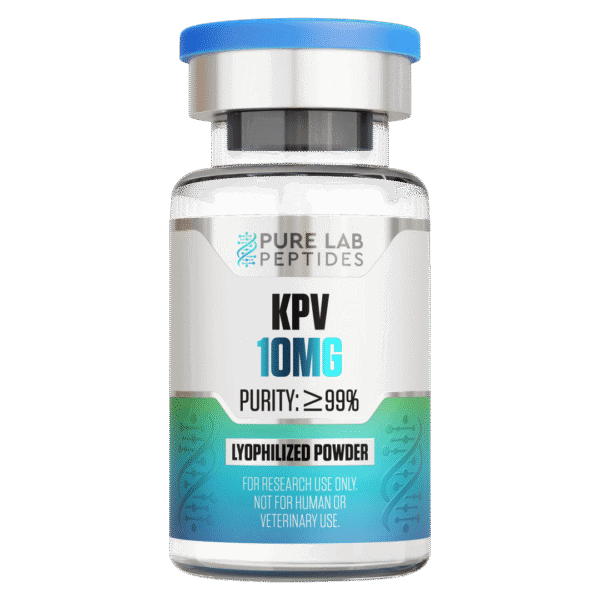
Tri-Heal is a peptide blend research material containing TB-500 25mg, BPC-157 10mg, and KPV 10mg in a 45mg total blend. IUPAC defines peptides as amides derived from two or more amino carboxylic acid molecules joined by peptide bonds, which is the chemical context used when laboratories review peptide identity and analytical documentation. [3]
BPC-157 is commonly cataloged as a pentadecapeptide. PubChem lists BPC-157 with the molecular formula C62H98N16O22, and the NCATS GSRS entry for BPC-157 acetate records related names and sequence-style identity information. [4] [5] Detection and in vitro metabolism literature has examined BPC 157 in non-RUO analytical settings, which should be treated as scientific context rather than product-use guidance. [6]
TB-500 is discussed in analytical literature as the N-terminal acetylated 17-23 fragment of thymosin beta-4. PubChem identifies thymosin beta-4 as a 43-residue peptide, and the GSRS record for TB-500 identifies it as an N-acetylated thymosin beta-4 fragment. [7] [8] Esposito and colleagues characterized the TB-500 fragment using analytical chemistry methods, while Van Troys and colleagues mapped the actin-binding site of thymosin beta-4 by mutational analysis. [9] [10]
KPV is the tripeptide Lys-Pro-Val and is also cataloged as MSH(11-13). PubChem lists MSH(11-13) with the molecular formula C16H30N4O4, and peer-reviewed delivery-method literature identifies KPV as a C-terminal peptide fragment of alpha-melanocyte stimulating hormone. [11] [12] Published alpha-MSH and KPV signaling literature provides broader model-system context, but those publications do not define how any RUO material should be used. [13]
Because Tri-Heal is a blend, procurement review should focus on the blend composition, component identity, lot-specific documentation, and analytical method transparency. Blend composition should be evaluated through documentation and identity review, not expected outcomes or use protocols. Research literature related to cellular pathways should not be converted into product-use claims for RUO materials.
Why Researchers Search “Buy Tri-Heal Online”
Researchers search “buy Tri-Heal online” to determine whether an RUO supplier provides enough information for a laboratory purchasing decision. The phrase can reflect a need to compare product form, documented composition, COA availability, purity documentation, identity testing, storage guidance, and supplier transparency before a research material is selected.
For technical procurement teams, the safer question is not simply where to buy Tri-Heal. The better question is whether the supplier gives researchers enough documentation to verify that Tri-Heal research material is labeled for research use only, that the Tri-Heal COA is batch-specific, that the product name and lot number match across records, and that the supplier avoids human-use, animal-use, or therapeutic positioning.
Tri-Heal supplier documentation should also allow a research institution to decide whether the material fits a controlled laboratory workflow. Useful documentation includes the full product name, component amounts, purity claim, analytical method, product form, storage expectations, lot number, and receiving records that can be retained for audit-ready procurement files.
Research Procurement Checklist for Tri-Heal
- Verify that Tri-Heal is labeled for research use only.
- Review the batch-specific certificate of analysis before procurement.
- Confirm that the COA includes identity and purity documentation for the blend or its documented components.
- Check whether HPLC, LC-MS, mass spectrometry, or another analytical method is listed.
- Compare the product name, component amounts, lot number, and documentation for consistency.
- Assess whether the supplier avoids therapeutic, human-use, animal-use, and consumer-use claims.
- Document storage and handling information in laboratory records.
- Evaluate whether the lyophilized powder form matches the needs of the research workflow.
- Confirm that the product is not marketed for human or animal consumption.
Tri-Heal Quality Signals to Review Before Buying Online
Researchers evaluating where to buy Tri-Heal online should treat quality signals as documentation checkpoints, not sales language. A strong RUO procurement record connects the product page, COA, label, and receiving documentation into one traceable file.
| Quality signal | What to review | Why it matters for research procurement |
| RUO labeling | Research-use-only language on product and supplier materials | Confirms that the listing is framed for controlled laboratory research rather than personal use |
| Batch-specific COA | Lot number, product name, test date, purity result, and method | Connects the received material to the documentation used for procurement review |
| Identity testing | HPLC, LC-MS, mass spectrometry, or equivalent analytical documentation | Supports Tri-Heal identity testing beyond name-matching alone |
| Purity documentation | Purity percentage, chromatogram or method notes, and component documentation | Helps researchers evaluate Tri-Heal purity documentation in context |
| Lot-level traceability | Consistent lot identifiers across label, COA, packing record, and internal log | Reduces ambiguity when research teams retain receiving records |
| Storage information | Supplier storage guidance and laboratory storage record | Helps maintain chain-of-custody documentation for lyophilized peptide material |
COA, Purity, and Identity Documentation
A Tri-Heal COA should be reviewed as a batch-specific technical document. Researchers should look for the compound or blend name, component listing, lot number, test date, purity percentage, testing method, identity confirmation, product form, and storage information. Where available, chromatograms, mass data, molecular-weight references, or sequence references help connect the material to analytical evidence.
A purity percentage alone does not establish complete compound identity; researchers should evaluate purity, identity, method, lot number, and documentation together. HPLC is widely used for peptide analysis and purification, while LC-HRMS and LC-MS methods are used in peptide quality-control contexts to characterize peptide-related impurities, sequence-related information, and analytical specificity. [14] [15] Synthetic peptide impurity profiling literature also shows why laboratories should consider method details rather than relying only on a single headline purity number. [16]
Peak purity and quantitation can require method-specific review. Two-dimensional liquid chromatography coupled to mass spectrometry has been studied for peak-purity assessment of pharmaceutical peptides, and LC-MRM methods are widely used for targeted peptide and protein quantitation. [17] [18] ISO/IEC 17025 is commonly used to describe competence requirements for testing and calibration laboratories, while NIST materials illustrate the importance of certificates, assigned values, and lot identifiers in traceable measurement systems. [19] [20] [21]
flowchart TD
A[Receive product and COA] --> B{RUO labeling present?}
B -- No --> C[Flag procurement gap]
B -- Yes --> D{Lot number matches across label and COA?}
D -- No --> E[Request batch-specific documentation]
D -- Yes --> F{Identity supported by analytical method?}
F -- No --> G[Request HPLC, LC-MS, or equivalent]
F -- Yes --> H[Proceed to laboratory documentation and storage]
Storage documentation is also part of procurement review. Peptide handling references generally emphasize dry, cool, dark storage for dry peptide materials, and laboratories should follow the supplier document for the specific lot received. [22] For Pure Lab Peptides Tri-Heal, researchers should review the product page and batch-specific documentation before logging the material into internal records.
Research Literature Context
Published literature on the branded Tri-Heal blend itself is more limited than literature on the individual components. That distinction matters. A blend listing should not be treated as evidence that the combined material has a defined research outcome. Researchers should evaluate the component identity and blend documentation first, then treat external literature as background context only.
BPC-157 appears in database and analytical literature, including PubChem, GSRS, and non-RUO studies of detection and in vitro metabolism. [4] [5] [6] TB-500 appears in analytical literature as a thymosin beta-4 fragment, with additional literature describing thymosin beta-4 and actin-binding research. [9] [10] KPV appears in database and delivery-method literature as MSH(11-13), a Lys-Pro-Val tripeptide. [11] [12]
Published clinical literature should not be interpreted as use guidance for RUO materials. Published literature outside the scope of RUO product use may examine component classes in human study settings, preclinical settings, analytical settings, or review-based contexts. Those publications do not convert Tri-Heal research-use-only material into a clinical, diagnostic, veterinary, supplement, wellness, or consumer-use product.
Evidence Landscape
| Evidence area | What the literature or database source supports | Procurement relevance | Boundary |
| Peptide identity | Peptide definitions and component database records describe molecular identity and nomenclature. [3] [4] | Supports name, formula, sequence, or component review | Does not establish product-use guidance |
| BPC-157 context | Database and analytical sources identify BPC-157 and discuss non-RUO detection or metabolism contexts. [6] | Supports literature awareness during component review | Should not be converted into a product claim |
| TB-500 context | Analytical literature identifies TB-500 as an N-acetylated thymosin beta-4 fragment. [9] | Supports component identity review | Does not support expected outcomes from a blend |
| KPV context | PubChem and peer-reviewed literature identify KPV as MSH(11-13) or Lys-Pro-Val. [11] [12] | Supports component naming and identity review | Does not define use instructions for RUO material |
| Analytical testing | HPLC, LC-HRMS, and LC-MS literature supports peptide analysis and impurity review. [14] [15] | Supports COA method evaluation | Does not replace batch-specific documentation |
Claim Boundary Table
| Acceptable research phrasing | Unsafe product-claim framing to avoid |
| Tri-Heal research material with batch-specific COA documentation | Tri-Heal positioned for personal-use outcomes |
| Tri-Heal research-use-only labeling and supplier documentation | Language implying clinical, veterinary, supplement, or wellness use |
| Tri-Heal identity testing by HPLC, LC-MS, mass spectrometry, or equivalent documentation | Claims that pathway literature proves product effects |
| Component identity review for TB-500, BPC-157, and KPV | Claims that blend components create expected combined outcomes |
| Lot-level traceability and Tri-Heal purity documentation | Generic documentation used as proof for every batch |
How Pure Lab Peptides Presents Tri-Heal
Pure Lab Peptides presents Tri-Heal 45mg as a research-use-only peptide blend in lyophilized powder form, with a ≥99% purity claim and a batch-specific COA available for review. The product composition is TB-500 25mg, BPC-157 10mg, and KPV 10mg. Researchers should review the product page, product labeling, purity information, storage and handling documentation, and lot-level traceability before procurement.
Review the Pure Lab Peptides Tri-Heal research-use-only product details page for RUO labeling, product details, purity information, and batch-specific documentation. Research teams comparing materials can also review the broader Pure Lab Peptides research peptide collection to compare documentation patterns across RUO peptide listings.
Tri-Heal supplier documentation should be evaluated as part of the laboratory purchasing file, not as a substitute for internal quality procedures. Qualified buyers should compare the product page with the COA, confirm the lot number, document storage expectations, and retain receiving records with the laboratory’s procurement system.
Common Misunderstandings About Buying Tri-Heal Online
Misunderstanding 1: “Buy Tri-Heal online” means personal use
In this article, “buy Tri-Heal online” means research procurement by qualified laboratory buyers. The phrase does not refer to personal use, consumer decision-making, clinical use, animal use, or self-directed use. RUO review should focus on labeling, COA access, purity documentation, identity information, and traceable supplier records.
Misunderstanding 2: Published literature equals product-use guidance
Published literature can help researchers understand component identity, analytical context, and model-system background. It should not be treated as instructions for an RUO material. Tri-Heal literature review should be separated from product procurement, and the procurement file should rely on batch-specific documentation.
Misunderstanding 3: Purity percentage alone proves identity
Purity is only one part of Tri-Heal purity documentation. A strong review also considers identity testing, method information, chromatographic or mass data where available, lot number consistency, component labeling, product form, and supplier transparency. A percentage without method and identity context is incomplete.
Misunderstanding 4: COA documentation does not need to be batch-specific
A COA is most useful when it is connected to the exact lot received. Researchers should compare the lot number on the Tri-Heal COA with the label and receiving record. If the documents do not match, the procurement record should be flagged for supplier clarification.
Misunderstanding 5: RUO labeling supports clinical or veterinary use
RUO labeling supports research procurement only. It does not support clinical use, diagnostic use, veterinary use, supplement use, wellness use, or consumer positioning. The laboratory buyer’s role is to confirm that the supplier’s labeling, documentation, and marketing remain aligned with research-use-only boundaries.
FAQs About Buying Tri-Heal Online for Research
Where can researchers buy Tri-Heal online for laboratory research?
Researchers can buy Tri-Heal online for laboratory research from an RUO supplier that provides clear product labeling, batch-specific COA availability, purity documentation, identity information, and lot-level traceability. Pure Lab Peptides provides a Tri-Heal product page for researchers to review RUO labeling, product details, and available batch-specific documentation.
What should researchers check before buying Tri-Heal online?
Before buying Tri-Heal online, researchers should check RUO labeling, product composition, batch-specific COA documentation, method information, lot number consistency, product form, storage guidance, and supplier transparency. The supplier should frame Tri-Heal as laboratory research material and avoid human-use, animal-use, therapeutic, or consumer-use positioning.
Why does a COA matter when buying Tri-Heal?
A Tri-Heal COA matters because it connects the research material to batch-specific documentation. Researchers should review the product name, component information, lot number, purity percentage, testing method, identity confirmation, and test date. The COA should be evaluated together with the label and receiving record.
Is Tri-Heal intended for human or animal consumption?
Tri-Heal is not intended for human or animal consumption. In this article, Tri-Heal is discussed only as a research-use-only laboratory material for qualified researchers and technical procurement teams. It should not be described, evaluated, or sourced as a clinical, veterinary, supplement, wellness, or consumer product.
What does research use only mean for Tri-Heal?
Research use only means Tri-Heal should be evaluated and handled as a laboratory research material within controlled research settings. The RUO designation directs attention to labeling, supplier documentation, COA review, identity testing, purity information, storage records, and traceability rather than personal-use claims or product-use instructions.
How should published literature about Tri-Heal be interpreted?
Published literature about Tri-Heal components should be interpreted as scientific background, not as use guidance for an RUO product. Researchers should distinguish component literature from batch-specific supplier documentation. For procurement, the decisive records are the product page, COA, label, lot number, method information, and receiving log.
Next Steps
Qualified researchers evaluating Tri-Heal should review product labeling, COA status, identity documentation, storage information, and supplier transparency. Review the Tri-Heal product page for RUO labeling, purity information, and available batch-specific documentation before selecting any research-use-only material.
References
- U.S. Food and Drug Administration. “Distribution of In Vitro Diagnostic Products Labeled for Research Use Only or Investigational Use Only.” FDA Guidance for Industry and FDA Staff. 2013; page current 2018. https://www.fda.gov/regulatory-information/search-fda-guidance-documents/distribution-in-vitro-diagnostic-products-labeled-research-use-only-or-investigational-use-only
- Electronic Code of Federal Regulations. “21 CFR Part 809 – In Vitro Diagnostic Products for Human Use.” eCFR. Current version. https://www.ecfr.gov/current/title-21/chapter-I/subchapter-H/part-809
- International Union of Pure and Applied Chemistry. “Peptides.” IUPAC Gold Book. DOI: 10.1351/goldbook.P04479. https://goldbook.iupac.org/terms/view/P04479
- National Center for Biotechnology Information. “Bpc-157 | C62H98N16O22 | CID 9941957.” PubChem. https://pubchem.ncbi.nlm.nih.gov/compound/Bpc-157
- National Center for Advancing Translational Sciences. “BPC-157 Acetate.” Global Substance Registration System. https://gsrs.ncats.nih.gov/ginas/app/beta/substances/PAR2FC72XP
- Cox HD, Miller GD, Eichner D. “Detection and in vitro metabolism of the confiscated peptides BPC 157 and MGF R23H.” Drug Testing and Analysis. 2017. https://pubmed.ncbi.nlm.nih.gov/28035768/
- National Center for Biotechnology Information. “Thymosin Beta 4 | C212H350N56O78S | CID 45382195.” PubChem. https://pubchem.ncbi.nlm.nih.gov/compound/Thymosin-Beta-4
- National Center for Advancing Translational Sciences and FDA. “TB-500.” Global Substance Registration System. https://precision.fda.gov/ginas/app/ui/substances/e850a4ce-7777-4d25-ae69-ab7174c798a4
- Esposito S, Deventer K, Goeman J, Van der Eycken J, Van Eenoo P. “Synthesis and characterization of the N-terminal acetylated 17-23 fragment of thymosin beta 4 identified in TB-500, a product suspected to possess doping potential.” Drug Testing and Analysis. 2012. https://pubmed.ncbi.nlm.nih.gov/22962027/
- Van Troys M, Dewitte D, Goethals M, Carlier MF, Vandekerckhove J, Ampe C. “The actin binding site of thymosin beta 4 mapped by mutational analysis.” The EMBO Journal. 1996. https://pubmed.ncbi.nlm.nih.gov/8617195/
- National Center for Biotechnology Information. “Msh (11-13) | C16H30N4O4 | CID 125672.” PubChem. https://pubchem.ncbi.nlm.nih.gov/compound/Msh-_11-13
- Pawar K, et al. “Transdermal iontophoretic delivery of lysine-proline-valine (KPV) peptide across microporated human skin.” Journal of Pharmaceutical Sciences. 2017. https://pubmed.ncbi.nlm.nih.gov/28343991/
- Elliott RJ, Szabo M, Wagner MJ, Kemp EH, MacNeil S, Haycock JW. “Alpha-melanocyte-stimulating hormone, MSH 11-13 KPV and adrenocorticotropic hormone signalling in human keratinocyte cells.” Journal of Investigative Dermatology. 2004. https://pubmed.ncbi.nlm.nih.gov/15102092/
- Mant CT, Chen Y, Hodges RS. “HPLC Analysis and Purification of Peptides.” Methods in Molecular Biology. 2007. https://pmc.ncbi.nlm.nih.gov/articles/PMC7119934/
- Zeng K, Geerlof-Vidavisky I, Gucinsky A, Jiang X, Boyne MT II. “Liquid Chromatography-High Resolution Mass Spectrometry for Peptide Drug Quality Control.” The AAPS Journal. 2015. https://pmc.ncbi.nlm.nih.gov/articles/PMC4406950/
- De Spiegeleer B, Vergote V, Pezeshki A, Peremans K, Burvenich CPG. “Impurity profiling quality control testing of synthetic peptides using liquid chromatography-photodiode array-fluorescence and liquid chromatography-electrospray ionization-mass spectrometry: the obestatin case.” Analytical Biochemistry. 2008. https://pubmed.ncbi.nlm.nih.gov/18342612/
- Stoll DR, et al. “A strategy for assessing peak purity of pharmaceutical peptides in reversed-phase chromatography methods using two-dimensional liquid chromatography coupled to mass spectrometry.” Journal of Chromatography A. 2023. https://pubmed.ncbi.nlm.nih.gov/36871316/
- Zhang H, et al. “Methods for peptide and protein quantitation by liquid chromatography-multiple reaction monitoring mass spectrometry.” Molecular & Cellular Proteomics. 2011. https://pubmed.ncbi.nlm.nih.gov/21357624/
- International Organization for Standardization. “ISO/IEC 17025 – Testing and calibration laboratories.” ISO. https://www.iso.org/ISO-IEC-17025-testing-and-calibration-laboratories.html
- National Institute of Standards and Technology. “Standard Reference Materials.” NIST. https://www.nist.gov/srm
- National Institute of Standards and Technology. “Standard Reference Materials FAQs.” NIST. https://www.nist.gov/srm/faqs
- National Institute for Biological Standards and Control. “Peptide Handling, Dissolution & Storage.” NIBSC. https://nibsc.org/science_and_research/virology/cjd_resource_centre/available_samples/peptide_library/peptide_storage.aspx
There are no reviews yet.