
...

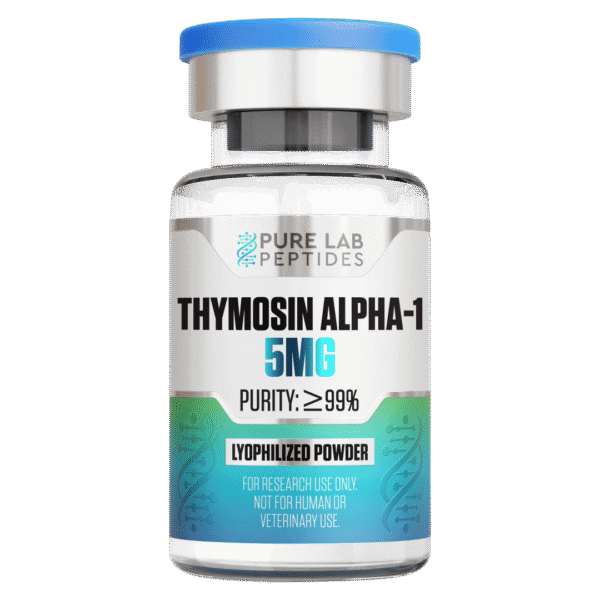
Thymosin Alpha-1 10mg

$119.99

(5.0) (20 customer reviews)

Research Studies:

  • Potent TLR9 and TLR2 agonist for investigating innate immune receptor signaling
  • Supports analysis of T-lymphocyte maturation and Th1-type cytokine expression in assays
  • Enables research on major histocompatibility complex class I molecule upregulation pathways
  • Useful for evaluating NF-κB and MAPK-mediated modulation of lymphocyte-specific responses

Quantity:

Free Shipping

Out of stock

Buy Peptides with confidence: Stripe-powered secure checkout and major cards accepted.
Secure payment methods for buying peptides: Visa, MasterCard, AMEX, and more.
Buy Peptides with confidence: Stripe-powered secure checkout and major cards accepted.
Secure payment methods for buying peptides: Visa, MasterCard, AMEX, and more.

FREE Shipping on 

orders over $200

ALL ARTICLES AND PRODUCT INFORMATION PROVIDED ON THIS WEBSITE ARE FOR INFORMATIONAL AND EDUCATIONAL PURPOSES ONLY. The products offered on this website are intended solely for research and laboratory use. These products are not intended for human or animal consumption. They are not medicines or drugs and have not been evaluated or approved by the FDA to diagnose, treat, cure, or prevent any disease or medical condition. Any form of bodily introduction is strictly prohibited by law.

Description

Thymosin Alpha-1 10mg is a research-use-only laboratory material supplied for controlled research workflows, compound characterization, and analytical documentation review. It is manufactured under rigorous quality standards to support consistency, traceability, and batch-specific verification for qualified laboratory settings.

Key Product Details

  • Manufactured in accordance with rigorous quality standards to support ≥99% purity, as reflected in batch-specific documentation where available.
  • Every batch is third-party analyzed for identity, assay/potency, and sterility documentation where applicable.
  • Supplied in lyophilized powder form to help preserve stability throughout transport and storage.
  • Produced with lot-level traceability to support research documentation and laboratory recordkeeping.

Research Documentation Context

  • Supports compound characterization in controlled laboratory settings.
  • Provides batch-specific identity and purity documentation for research review.
  • Allows lot-level traceability across laboratory documentation workflows.
  • Supports comparison of product labeling, analytical documentation, and storage information during research planning.
  • Supports analytical review of short peptide research materials within a strictly laboratory-focused context.

Specifications and Documentation

  • Certificate of Analysis: Available with batch-specific documentation where applicable.
  • Material Safety Data Sheet: Coming Soon.
  • Handling and Storage Instructions: Coming Soon.
  • Product Form: Lyophilized powder.
  • Purity Specification: ≥99% purity.
  • Intended Use: Laboratory research use only.

Thymosin Alpha-1 10mg is intended strictly for laboratory research use only. This product is not intended for human or animal consumption, therapeutic use, diagnostic use, clinical use, veterinary use, or as a food, drug, cosmetic, dietary supplement, or household product.

Additional information

CAS No.

62304-98-7

Purity

≥99%

Sequence

Ac-Ser-Asp-Ala-Ala-Val-Asp-Thr-Ser-Ser-Glu-Ile-Thr-Thr-Lys-Asp-Leu-Lys-Glu-Lys-Lys-Glu-Val-Val-Glu-Glu-Ala-Glu-Asn

Molecular Formula

C129H215N33O55

Molecular Weight

3108.3 g/mol

Applications

Immunology research, viral infection models, cancer immunotherapy studies

Synthesis

Solid-phase synthesis

Solubility

Soluble in water or 1% acetic acid

Stability & Storage

Stable for up to 24 months at -20°C. After reconstitution, may be stored at 4°C for up to 4 weeks or at -20°C for up to 6 months.

Appearance

White lyophilized powder

Shipping Conditions

Shipped at ambient temperature; once received, store at -20°C

Regulatory/Compliance

Manufactured in a facility that adheres to cGMP guidelines

Safety Information

Refer to provided MSDS

There are no reviews yet.

We value your feedback. Please leave a review below:

Research Procurement Information

Buy Thymosin Alpha-1 Online for Research | COA Guide

Researchers searching for buy Thymosin Alpha-1 online should evaluate Thymosin Alpha-1 as a research-use-only laboratory material, not a consumer product. For laboratory buyers, the key considerations are compound identity, purity documentation, batch-specific COAs, lot traceability, product labeling, and storage information. This guide explains how to evaluate Thymosin Alpha-1 for controlled research procurement through Pure Lab Peptides, with emphasis on documentation review, supplier transparency, and research-use-only boundaries.

Fast Answer: buy Thymosin Alpha-1 online for laboratory research

Researchers can buy Thymosin Alpha-1 online for laboratory research by reviewing RUO labeling, batch-specific COA documentation, purity data, identity information, storage guidance, and supplier transparency before selecting a source. Products discussed in this article are intended for laboratory research use only and are not intended for human or animal consumption.

What Does “Buy Thymosin Alpha-1 Online” Mean in a Research Context?

The phrase `buy Thymosin Alpha-1 online` is addressed here as laboratory research procurement intent, not personal-use intent. In this context, procurement teams are not evaluating Thymosin Alpha-1 as a wellness item, clinical item, or consumer peptide. They are evaluating whether a research-use-only material is labeled appropriately, supported by documentation, and traceable to a specific batch.

RUO sourcing starts with the intended-use statement. FDA guidance on research-use-only and investigational-use-only labeling for certain laboratory products emphasizes that RUO labeling is tied to research settings rather than diagnostic use [1]. For peptide procurement, the same practical principle applies: the supplier should keep the product positioned as a laboratory research material and avoid personal-use framing.

A qualified laboratory buyer should review the Thymosin Alpha-1 COA, the lot number, the product name, the product form, the purity statement, and the analytical method before documenting the purchase. Supplier transparency also matters. A credible research supplier makes Thymosin Alpha-1 supplier documentation easy to locate, keeps the RUO boundary clear, and does not substitute marketing claims for analytical documentation.

Thymosin Alpha-1 Research Material Overview

Thymosin Alpha-1 is commonly discussed in scientific literature as a thymic peptide, and the chemically synthesized version is identified as thymalfasin. PubChem lists thymalfasin with molecular formula C129H215N33O55 and identifies it as a synthetic version of Thymosin Alpha-1 [2]. The National Cancer Institute describes thymalfasin as a synthetic analogue of Thymosin Alpha-1 and notes its relationship to the precursor protein prothymosin alpha [3].

The original biochemical literature characterized Thymosin Alpha-1 as a heat-stable, acidic 28-amino-acid peptide from thymosin fraction 5 [4]. Later sequence-oriented work further described the chemistry of alpha thymosins and the amino acid sequence of Thymosin Alpha-1 [5]. UniProt records prothymosin alpha as the human precursor entry, while ChEMBL lists thymalfasin as CHEMBL2103979 for database-level compound identification [6] [7].

Published reviews describe Thymosin Alpha-1 in immunology and peptide research contexts, including biochemical production, pathway literature, and broader review-based evidence [8] [9] [10]. Cellular-model papers have also examined dendritic-cell and Toll-like-receptor signaling contexts, but those findings are scientific context only and are not product-use instructions for RUO materials [11] [12] [13] [14].

For procurement purposes, Thymosin Alpha-1 research material should be evaluated through identity testing, purity documentation, and batch records rather than expected outcomes. Short peptide research literature should be discussed as scientific context, not as product-use guidance.

Why Researchers Search “Buy Thymosin Alpha-1 Online”

Researchers and technical procurement teams search this phrase because online sourcing can make product documentation visible before a purchase decision. A laboratory buyer may need to compare RUO product availability, verify that Thymosin Alpha-1 research-use-only positioning is clear, and determine whether batch-specific documentation is available before adding a material to internal purchasing records.

When a team searches buy Thymosin Alpha-1, the priority should not be promotional language. The priority should be evidence of compound identity, lot-level traceability, Thymosin Alpha-1 purity documentation, and a COA that matches the product being evaluated. Product-form details also matter because a lyophilized powder should be documented in records alongside supplier handling information and storage guidance.

Search intent can also reflect supplier comparison. A laboratory buyer may compare whether product pages provide a clear product name, amount, purity claim, research-use-only statement, and access to batch-specific COA documentation. Those procurement signals are more relevant to controlled research purchasing than broad claims about pathways, outcomes, or consumer uses.

Research Procurement Checklist for Thymosin Alpha-1

  • Verify that Thymosin Alpha-1 is labeled for research use only.
  • Review the batch-specific certificate of analysis before procurement.
  • Confirm that the COA includes identity and purity documentation where available.
  • Check whether HPLC, LC-MS, mass spectrometry, or another analytical method is listed.
  • Compare the product name, amount, lot number, and documentation for consistency.
  • Assess whether the supplier avoids dosing, injection, therapeutic, or personal-use claims.
  • Document storage and handling information in laboratory records.
  • Evaluate whether the lyophilized powder form matches the needs of the research workflow.
  • Confirm that the product is not marketed for human or animal consumption.

Thymosin Alpha-1 Quality Signals to Review Before Buying Online

Researchers evaluating where to buy Thymosin Alpha-1 online should review quality signals together, not as isolated claims. HPLC is widely used in peptide analysis and purification, while mass spectrometry is commonly used to support peptide identity and purity assessment in synthetic peptide workflows [15] [16] [17] [18].

Quality signal What researchers should review Why it matters for RUO procurement
RUO labeling Clear research-use-only statement on the product page and documentation Shows that the supplier is framing the material for controlled laboratory procurement
Batch-specific COA Product name, lot number, purity value, method, and test date Links analytical documentation to the exact material under review
Identity testing Mass spectrometry, LC-MS, or equivalent identity information Supports confirmation that the documented material matches Thymosin Alpha-1
Purity documentation HPLC or comparable chromatographic data Helps researchers assess the reported purity claim in context
Lot traceability Lot number consistency across label, COA, and internal records Allows procurement and laboratory teams to connect records to a specific batch
Supplier documentation Storage guidance, product form, and clear product details Supports internal documentation without shifting into product-use guidance

COA, Purity, and Identity Documentation

A Thymosin Alpha-1 COA should be reviewed as a batch-specific analytical record. Researchers should look for the compound name, lot number, test date, purity percentage, testing method, identity confirmation, molecular weight where relevant, sequence information where relevant, chromatogram or mass data where available, product form, and storage documentation.

A purity percentage alone does not establish complete compound identity; researchers should evaluate purity, identity, method, lot number, and documentation together. LC-HRMS literature on peptide impurities illustrates why structurally related peptide materials may require more than a simple purity value, and chiral HPLC-MS/MS literature shows that specialized methods can be relevant for certain peptide quality questions [19] [20]. ICH Q2(R2) provides a general framework for analytical-procedure validation concepts, and ISO/IEC 17025 describes competence expectations for testing and calibration laboratories [21] [22].

flowchart TD A[Receive product and COA] --> B{RUO labeling present?} B -- No --> C[Flag procurement gap] B -- Yes --> D{Lot number matches across label and COA?} D -- No --> E[Request batch-specific documentation] D -- Yes --> F{Identity supported by analytical method?} F -- No --> G[Request HPLC, LC-MS, or equivalent] F -- Yes --> H[Proceed to laboratory documentation and storage]

For Thymosin Alpha-1 identity testing, the strongest procurement file is the one that keeps label, COA, product page, and internal receiving record aligned. If the lot number or product name differs across documents, the discrepancy should be resolved before the material is entered into a controlled research workflow.

Research Literature Context

Published literature has examined Thymosin Alpha-1 in biochemical, immunology, cellular-model, review-based, and clinical study settings. Database records identify thymalfasin and prothymosin-alpha relationships, while early biochemical papers describe isolation and sequence characterization [2] [4] [5]. Review articles summarize broader research areas, but review conclusions should not be converted into claims about RUO materials [8] [9] [10].

Cellular-model studies have investigated dendritic-cell differentiation and Toll-like-receptor-linked signaling models involving Thymosin Alpha-1 [11] [12] [13] [14]. Those publications are useful for understanding why the compound appears in immunology research literature, but they do not establish procurement criteria beyond identity, documentation, and analytical review.

Published clinical literature should not be interpreted as use guidance for RUO materials. The presence of clinical or translational papers in a database does not change the status of a research-use-only compound sold for laboratory research procurement. For this article, the literature context is used only to support compound identification and scientific background, not to recommend use, preparation, administration, or outcomes.

Evidence Landscape

Evidence type Examples for Thymosin Alpha-1 Procurement interpretation
Database records PubChem, ChEMBL, UniProt, and NCI records identify thymalfasin, prothymosin alpha, and related naming conventions [2] [7] Useful for identity cross-checking and terminology, not a substitute for a batch-specific COA
Original characterization literature Early papers describe isolation, sequence analysis, and chemical characterization [4] [5] Supports neutral background on compound identity
Review literature Reviews summarize biochemical production and research areas involving Thymosin Alpha-1 [8] [9] Helpful for scientific context, but not product-use guidance
Cellular-model literature Studies discuss dendritic-cell and Toll-like-receptor signaling models [11] [13] Context for research interest, not a procurement claim or protocol
Analytical-method literature HPLC, LC-MS, mass spectrometry, impurity, and chiral purity literature describes methods relevant to peptide quality review [15] [18] [19] Supports COA interpretation and documentation review

Claim Boundary Table

Acceptable research phrasing Unsafe product-claim phrasing
“Thymosin Alpha-1 appears in peptide and immunology research literature.” “Thymosin Alpha-1 produces wellness or therapeutic outcomes.”
“Review the batch-specific Thymosin Alpha-1 COA before procurement.” “A purity percentage alone proves the material is suitable for any intended outcome.”
“Evaluate HPLC, LC-MS, or mass spectrometry information where documented.” “Analytical documentation can be replaced by reviews, testimonials, or expected results.”
“Thymosin Alpha-1 research-use-only materials should remain in controlled laboratory contexts.” “RUO labeling supports personal, clinical, veterinary, or consumer use.”
“Published literature is scientific background for qualified researchers.” “Published literature provides product-use guidance for RUO materials.”

How Pure Lab Peptides Presents Thymosin Alpha-1

Pure Lab Peptides presents Thymosin Alpha-1 10mg as a research-use-only compound. The fixed product attributes for this research-procurement guide are a ≥99% purity claim, lyophilized powder form, and batch-specific COA availability. Researchers should review the product page and batch-specific documentation to confirm the product name, lot information, product form, storage and handling documentation, and analytical details before procurement.

Review the Pure Lab Peptides Thymosin Alpha-1 research-use-only product page for RUO labeling, product details, purity information, and batch-specific documentation. Laboratory teams comparing broader peptide options can also review the research peptide collection, the blog resource area, and shipping and returns information for supplier documentation context.

Pure Lab Peptides documentation should be treated as a procurement record, not as a protocol. Lot-level traceability, Thymosin Alpha-1 supplier documentation, storage and handling information, and the available batch-specific COA are the central quality signals for qualified research buyers.

Common Misunderstandings About Buying Thymosin Alpha-1 Online

Misunderstanding 1: “Buy Thymosin Alpha-1 online” means personal use

In this article, the phrase means laboratory research procurement only. A qualified buyer is evaluating RUO labeling, COA availability, identity testing, and supplier transparency. The article does not address personal-use selection, self-directed use, or non-laboratory purchasing decisions.

Misunderstanding 2: Published literature equals product-use guidance

Published research can explain why a compound appears in scientific databases or research literature. It does not turn an RUO material into a clinical, diagnostic, veterinary, or consumer product. Short peptide research literature should be discussed as scientific context, not as product-use guidance.

Misunderstanding 3: Purity percentage alone proves identity

Purity is one documentation element, not the entire identity record. Researchers should assess Thymosin Alpha-1 purity documentation together with analytical method, mass or sequence confirmation where available, lot number, product name, test date, and supplier documentation.

Misunderstanding 4: COA documentation does not need to be batch-specific

A general sample COA is less useful than a batch-specific COA tied to the lot under review. Procurement teams should confirm that the label, COA, product page, and receiving record all reference the same Thymosin Alpha-1 material and lot identifier.

Misunderstanding 5: Pathway relevance equals a product claim

Thymosin Alpha-1 appears in pathway and immunology literature, but pathway relevance is not a product claim for an RUO material. Procurement language should stay focused on identity, purity, analytical documentation, labeling, traceability, and storage records.

FAQs About Buying Thymosin Alpha-1 Online for Research

Where can researchers buy Thymosin Alpha-1 online for laboratory research?

Researchers can buy Thymosin Alpha-1 online for laboratory research from an RUO supplier that provides clear labeling, product details, batch-specific COA access, purity documentation, and identity information. Pure Lab Peptides provides a Thymosin Alpha-1 10mg product page for research procurement review.

What should researchers check before buying Thymosin Alpha-1 online?

Before buying Thymosin Alpha-1 online, researchers should check RUO labeling, the batch-specific COA, the reported purity, identity testing, product form, lot number consistency, storage information, and supplier documentation. The review should remain focused on laboratory procurement rather than product-use expectations.

Why does a COA matter when buying Thymosin Alpha-1?

A COA matters when buying Thymosin Alpha-1 because it connects analytical documentation to a specific batch. A strong COA review looks at product name, lot number, method, purity value, identity confirmation, and test date together, rather than relying on a purity statement alone.

Is Thymosin Alpha-1 intended for human or animal consumption?

Thymosin Alpha-1 discussed here is not intended for human or animal consumption. It is addressed as a research-use-only laboratory material for qualified researchers, laboratory buyers, research institutions, and technical procurement teams evaluating documentation and supplier transparency.

What does research use only mean for Thymosin Alpha-1?

Research use only means Thymosin Alpha-1 is positioned for controlled laboratory research contexts and not for clinical, diagnostic, veterinary, or consumer use. For procurement teams, RUO review centers on labeling, COA availability, purity documentation, identity information, and lot-level traceability.

How should published literature about Thymosin Alpha-1 be interpreted?

Published literature about Thymosin Alpha-1 should be interpreted as scientific background, not product-use guidance for RUO materials. Literature may describe compound identity, cellular models, pathway research, or clinical study settings, but procurement decisions should focus on documentation, labeling, and analytical review.

Next Steps

Qualified researchers evaluating Thymosin Alpha-1 should review product labeling, COA status, identity documentation, storage information, and supplier transparency before selecting any research-use-only material. Review the Thymosin Alpha-1 product page for RUO labeling, purity information, and available batch-specific documentation.

References

  1. U.S. Food and Drug Administration. “Distribution of In Vitro Diagnostic Products Labeled for Research Use Only or Investigational Use Only.” FDA Guidance Documents. 2013. https://www.fda.gov/regulatory-information/search-fda-guidance-documents/distribution-in-vitro-diagnostic-products-labeled-research-use-only-or-investigational-use-only
  2. National Center for Biotechnology Information. “Thymalfasin.” PubChem Compound Summary. 2026. https://pubchem.ncbi.nlm.nih.gov/compound/Thymalfasin
  3. National Cancer Institute. “Thymalfasin.” NCI Drug Dictionary. 2026. https://www.cancer.gov/publications/dictionaries/cancer-drug/def/thymalfasin
  4. Goldstein AL, Low TL, McAdoo M, McClure J, Thurman GB, Rossio J, et al. “Thymosin alpha1: isolation and sequence analysis of an immunologically active thymic polypeptide.” Proceedings of the National Academy of Sciences. 1977. https://pubmed.ncbi.nlm.nih.gov/265536/
  5. Low TL, Thurman GB, McAdoo M, McClure J, Rossio JL, Naylor PH, et al. “The chemistry and biology of thymosin. II. Amino acid sequence analysis of thymosin alpha1 and polypeptide beta1.” Journal of Biological Chemistry. 1979. https://pubmed.ncbi.nlm.nih.gov/762108/
  6. UniProt Consortium. “PTMA – Prothymosin alpha – Homo sapiens (Human).” UniProtKB. 2026. https://www.uniprot.org/uniprotkb/P06454/entry
  7. European Bioinformatics Institute. “THYMALFASIN (CHEMBL2103979).” ChEMBL. 2026. https://www.ebi.ac.uk/chembl/explore/compound/CHEMBL2103979
  8. Li J, Liu CH, Wang FS. “Thymosin alpha 1: biological activities, applications and genetic engineering production.” Peptides. 2010. https://pubmed.ncbi.nlm.nih.gov/20699109/
  9. Dominari A, Hathaway D, Pandav K, Matos W, Biswas S, Reddy G, et al. “Thymosin alpha 1: A comprehensive review of the literature.” World Journal of Virology. 2020. https://pubmed.ncbi.nlm.nih.gov/33362999/
  10. Tao N, Xu X, Ying Y, et al. “Thymosin alpha 1 and Its Role in Viral Infectious Diseases: The Mechanism and Clinical Application.” Molecules. 2023. https://pubmed.ncbi.nlm.nih.gov/37110771/
  11. Romani L, Bistoni F, Gaziano R, Bozza S, Montagnoli C, Perruccio K, et al. “Thymosin alpha 1 activates dendritic cells for antifungal Th1 resistance through toll-like receptor signaling.” Blood. 2004. https://pubmed.ncbi.nlm.nih.gov/14982877/
  12. Bozza S, Gaziano R, Bonifazi P, Zelante T, Pitzurra L, Montagnoli C, et al. “Thymosin alpha1 activates the TLR9/MyD88/IRF7-dependent murine cytomegalovirus sensing for induction of anti-viral responses in vivo.” International Immunology. 2007. https://pubmed.ncbi.nlm.nih.gov/17804687/
  13. Yao Q, Doan LX, Zhang R, Bharadwaj U, Li M, Chen C. “Thymosin-alpha1 modulates dendritic cell differentiation and functional maturation from human peripheral blood CD14+ monocytes.” Immunology Letters. 2007. https://pubmed.ncbi.nlm.nih.gov/17532057/
  14. Huang Y, Chen Z, Zhou C, Yao H, Li M, Xu C. “The modulation of thymosin alpha 1 in the maturation, differentiation and function of murine bone marrow-derived dendritic cells in the absence or presence of tumor necrosis factor-alpha.” International Immunopharmacology. 2004. https://pubmed.ncbi.nlm.nih.gov/15099531/
  15. Mant CT, Chen Y, Yan Z, Popa TV, Kovacs JM, Mills JB, et al. “HPLC Analysis and Purification of Peptides.” Methods in Molecular Biology. 2007. https://pubmed.ncbi.nlm.nih.gov/18604941/
  16. Henzel WJ, Watanabe C. “Reversed-phase isolation of peptides.” Current Protocols in Protein Science. 2001. https://pubmed.ncbi.nlm.nih.gov/18429105/
  17. Aguilar MI. “HPLC of peptides and proteins: basic theory and methodology.” Methods in Molecular Biology. 2004. https://pubmed.ncbi.nlm.nih.gov/14704434/
  18. Prabhala BK, Adarska P, Douthwaite S. “Characterization of Synthetic Peptides by Mass Spectrometry.” Methods in Molecular Biology. 2015. https://pubmed.ncbi.nlm.nih.gov/26424265/
  19. Li M, Josephs RD, Daireaux A, Choteau T, Westwood S, Wielgosz RI, et al. “Identification and accurate quantification of structurally related peptide impurities in synthetic human C-peptide by liquid chromatography-high resolution mass spectrometry.” Analytical and Bioanalytical Chemistry. 2018. https://pubmed.ncbi.nlm.nih.gov/29862433/
  20. Strege MA, Evaerts K, Plumb RS, et al. “Enantiomeric purity analysis of synthetic peptide therapeutics by direct chiral high-performance liquid chromatography-electrospray ionization tandem mass spectrometry.” Journal of Chromatography B. 2023. https://pubmed.ncbi.nlm.nih.gov/36857849/
  21. U.S. Food and Drug Administration. “Q2(R2) Validation of Analytical Procedures.” FDA Guidance Documents. 2024. https://www.fda.gov/regulatory-information/search-fda-guidance-documents/q2r2-validation-analytical-procedures
  22. International Organization for Standardization. “ISO/IEC 17025: Testing and calibration laboratories.” ISO. 2017. https://www.iso.org/ISO-IEC-17025-testing-and-calibration-laboratories.html

Have Questions?

Our team is ready to assist you with any inquiries regarding our catalogue of peptides and their applications.

Pure Lab Peptides Logo with Black Letters
0