


1 / 6
Laboratory Research Material
Tesamorelin 5mg + Ipamorelin 5mg (10mg Blend)
- Blend composition
-
Compound Per vial Tesamorelin 5 mg Ipamorelin 5 mg Total per vial 10 mg - Form
- Lyophilized powder
- Packaging
- 1 × 3 mL vial, boxed
- Shipping
- FedEx 2DayShips from the U.S. Estimated arrival2 business days after dispatchWeekday dispatch · 4 p.m. ET cutoff
Delivery details
Estimated for in-stock orders using FedEx 2Day. Weekends and FedEx closures are excluded. Holiday pickups, destination and carrier delays can affect arrival. Alaska and Hawaii may take longer.
Free U.S. shipping on orders $199+
Important
Research Use Notice
All articles and product information provided on this website are for informational and educational purposes only. The products offered on this website are intended solely for research and laboratory use. These products are not intended for human or animal consumption. They are not medicines or drugs and have not been evaluated or approved by the FDA to diagnose, treat, cure, or prevent any disease or medical condition. Any form of bodily introduction is strictly prohibited by law.
Product Documentation
Details, specifications, and reviews
Description
Tesamorelin + Ipamorelin 10 mg blend
Buy Tesamorelin + Ipamorelin blend with 5 mg of each peptide and 10 mg total labeled material per vial. This research blend is supplied as lyophilized powder in one boxed 3 mL vial.
- Tesamorelin: 5 mg per vial
- Ipamorelin: 5 mg per vial
- Total blend: 10 mg per vial
A two-component formulation with equal labeled mass
The mixture has a 1:1 mass ratio. That does not mean it contains equal numbers of Tesamorelin and Ipamorelin molecules; their molecular sizes differ. Use the supplied chemical forms when calculating molar amounts.
The CJC-1295 NO DAC + Ipamorelin blend also has a 10 mg total, but contains a different GHRH-related partner. Matching total milligrams does not make the formulations interchangeable. For a separate-component comparison, see Tesamorelin 5 mg and Ipamorelin 5 mg.
Distinct peptide classes and research evidence
Tesamorelin is a growth hormone-releasing hormone (GHRH) analog. In Knoop and colleagues’ analytical study, mass spectrometry distinguished Tesamorelin from other GHRH-related materials. That identification method concerns defined reference analytes; it does not authenticate this finished blend.
Ipamorelin is a pentapeptide secretagogue. Raun and colleagues investigated growth-hormone release and selectivity in rat pituitary cells and animal models. Those findings describe the endpoints and models tested.
The two references address different questions. Neither tests the 5 mg + 5 mg mixture or establishes synergy. A blend experiment needs suitable component comparisons to distinguish the response to each ingredient from the combined response.
Review the certificate of analysis and product files
Open COA & Documents and match the product and lot. Check identity separately from purity, and whether the analytical record quantifies both components. A single purity percentage or combined weight does not confirm each labeled amount.
For handling and storage, follow documentation applicable to this mixture. The vial’s 3 mL capacity is separate from peptide content and does not specify a liquid volume or preparation protocol.
Additional information
| CAS No. | Ipamorelin: 170851-70-4 Tesamorelin: 218949-48-5 |
|---|---|
| Purity | ≥99% |
| Synthesis Method | Solid-phase synthesis |
| Format | Lyophilized powder |
| Solubility | Water or validated laboratory buffer |
| Stability & Storage | Up to 24 months at -20°C. Avoid repeated freeze-thaw cycles. |
| Applications | In-vitro assay research, compound characterization, analytical method development |
| Appearance | White to off-white powder |
| Regulatory/Compliance | Not for human consumption. For research use only. |
| Safety Information | MSDS available upon request |
Only logged in customers who have purchased this product may leave a review.
Product documents
Product information and laboratory resources for this product.
Product & packaging information
Labeled amount, physical form and packaging for Tesamorelin 5mg + Ipamorelin 5mg (10mg Blend).
Revision 0.4 · 2026-10-05Download PDFLaboratory handling guide
General guidance for applicable lyophilized research materials. Not a product-specific SDS.
Revision 1.0 · 2026-09-22Download PDFGeneral guides & resources
Reading a COA & Verifying Your Lot
PDF · Revision 1.0Receiving, Storage & Traceability Record
PDF · Revision 1.0Research Use & Documentation Scope
PDF · Revision 1.0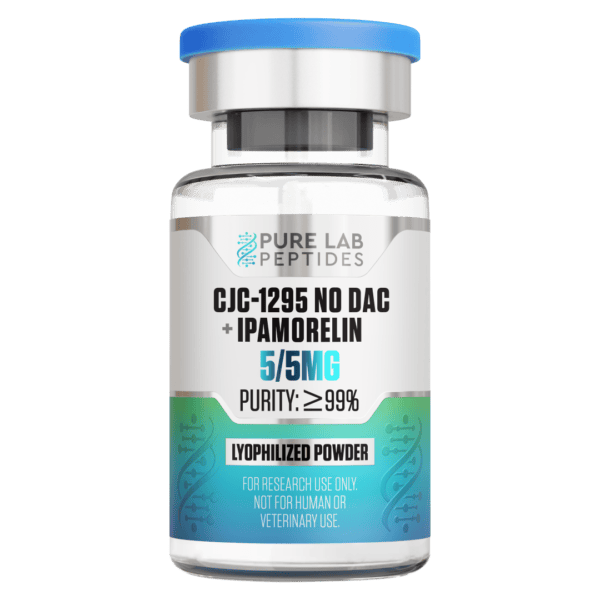
Need Assistance?
Questions about product documentation?
Our support team can assist with product records, lot information, order questions, and certificate verification.
There are no reviews yet.