
...

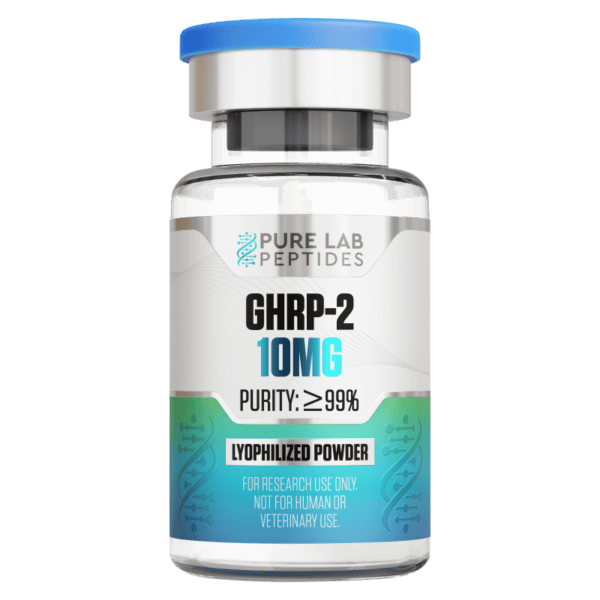
GHRP-2 5mg

$29.99

(5.0) (40 customer reviews)

Research Studies:

  • Selective GHS-R1a agonist for investigating calcium-mediated growth hormone secretagogue signaling pathways
  • Supports analysis of pulsatile growth hormone release through phospholipase C activation
  • Enables research on ghrelin-mimetic modulation of appetite and energy homeostasis mechanisms
  • Useful for evaluating somatotroph-specific receptor binding and downstream protein kinase signaling

Quantity:

Free Shipping
Buy Peptides with confidence: Stripe-powered secure checkout and major cards accepted.
Secure payment methods for buying peptides: Visa, MasterCard, AMEX, and more.
Buy Peptides with confidence: Stripe-powered secure checkout and major cards accepted.
Secure payment methods for buying peptides: Visa, MasterCard, AMEX, and more.

FREE Shipping on 

orders over $200

ALL ARTICLES AND PRODUCT INFORMATION PROVIDED ON THIS WEBSITE ARE FOR INFORMATIONAL AND EDUCATIONAL PURPOSES ONLY. The products offered on this website are intended solely for research and laboratory use. These products are not intended for human or animal consumption. They are not medicines or drugs and have not been evaluated or approved by the FDA to diagnose, treat, cure, or prevent any disease or medical condition. Any form of bodily introduction is strictly prohibited by law.

Description

GHRP-2 5mg is a research-use-only laboratory material supplied for controlled research workflows, compound characterization, and analytical documentation review. It is manufactured under rigorous quality standards to support consistency, traceability, and batch-specific verification for qualified laboratory settings.

Key Product Details

  • Manufactured in accordance with rigorous quality standards to support ≥99% purity, as reflected in batch-specific documentation where available.
  • Every batch is third-party analyzed for identity, assay/potency, and sterility documentation where applicable.
  • Supplied in lyophilized powder form to help preserve stability throughout transport and storage.
  • Produced with lot-level traceability to support research documentation and laboratory recordkeeping.

Research Documentation Context

  • Supports compound characterization in controlled laboratory settings.
  • Provides batch-specific identity and purity documentation for research review.
  • Allows lot-level traceability across laboratory documentation workflows.
  • Supports comparison of product labeling, analytical documentation, and storage information during research planning.
  • Supports analytical review of peptide research materials within a strictly laboratory-focused context.

Specifications and Documentation

  • Certificate of Analysis: Available with batch-specific documentation where applicable.
  • Material Safety Data Sheet: Coming Soon.
  • Handling and Storage Instructions: Coming Soon.
  • Product Form: Lyophilized powder.
  • Purity Specification: ≥99% purity.
  • Intended Use: Laboratory research use only.

GHRP-2 5mg is intended strictly for laboratory research use only. This product is not intended for human or animal consumption, therapeutic use, diagnostic use, clinical use, veterinary use, or as a food, drug, cosmetic, dietary supplement, or household product.

Additional information

CAS No.

158861-67-7

Purity

≥99%

Sequence

D-Ala-D-2-Nal-Ala-Trp-D-Phe-Lys-NH2

Molecular Formula

C45H55N9O6

Molecular Weight

818.99 g/mol

Applications

Growth hormone research, muscle recovery studies, anti-aging research, metabolic function studies

Synthesis

Solid-phase synthesis

Solubility

Soluble in water or 1% acetic acid

Stability & Storage

Stable for up to 24 months at -20°C. After reconstitution, may be stored at 4°C for up to 4 weeks or at -20°C for up to 6 months.

Appearance

White lyophilized powder

Shipping Conditions

Shipped at ambient temperature; once received, store at -20°C

Regulatory/Compliance

Manufactured in a facility that adheres to cGMP guidelines

Safety Information

Refer to provided MSDS

There are no reviews yet.

We value your feedback. Please leave a review below:

Research Procurement Information

Buy GHRP-2 Online for Laboratory Research | COA Guide

For researchers evaluating where to buy GHRP-2 for research, the priority is documented compound identity, research-use-only labeling, and batch-specific analytical support rather than consumer-oriented claims. GHRP-2 is commonly associated with pralmorelin and growth hormone releasing peptide 2 in chemical and pharmacology databases, where it is classified as a peptide with documented molecular identity fields [1], [2]. This Pure Lab Peptides guide explains how laboratory buyers can review literature, COA data, HPLC, LC-MS, lot traceability, and supplier documentation while keeping the page strictly within RUO boundaries.

  • GHRP-2 is a research peptide also indexed under pralmorelin and growth hormone-releasing peptide-2, with chemical identity fields available in official databases [1], [2].
  • Published literature places this compound in the same research lane as ghrelin receptor and growth hormone secretagogue receptor studies, but that literature must remain separate from product positioning [2], [3].
  • Research buyers should review the certificate of analysis, compound name, lot number, purity data, and analytical testing documentation before procurement.
  • HPLC can support peptide purity review, while LC-MS and mass spectrometry can support identity and impurity characterization when paired with suitable reference data [4], [5].
  • A product listing may include catalog details, but those details should not become separate SEO targets or practical-use language.
  • RUO product pages should emphasize documentation, published literature boundaries, analytical verification, and lawful laboratory handling.

Fast Answer: What Should Researchers Check Before They Buy GHRP-2 for Research?

Researchers looking to buy GHRP-2 for research should first confirm RUO labeling, product-page identity fields, a batch-specific certificate of analysis, and analytical testing documentation. Products discussed in this article are intended for laboratory research use only and are not intended for human or animal consumption. Review COA, HPLC, LC-MS, lot number, and storage notes before any research procurement decision.

How Commercial Research Intent Changes the Search Phrase

The phrase “buy GHRP-2” becomes RUO-safe only when the intent is narrowed to qualified laboratory procurement. A safe product-page interpretation is “buy GHRP-2 for research,” which points the reader toward documentation, identity review, and supplier evaluation.

That distinction matters because a commercial keyword can drift into non-research intent if the page discusses personal outcomes or practical-use guidance. This guide keeps the commercial intent tied to research material review.

What Documentation Should Come First?

The first review layer should be the product identity record: compound name, recognized synonyms, molecular formula, and supplier documentation. PubChem lists pralmorelin with molecular formula C45H55N9O6 and molecular weight of about 818.0 g/mol, while IUPHAR identifies pralmorelin as GHRP-2 and growth hormone-releasing peptide-2 [1], [2].

After identity fields, research buyers should review the batch-specific certificate of analysis. A COA should be read as a documentation record, not as a claim about research outcomes.

Why RUO Labeling Matters Before Procurement

RUO labeling tells a laboratory team what the product page is and is not positioning. It keeps the page focused on laboratory research use, product documentation, and compound characterization.

RUO labeling also helps prevent literature language from being converted into product claims. That is especially important for GHRP-2 because endocrine-pathway literature can include terminology that belongs in academic context, not product positioning.

What Is GHRP-2 in Research Literature?

GHRP-2 is a synthetic peptide commonly cross-referenced with pralmorelin, KP-102, and growth hormone releasing peptide 2 in database and pharmacology sources [1], [2]. IUPHAR classifies pralmorelin as a peptide and describes it as an analogue that activates the growth hormone secretagogue, or ghrelin, receptor [2].

Research literature places GHRP-2 in the broader category of growth hormone secretagogues and ghrelin receptor research. This classification is useful for source discovery, but it should not be treated as product-use positioning.

GHRP-2 as a Synthetic Hexapeptide in Literature

A peer-reviewed analytical report describes pralmorelin/GHRP-2 with the sequence D-Ala-D-2-Nal-Ala-Trp-D-Phe-Lys-NH2, which places it in the synthetic hexapeptide category [6]. Sequence documentation can help laboratory buyers compare the product page, COA, and published literature.

Amino acid sequence is not the same as complete material verification. For procurement review, the sequence should align with the COA, identity testing, and lot-specific records.

Where Does Pralmorelin Fit in Compound Naming?

Pralmorelin is the database and pharmacology name commonly associated with GHRP-2 [1], [2]. IUPHAR lists GHRP-2, growth hormone-releasing peptide-2, and KP-102 as synonyms for pralmorelin [2].

Naming consistency matters because product pages, literature abstracts, COAs, and analytical reports may use different labels for the same compound. A research buyer should confirm that those labels point to the same target compound before comparing documentation.

What Same-Lane Endocrine Research Context Adds

Same-lane research context helps clarify why ghrelin, GHSR, GHRH, pituitary gland, and anterior pituitary terminology can appear near GHRP-2 in literature. Ghrelin was identified as an endogenous ligand for the growth hormone secretagogue receptor, and receptor-focused literature connects ghrelin signaling with pituitary and hypothalamic research models [7], [8].

That context is useful for literature interpretation. It should not be rewritten as a product claim.

GHRP-2 Peptide Identity and Product-Page Positioning

A product-page research guide should treat GHRP-2 as the canonical entity and pralmorelin as a key synonym. The page should not split the compound into separate variant topics or amount-specific SEO targets.

The identity layer should connect four items: compound name, sequence, molecular formula, and analytical records. When those items align, researchers have a clearer basis for procurement review.

How Amino Acid Sequence Supports Identity Review

The published pralmorelin sequence supports identity review because it gives laboratories a reference point for comparing supplier documentation [6]. Sequence review is especially useful when a peptide contains modified or D-amino residues that should be reflected accurately in documentation.

Sequence alone is not enough. Analytical confirmation still matters because a sequence written on a page does not prove batch identity.

Why Does Molecular Weight Belong in Supplier Documentation?

Molecular weight supports cross-checking between product documentation, chemical databases, and mass spectrometry records. PubChem and ChEMBL list pralmorelin with molecular formula C45H55N9O6 and molecular weight near 818 g/mol [1], [9].

For research procurement, this field should be consistent across the product page, COA, and identity testing data. A mismatch should be treated as a documentation issue that needs review.

What Does Research Use Mean for Growth Hormone Releasing Peptide 2?

For this page, research use means the compound is discussed as a laboratory material with documentation, analytical testing, and literature context. It does not mean the page provides personal-use guidance, clinical positioning, or outcome claims.

Growth hormone releasing peptide 2 terminology can be used safely when it identifies the compound or literature category. It becomes risky when it is framed as a claim about product effects.

What Should Research Use Mean for Product-Page Copy?

Product-page copy should answer procurement questions: What is the compound? What documentation is available? What analytical records support identity and purity? What boundaries apply?

That is the correct lane for a commercial RUO page. The page should not turn receptor or endocrine literature into claims about the product.

How Laboratory Research Use Differs From Product Positioning

Laboratory research use focuses on research models, analytical records, and documentation review. Product positioning focuses on what the seller claims about the material.

For GHRP-2, safe positioning means the product page can discuss COA review, receptor literature, and analytical verification without implying a practical application outside laboratory research.

Receptor and Pathway Context in Same-Lane Research

GHRP-2 appears in the same research lane as ghrelin receptor and growth hormone secretagogue receptor literature. IUPHAR states that GHRP-2, GHRP-6, and hexarelin are recognized as synthetic peptide agonists for the ghrelin receptor [3].

That receptor context supports literature interpretation. It does not establish product claims for RUO materials.

Growth Hormone Secretagogue Receptor Context

The growth hormone secretagogue receptor, also called the ghrelin receptor, is a G protein-coupled receptor connected to ghrelin signaling [3], [10]. UniProt identifies human GHSR as a receptor for ghrelin and notes coupling to G-alpha proteins in receptor function context [10].

For product-page research writing, the receptor should be discussed as a molecular target in the literature. It should not be presented as a commercial outcome.

Ghrelin Receptor Agonist Framing in Research

A ghrelin receptor agonist framing is appropriate when describing how academic sources classify GHRP-2 in receptor assays. IUPHAR’s ghrelin receptor page places GHRP-2 among synthetic peptide agonists for the receptor [3].

This phrasing should remain tied to research context. It should not become an implied purpose for the research material.

Why Is Pathway Relevance Not a Product Claim?

Pathway relevance means a compound appears in literature related to a receptor, signaling cascade, or model system. It does not mean a listed research material has demonstrated any product effect.

This boundary is essential for endocrine pathway research. A pathway term such as receptor signaling should help organize the literature, not market the product.

How Should Published Literature Be Interpreted?

Published literature should be interpreted by model type, endpoint, source quality, and RUO relevance. A receptor assay, database record, review article, or preclinical paper may provide context, but each evidence type has limits.

Research Area What Literature Examines Evidence Type RUO Interpretation
Compound identity Pralmorelin/GHRP-2 names, formula, and database identifiers [1], [2] Official database Useful for identity cross-checking, not outcome claims
Receptor context Ghrelin receptor and growth hormone secretagogue receptor mapping [3], [10] Pharmacology database Useful for pathway classification
Endocrine pathway literature GHRH, pituitary gland, and anterior pituitary signaling context [11], [12] Academic and database context Useful for same-lane interpretation
Peptide analytical review HPLC separation and LC-MS characterization of synthetic peptides [4], [5] Analytical literature Useful for purity and identity review

What Can Published Literature Support?

Published literature can support compound classification, receptor context, analytical concepts, and model-specific interpretation. For example, ghrelin discovery literature explains the endogenous ligand context for GHSR, while GHRP literature helps place synthetic gh-releasing peptides in the same research lane [7], [13].

Published literature should not be used as a shortcut for product claims. A safer interpretation is to separate what researchers studied from what a product page can say.

How Does Preclinical Context Shape Interpretation?

Preclinical context helps explain why some studies examine signaling, pituitary models, receptor interactions, or endocrine endpoints. A study of pituitary somatotroph cells examined whether GHRP-2 had a direct growth hormone-releasing, GHRH-independent action in that model [14].

Model-specific findings are not product positioning. They belong in literature interpretation, not procurement claims.

How Claim Boundaries Support RUO Positioning

Claim boundaries keep product-page copy focused on documentation rather than outcomes. This matters because phrases such as effects of GHRP-2 or product performance can drift into product-claim language if separated from study design and model context.

Some published literature outside the scope of RUO product use has examined this compound class in human study settings, including growth hormone deficiency as a clinical research category [15]. That literature should not be interpreted as a use claim for research-use-only materials.

How Research Findings Stay Separate From Product Claims

A research finding belongs to its study design, methods, materials, and model. A product claim belongs to commercial copy.

The safest product-page approach is to state that published literature has examined GHRP-2 in receptor and endocrine-pathway contexts, while the product page itself focuses on COA review, identity testing, and RUO labeling.

What Do Claim Boundaries Mean for Commercial Pages?

For a commercial RUO page, claim boundaries mean the page can help researchers evaluate documentation without suggesting non-research intent. The copy can discuss analytical testing, certificate of analysis review, and lot traceability.

It should not interpret academic findings as reasons to procure the compound for a non-laboratory purpose. This separation protects the clarity of the page.

Why Does Endocrine Language Require Careful Framing?

Endocrine language can be scientifically precise and still risky if it is written as a commercial claim. Terms related to GH secretion, pituitary signaling, or the release of growth hormone should appear only as literature context or model-specific endpoint language [11], [14].

For GHRP-2, the safer framing is simple: receptor and pathway literature explains why the compound is studied, while the product page explains how documentation should be reviewed.

Why Should Certificate of Analysis Review Come Before Procurement?

A certificate of analysis should come before procurement because it links a product listing to batch-specific analytical information. For a research peptide, the COA should help confirm identity fields, purity data, lot number, testing method, and date of analysis.

This does not make the COA a complete scientific proof. It makes it a critical documentation checkpoint.

What Should a Certificate of Analysis Identify?

A certificate of analysis should identify the compound, batch or lot number, testing method, and reported analytical results. FDA analytical guidance emphasizes the role of validated analytical procedures and the selection of suitable validation tests for analytical methods [16].

For peptide research materials, a COA is most useful when it can be matched to the product page and lot-specific documentation. The document should not be treated as interchangeable across batches.

How Do Researchers Review COA Consistency?

Researchers can review COA consistency by comparing the compound name, molecular weight, lot number, purity method, and identity method across documents. FDA analytical-method guidance discusses the importance of reference standards, qualification records, certificates of analysis, and impurity profile information in analytical contexts [17].

The practical question is whether the product page, COA, and label tell the same documentation story. If they do not, the material needs closer review.

Why Do Batch-Specific COA Dates Matter?

COA dates matter because research procurement is batch-specific. A COA from a different lot does not confirm the documentation status of the material being reviewed.

Data integrity guidance for regulated laboratories emphasizes complete laboratory records, including graphs, charts, spectra, notebooks, worksheets, and instrument data where applicable [18]. That principle supports careful review of batch-level records.

Peptide Purity and Identity Testing Considerations

Peptide purity and identity are related, but they are not the same. Purity testing may show the relative proportion of a main chromatographic peak, while identity testing helps confirm whether that material corresponds to the intended peptide.

A neutral lab-test verification workflow can support review:

  1. Verify the compound name, synonym set, and lot number across the product page, label, and COA.
  2. Review the batch-specific certificate of analysis.
  3. Check whether the purity testing method is identified.
  4. Confirm whether identity testing is supported by LC-MS, mass spectrometry, or another suitable analytical method.
  5. Review chromatogram, retention-time, or mass data when available.
  6. Check the COA date and laboratory source.
  7. Record storage and handling documentation in the laboratory file.

How Assay Purity Supports Material Review

Assay purity supports material review by showing how an analytical method reports the primary component relative to other detected components. HPLC is widely used in peptide analysis and purification because it can separate peptide components using chromatographic conditions suited to peptide chemistry [4].

A purity value should be read with the method and chromatogram in mind. It does not replace identity confirmation.

What Identity Confirmation Adds to Procurement

Identity confirmation adds confidence that the material corresponds to the intended compound. LC-MS is often used in synthetic peptide characterization because mass spectrometry can help evaluate structural features and impurities when paired with liquid chromatography [5].

Mass spectrometry is well suited for synthetic peptide identity and purity analysis when the expected sequence and mass are known [19]. For procurement review, identity confirmation should connect back to the COA and lot record.

HPLC and LC-MS Documentation for GHRP-2

HPLC and LC-MS documentation should be read as complementary. HPLC can support purity review, while LC-MS can support identity and impurity characterization [4], [5].

For GHRP-2, a strong documentation set may include HPLC purity data, LC-MS identity data, compound name, formula, molecular weight, lot number, and COA date. The value comes from the consistency of the documentation stack.

How Does HPLC Support Peptide Purity Review?

HPLC supports peptide purity review by separating peptide components so that chromatographic peaks can be assessed. Peptide HPLC methods can include reversed-phase, ion-exchange, and size-exclusion modes depending on the analytical objective [4].

For a product-page buyer, the key is not to overread a purity percentage. The key is to confirm the method, batch link, and supporting chromatogram.

How Does LC-MS Support GHRP-2 Identity Verification?

LC-MS supports GHRP-2 identity verification by combining liquid chromatography with mass-based analysis. LC-MS can help characterize synthetic peptide impurities, including structurally related forms, when the method is appropriate for the peptide and analytical question [5].

For documentation review, LC-MS data should be connected to the same lot as the COA. Otherwise, the data may not support the specific material being evaluated.

Why Does Mass Spectrometry Data Help Confirm Identity?

Mass spectrometry data helps confirm identity because peptide mass and fragmentation information can be compared with expected peptide features. Synthetic peptide mass spectrometry is often discussed as a tool for evaluating identity and purity when sequence expectations are known [19].

For GHRP-2, mass data should be reviewed next to the expected molecular weight and sequence. That comparison supports technical procurement review without making product claims.

Lot Traceability and Batch-Specific Documentation

Lot traceability ties the material listing to a specific batch record. It helps research buyers avoid treating generic documentation as if it applied to every material unit.

OECD guidance on GLP test items emphasizes the importance of identification, labeling, storage, characterization, and handling records for test items used in GLP studies [20]. RUO procurement can apply the same documentation mindset without suggesting the material is intended for regulated study use.

What Do Lot Numbers Add to Traceability?

Lot numbers make documentation specific. They connect the product label, COA, test records, and storage notes to a defined batch.

Without lot-level alignment, a COA may be informative but incomplete. The stronger review asks whether every document points to the same lot.

How Batch Documentation Supports Research Procurement

Batch documentation supports research procurement by reducing ambiguity. It gives laboratory buyers a record of what was tested, when it was tested, and which lot the record describes.

FDA Q7A guidance states that quality systems are intended to help ensure materials meet the quality and purity characteristics they are represented to possess [21]. For RUO product pages, that principle supports careful documentation review rather than outcome language.

Which Supplier Documentation Matters Before Researchers Buy GHRP-2 for Research?

Before researchers buy GHRP-2 for research, supplier documentation should answer identity, purity, testing, lot traceability, and labeling questions. A product page should make those records easy to evaluate.

The strongest documentation stack includes the product listing, batch-specific COA, analytical testing summary, lot number, storage notes, and RUO statement. Each part should support the same compound identity.

What Should Research Buyers Compare Across Suppliers?

Research buyers should compare document clarity, not marketing claims. Useful comparison points include COA availability, HPLC method visibility, LC-MS identity support, lot-specific records, and consistent RUO labeling.

This is a source-quality filter: official databases and peer-reviewed literature support scientific context, while supplier documents support procurement review. The two should not be merged into product claims.

How Third-Party Testing Fits the Documentation Stack

Third-party testing can add value when the lab source, method, lot number, and date are clearly documented. It is less useful when the report is generic or detached from the material being evaluated.

Analytical documentation is strongest when it is traceable. The record should show what was tested and how the report connects to the product page.

Storage, Handling, and Labeling Documentation Review

Storage, handling, and labeling documentation help preserve the integrity of laboratory records. They also clarify how the supplier frames the material.

OECD test-item guidance includes storage, labeling, identification, and characterization among test-item management considerations [20]. For RUO procurement, those fields support orderly lab documentation.

Why Lyophilized Material Notes Matter

Lyophilized material notes matter because freeze drying is a process used to remove water from a frozen material by sublimation and desorption, and storage conditions can affect material stability [22]. A product page should state storage documentation clearly without drifting into practical-use language.

For research buyers, the key question is whether storage expectations are documented and consistent. Storage notes belong in the laboratory record.

What Labeling Consistency Shows Across Documentation

Labeling consistency shows whether the supplier’s product page, COA, and product label identify the same compound. For GHRP-2, the label should align with the canonical compound name and recognized synonyms.

Consistency does not replace analytical testing. It helps prevent ambiguity before the laboratory reviews COA and method data.

What Should Final Procurement Review Confirm Before Researchers Buy GHRP-2 for Research?

Final procurement review should confirm that the page is RUO-safe, the compound identity is consistent, and the documentation stack is complete. It should also confirm that the product page avoids claim-heavy language.

This final review is not about product outcomes. It is about whether a research buyer has enough documentation to evaluate the listing.

What Should Researchers Confirm Before Procurement?

Use this quality and documentation checklist:

  • Verify that GHRP-2 is labeled for research use only.
  • Review the batch-specific certificate of analysis.
  • Confirm that purity data are supported by analytical testing.
  • Check that the lot number on the COA matches the product documentation.
  • Compare compound name, synonyms, molecular weight, and sequence across records.
  • Assess whether the product page keeps literature context separate from claims.
  • Document storage and labeling details in the laboratory record.

How Documentation Review Reduces Ambiguity

Documentation review reduces ambiguity by making each claim checkable. A product name can be compared with a database record, a COA can be matched to a lot, and analytical data can be reviewed next to the stated testing method.

For GHRP-2, this process is especially helpful because literature may use multiple names: GHRP-2, pralmorelin, KP-102, and growth hormone-releasing peptide-2 [2]. Consistent naming improves procurement clarity.

Where Pure Lab Peptides Fits in RUO Procurement

Pure Lab Peptides product-page content should be evaluated through RUO labeling, product documentation, and batch-specific records. The purpose of this page is to help research buyers understand what to review before selecting a research-use-only peptide.

The safest next step is documentation-first evaluation. Review the product-page documentation, COA details, and RUO labeling before evaluating this compound for laboratory research.

Common Misunderstandings in GHRP-2 Research Procurement

Several misunderstandings can weaken RUO product-page clarity:

  • Published literature does not equal product-use guidance.
  • A purity percentage does not prove complete peptide identity; HPLC and LC-MS answer different analytical questions [4], [5].
  • A COA should be batch-specific, not generic.
  • A catalog amount such as 10mg is a listing specification, not a separate SEO target or research instruction.
  • Receptor pathway relevance is not a product claim.

The safest interpretation is documentation-first. Product pages should help laboratories evaluate records, not translate literature into outcomes.

Next Steps for RUO Documentation Review

Review batch-specific documentation before selecting any research-use-only peptide. For research teams comparing peptide suppliers, prioritize COA availability, transparent labeling, analytical testing, and lot-level documentation. Explore Pure Lab Peptides for RUO peptide compounds with research-focused product information and available documentation.

FAQs

What is another name for GHRP-2?

Another name for GHRP-2 is pralmorelin, and published database records also associate it with growth hormone-releasing peptide-2 and KP-102 [1], [2]. In research documentation, synonym review helps laboratory buyers compare product-page identity fields, COA records, and peptide sequence references. The goal is consistent compound identification, not product-use positioning.

Is GHRP-2 a growth hormone?

GHRP-2 is not itself growth hormone; it is classified in research literature as a peptide associated with growth hormone secretagogue receptor studies [2], [3]. Product-page content should describe GHRP-2 as a research peptide and keep endocrine pathway terminology tied to literature context. This helps prevent receptor research from becoming a product claim.

What should researchers consider before they buy GHRP-2 for research?

Researchers should consider documentation before they buy GHRP-2 for research. Key review points include RUO labeling, batch-specific COA data, lot traceability, peptide identity, and analytical testing records. If available, HPLC and LC-MS documentation can help connect purity review and identity confirmation to the same research material lot [4], [5].

What does the peptide sequence show for GHRP-2 research materials?

The peptide sequence helps identify GHRP-2 as a defined synthetic hexapeptide in research literature [6]. Sequence review can support compound characterization when paired with molecular weight, synonym checks, COA data, and analytical testing. It should not be treated as complete verification by itself because batch-specific documentation remains necessary.

How do high-performance liquid chromatography and LC-MS support documentation review?

High-performance liquid chromatography supports peptide purity review by separating components for chromatographic assessment, while LC-MS supports identity review through mass-based analytical data [4], [5]. For GHRP-2 research materials, these methods are most useful when linked to the same lot number, COA, and supplier documentation. Method context matters as much as the reported value.

How should researchers interpret GHSR-1A receptor and cell signaling language?

Researchers should interpret GHSR-1A receptor and cell signaling language as literature context, not as product positioning. GHRP-2 appears in research discussions involving ghrelin agonist activity, receptor signaling, and signal transduction pathways [3]. RUO product pages should keep those concepts connected to published literature, in vitro research context, and documentation review.


Contributing Authors

The following authors are recognized for published research that helped shape the scientific context discussed in this article.

Masayasu Kojima

Author profile: KAKEN Researcher Profile

Masayasu Kojima’s published work is central to the ghrelin and growth hormone secretagogue receptor literature that supports the receptor-pathway context for GHRP-2 research pages. His publications help frame how peptide ligands, receptor identification, and endocrine pathway terminology are described in academic literature. For this product-page context, that work is most useful as background for interpreting compound classification, receptor research, and literature boundaries while keeping RUO content focused on documentation rather than claims. His ghrelin research also supports careful use of same-lane terms around peptide identity and receptor pathway research.

Selected publications:

Yuxiang Sun

Author profile: Texas A&M University Profile

Yuxiang Sun’s publications are relevant to the GHSR and ghrelin receptor pathway literature used to interpret GHRP-2 within the GH Secretagogue and GHRH Research lane. Her work with receptor-focused research models adds context for how published studies separate pathway investigation from product-page claims. In this article’s framework, that literature helps support a documentation-first approach: receptor language belongs in scientific interpretation, while RUO product pages should emphasize COA review, analytical testing, peptide identity, and lot traceability. Her publications provide useful background for understanding GHSR-focused endocrine pathway research without shifting the page into outcome language.

Selected publications:

REFERENCES

  1. National Library of Medicine. Pralmorelin compound record. PubChem. Updated database record.
  2. IUPHAR/BPS Guide to Pharmacology. Pralmorelin ligand record. Guide to Pharmacology Database.
  3. IUPHAR/BPS Guide to Pharmacology. Ghrelin receptor record. Guide to Pharmacology Database.
  4. Mant CT, Chen Y, Yan Z, Popa TV, Kovacs JM, Mills JB, Tripet BP, Hodges RS. HPLC analysis and purification of peptides. Methods in Molecular Biology. 2007.
  5. Lian Z, Jalan A, et al. LC-MS characterization of synthetic peptides. Journal of Pharmaceutical and Biomedical Analysis. 2021. PMID: 34110145.
  6. Okano M, et al. Analytical identification of pralmorelin/GHRP-2. Rapid Communications in Mass Spectrometry. 2010. PMID: 20552695.
  7. Kojima M, Hosoda H, Date Y, Nakazato M, Matsuo H, Kangawa K. Ghrelin discovery and GHSR ligand context. Nature. 1999. PMID: 10604470. DOI: 10.1038/45230.
  8. Howard AD, Feighner SD, Cully DF, et al. Growth hormone secretagogue receptor discovery study. Science. 1996. PMID: 8688086.
  9. European Bioinformatics Institute. Pralmorelin compound record. ChEMBL.
  10. UniProt Consortium. GHSR human protein record. UniProtKB.
  11. Olarescu NC, et al. Normal physiology of growth hormone in adults. Endotext, NCBI Bookshelf. Updated 2025.
  12. National Library of Medicine. Growth Hormone-Releasing Hormone MeSH record. NCBI MeSH.
  13. Ghigo E, Arvat E, Muccioli G, Camanni F. Growth hormone-releasing peptides research review. European Journal of Endocrinology. 1997. PMID: 9186261.
  14. Peroni CN, et al. GHRP-2 research in pituitary somatotroph cell context. Growth Hormone & IGF Research. 2012.
  15. Adis International. Pralmorelin source profile. Drugs in R&D. 2004. PMID: 15230633.
  16. U.S. Food and Drug Administration. Q2(R2) Validation of Analytical Procedures. FDA Guidance. 2024.
  17. U.S. Food and Drug Administration. Analytical procedure content and reference material guidance. FDA Guidance. 2015.
  18. U.S. Food and Drug Administration. Data integrity and laboratory record guidance. FDA Guidance. 2018.
  19. Prabhala BK, et al. Mass spectrometry characterization of synthetic peptides. Methods in Molecular Biology. 2015. PMID: 26424265.
  20. OECD. Management, characterisation and use of test items used in GLP studies. OECD Series on Principles of Good Laboratory Practice and Compliance Monitoring. 2018. DOI: 10.1787/da9ee953-en.
  21. U.S. Food and Drug Administration. Q7A Good Manufacturing Practice Guidance for Active Pharmaceutical Ingredients. FDA Guidance.
  22. Roy I, Gupta MN. Freeze-drying process review for protein and peptide materials. Biotechnology and Applied Biochemistry. 2004. PMID: 15032737.

Research Disclaimer

This research disclaimer clarifies how this page handles published literature and search language around GHRP-2. In GH Secretagogue and GHRH Research content, phrases such as food intake, action of GHRP-2, GHRP-2 exposure, insulin-like growth factor-1, IGF-1 levels, and energy balance can drift into consumer-facing, clinical-use, wellness, or product-claim language when framed outside model-specific research context.

Here, those phrases are handled only as research-language examples, not product uses, outcomes, instructions, or recommendations. The focus remains on GHRP-2 identity, COA review, analytical testing, peptide purity, lot traceability, RUO labeling, product documentation, and published literature boundaries. Terms such as growth hormone secretion, growth hormone from the pituitary, potential action of GHRP-2, peak GH, GH production, and tissue damage should remain separate from product positioning unless they are clearly limited to research interpretation.


Have Questions?

Our team is ready to assist you with any inquiries regarding our catalogue of peptides and their applications.

Pure Lab Peptides Logo with Black Letters
0