 Skip to content
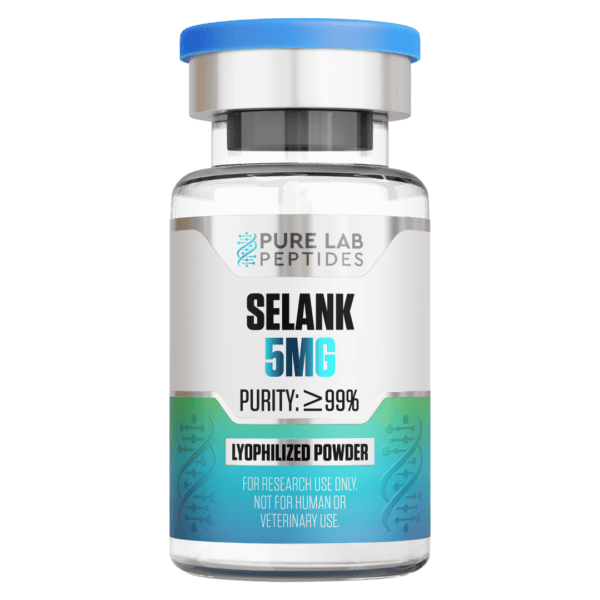
Researchers who want to buy DSIP for research should begin with documentation, not product-claim language. DSIP, also known as delta sleep-inducing peptide, is cataloged in PubChem as a peptide compound and described in foundational literature as a nine-residue neuropeptide sequence, Trp-Ala-Gly-Gly-Asp-Ala-Ser-Gly-Glu [1], [2]. Laboratory buyers can compare DSIP identity records, relevant literature, COA data, analytical testing, and lot traceability when reviewing research-use-only materials.
- DSIP is a research peptide associated with delta sleep-inducing peptide literature, nonapeptide identity, and neuropeptide research context [1], [2].
- Research buyers should evaluate DSIP through compound identity, peptide sequence documentation, molecular-weight consistency, and batch-specific records.
- Published research on DSIP includes early sequence work, sleep-regulation terminology, preclinical evidence, and later reviews that emphasize unresolved questions in the literature [3], [4], [5].
- COA documentation should connect the product listing, label, lot number, analytical method, purity data, and identity review.
- HPLC, LC-MS, and mass spectrometry are useful analytical terms for peptide review, but they must be tied to method details and batch documentation rather than assumed from a product claim [9], [10].
- Lot traceability, readable records, and reproducible documentation support technical procurement review [13].
Fast Answer: What Should Researchers Check Before They Buy DSIP for Research?

Researchers evaluating where to buy DSIP for research should first review RUO labeling, compound identity, batch-specific COA documentation, HPLC purity data, LC-MS or mass-spectrometry identity support, lot traceability, and supplier documentation consistency. Products discussed in this article are intended for laboratory research use only and are not intended for human or animal consumption.
What Documentation Should Come First?
The first document to review is the batch-specific certificate of analysis. A useful COA should identify the compound, lot number, analytical method, reported purity, identity confirmation data when available, and the date or source of the testing record.
Analytical-documentation frameworks such as FDA Q2(R2) and ICH Q2(R2) describe validation concepts for identity, assay, purity, impurity, and qualitative or quantitative measurements [9], [10]. For research procurement, those concepts translate into a simple question: do the label, COA, and supporting records describe the same DSIP material?
Why RUO Labeling Matters Before Procurement
RUO labeling identifies DSIP as a laboratory research material, not a compound supplied for personal or clinical use.
Before procurement, lab teams should confirm that the product listing, label language, and supporting documentation stay aligned. Mixed signals create compliance risk because they blur the distinction between published literature, product documentation, and unsupported claims.
What Is DSIP in Neuropeptide Research Literature?
DSIP stands for delta sleep-inducing peptide. PubChem lists delta sleep-inducing peptide with the molecular formula C35H48N10O15 and molecular weight of about 848.8 g/mol [1].
Foundational sequence work identified DSIP as Trp-Ala-Gly-Gly-Asp-Ala-Ser-Gly-Glu and named it “Delta Sleep-Inducing Peptide” in the scientific literature [2]. This sequence provides a reference for comparing DSIP identity documentation.
Nonapeptide Identity and Research Classification
A nonapeptide contains nine amino acid residues. DSIP is discussed in literature as a nonapeptide, and its sequence identity is central to how researchers evaluate whether documentation is consistent [2].
DSIP is a neuropeptide research compound, not a wellness product or product-outcome claim.
Why Amino Acid Sequence Documentation Matters?

Sequence documentation helps connect a named peptide to its molecular identity. For DSIP, the sequence Trp-Ala-Gly-Gly-Asp-Ala-Ser-Gly-Glu is the reference point used in foundational amino-acid analysis and sequence work [2].
Sequence documentation also helps reviewers compare the product page, COA, and analytical records. If the compound name, sequence, molecular formula, or molecular weight conflict across documents, the material needs further technical review before procurement.
DSIP Peptide Identity and Catalog Documentation
Identity documentation links the catalog listing to the compound record and the analytical results for a particular lot.
How DSIP Peptide Naming Stays Consistent
DSIP may appear as DSIP, delta sleep-inducing peptide, delta sleep inducing peptide, or emideltide in chemical databases and literature records [1].
What Catalog Amounts Tell Research Buyers
A catalog amount such as DSIP 5mg identifies a listing’s stated quantity. It does not establish an experimental design or replace lot-specific identity documentation.
For technical procurement, the stronger questions are whether the lot documentation is specific, whether the COA matches the listing, whether analytical methods are stated, and whether the supplier uses clear RUO language.
DSIP Documentation Priorities
Review compound identity, relevant literature, COA data, analytical testing, and lot traceability before procurement.
What Research Buyers Should Compare Across Supplier Documentation?
Research buyers should compare the compound name, sequence, formula, molecular weight, lot number, COA date, testing methods, and storage notes across all supplier documents. Good documentation practices emphasize legible, traceable, complete, and accurate records [13].
A mismatch is not automatically a failure, but it is a reason to pause.
How Product Listings Support Technical Procurement Review
A product listing should identify DSIP clearly, state RUO positioning, and point to batch-level documentation where available. It should not rely on vague claims.
For research teams, a product listing is the front door to the documentation set. The COA, label, lot record, and analytical details carry the technical weight.
Research-Use-Only Context for DSIP Materials
Research-use-only DSIP is a laboratory material evaluated through identity documentation, relevant literature, and analytical testing.
What RUO Status Means for Laboratory Research?
RUO status identifies a laboratory-research restriction. It does not establish suitability for personal or clinical use, or guarantee any experimental result.
How Documentation Supports Research Procurement
Researchers can compare compound identity records with supplier documentation to determine whether the listing, label, and COA describe the same material.
Scientific Background for Delta Sleep-Inducing Peptide
Delta sleep-inducing peptide research began with early work comparing original and synthetic nonapeptide material and later sequence-focused studies [2], [3]. A 1984 review described characterization, properties, and multiple research functions attributed to DSIP in the literature [4].
Later review work described DSIP as an unresolved research topic, noting that questions remain around endogenous biology, receptor context, and the strength of the sleep-factor hypothesis [5]. These unresolved questions limit the conclusions researchers can draw about DSIP biology.
How Schoenenberger-Era Literature Shaped DSIP Research?
Schoenenberger-era literature gave DSIP its sequence identity and early research framing. The 1978 amino-acid analysis and synthesis paper remains important because it connects the DSIP name to a specific nonapeptide sequence [2].
Where Delta Sleep Terminology Appears in Study Context
The term “delta sleep” comes from sleep-stage and EEG terminology. NCBI Bookshelf describes delta waves as low-frequency, high-amplitude EEG activity associated with deep non-REM stages in sleep-stage classification [7].
DSIP literature uses that terminology because the compound was historically discussed in relation to delta EEG and slow-wave sleep models [2].
What Do Slow-Wave Sleep and Sleep Architecture Terms Describe?
Slow-wave sleep, delta waves, non-rapid eye movement sleep, and rapid eye movement sleep are scientific terms used in sleep architecture research [7]. These terms describe experimental observations and classifications; they do not establish effects of a catalog product.
This is especially important for DSIP because later review literature emphasizes unresolved questions in the DSIP field [5].
Sleep Regulation Models in DSIP Research
Sleep regulation is often discussed through model frameworks. The two-process model describes sleep regulation as an interaction between a homeostatic process and a circadian process [8].
That broader sleep-regulation context helps readers understand why DSIP literature includes circadian rhythm, slow-wave sleep, delta wave, and sleep architecture terms. It does not establish that a supplier’s DSIP product produces sleep outcomes.
DSIP and Sleep Terminology in Research
Some research discusses DSIP in relation to slow-wave sleep models and EEG-based terminology, while later reviews remain cautious about firm conclusions [5], [7].
That caution is the core point.
Where Circadian Rhythm Concepts Fit
Circadian rhythm concepts can appear in DSIP research because older literature discusses DSIP alongside rhythmicity and neuroendocrine measures [4]. The broader sleep-regulation field also uses circadian and homeostatic models to explain timing and structure [8].
Circadian models provide research background; they do not establish the effects or suitability of a particular DSIP preparation.
Neuropeptide Signaling Context
DSIP is discussed as a peptide signal in scientific literature[1], [5]. Signaling findings depend on the experimental model and methods.
Neurotransmitter, receptor, and signal transduction concepts can help researchers interpret published DSIP studies within their experimental limitations.
What Neurotransmitter-Related Models Can Clarify?
Older DSIP literature discusses transmitter concentrations and neuroendocrine measures in research contexts [4]. These studies provide context for neurotransmitter-related research models.
How Stress Response Context Stays Preclinical
Stress response appears in some DSIP research literature, including model-specific work and review discussions [4], [5].
Stress-response findings apply to the models investigated. They do not establish effects of a supplier’s DSIP product.
Why Pathway Relevance Is Not a Product Claim?
A pathway can be relevant to a research question without supporting a product claim.
How Should DSIP Research Literature Be Interpreted?

DSIP literature should be interpreted as a mixed and historically complex research record. Foundational papers identified and synthesized the nonapeptide, while later review literature described unresolved questions around DSIP biology and sleep-factor interpretation [2], [5].
The better approach is to evaluate model type, methods, limitations, and documentation relevance.
What Published Literature Can and Cannot Establish?
Published literature can establish that DSIP has been studied as a nonapeptide and neuropeptide research compound. It can also show how scientists have used sleep-stage terminology, EEG terminology, preclinical models, and neuroendocrine research concepts in DSIP studies [2], [3], [4], [6].
Published literature cannot replace product-specific COA review. A paper is not a batch record.
| Research Area | What Literature Examines | Evidence Type | RUO Interpretation |
|---|---|---|---|
| Compound identity | DSIP sequence, synthesis, and nonapeptide characterization [2], [3] | Foundational chemistry literature | Supports identity context, not product claims |
| Sleep architecture terminology | Delta waves, slow-wave sleep, and NREM/REM terminology [7] | Academic reference | Helps define terms without making product claims |
| Sleep regulation models | Homeostatic and circadian framework for sleep regulation [8] | Review literature | Provides context for research interpretation |
| DSIP evidence limits | Review literature describes DSIP as an unresolved research topic [5] | Peer-reviewed review | Highlights unresolved questions and limits on interpretation |
| Analytical documentation | Identity, assay, purity, and analytical validation concepts [9], [10] | Official guidance | Guides documentation review, not product performance |
Where Source Quality Changes Interpretation
Source quality changes how much weight a claim deserves. Peer-reviewed literature, official databases, and official analytical guidance should carry more weight than marketing claims or unsourced summaries.
Testing and calibration laboratories are commonly evaluated through competence and valid-result frameworks such as ISO/IEC 17025 [14]. Good documentation principles also emphasize traceable, reproducible records [13].
Limits of DSIP Research Evidence

Some published literature outside the scope of RUO product use has examined this compound class in human study settings. That literature should not be interpreted as a use claim for research-use-only materials.
Why Study Findings Do Not Establish Product Suitability
Study findings are model-specific. A foundational paper, review, or preclinical study may support scientific background, but it does not describe a Pure Lab Peptides product’s suitability for non-research contexts.
The 2006 DSIP review is especially useful here because it characterizes the topic as unresolved rather than settled [5].
Technical procurement review depends on compound identity, analytical methods, and batch-specific documentation.
Why COA Documentation Matters for DSIP?
COA documentation matters because it connects the product listing to batch-level analytical data. For DSIP, that means the COA should identify the peptide, lot, reported purity, method information, and any identity-supporting analysis.
FDA Q2(R2) and ICH Q2(R2) describe analytical validation concepts for identity, purity, assay, impurity, and related qualitative or quantitative measurements [9], [10]. Those concepts help buyers ask better documentation questions.
What a Certificate of Analysis Should Confirm?
A certificate of analysis should confirm what was tested, which lot it applies to, what method was used, and what the reported result means. It should be specific to the batch being evaluated.
For DSIP, the COA should match the canonical compound name and not rely on vague identity language. If LC-MS or mass spectrometry is cited, the record should make the identity basis clear.
How Batch-Specific Data Supports Review
Batch-specific data supports review because peptide lots can differ in documentation details, analytical dates, and testing records. Good documentation practice emphasizes records that are legible, traceable, complete, and accurate [13].
For procurement teams, the practical question is whether the product page, label, COA, and lot record tell the same story.
Where Assay Purity Belongs in Documentation
The reported value should be connected to the method and the batch.
A purity value is useful, but it is not the same as full identity review. HPLC can support purity review, while LC-MS or mass spectrometry can support identity review when method data and reference expectations are aligned [10], [11], [12].
What Analytical Testing Can Confirm for Peptide Purity and Identity?

Analytical testing can support a documentation review by showing whether the reported material aligns with expected purity and identity data. FDA Q14 describes science- and risk-based approaches for analytical procedure development, while Q2(R2) addresses validation principles [15], [9].
HPLC and LC-MS provide analytical evidence within the limits of their methods. Neither offers a blanket guarantee of identity, purity, or suitability.
How HPLC Supports Peptide Purity Review?
High-performance liquid chromatography is widely used for peptide analysis and purification. Mant and Hodges describe HPLC modes used for peptides, including reversed-phase, size-exclusion, ion-exchange, and mixed-mode approaches [11].
In a COA context, HPLC can help support purity review when the chromatogram, method, and lot-level data are available. It does not, by itself, establish every identity feature.
How LC-MS Supports Identity Verification?
LC-MS combines chromatographic separation with mass-spectrometry analysis. In peptide and proteomics workflows, mass-spectrometry data are commonly used to support identification by comparing observed spectral information with theoretical or reference information [12].
For DSIP documentation, LC-MS is most useful when it is tied to the expected peptide mass, lot number, and COA record. The reviewer should look for method clarity rather than relying on a short claim.
What Mass Spectrometry Adds to Peptide Review?
Mass spectrometry adds mass-related evidence to the peptide review process. In LC-MS workflows, peptide features can be evaluated through mass-to-charge data, spectra, and chromatographic context [12].
For DSIP, that means mass spectrometry can help support identity review when the observed signal is consistent with the expected compound. It should be read alongside HPLC, sequence documentation, and batch records.
Lot Traceability and Supplier Documentation Review
Lot traceability is the bridge between product listing and laboratory record. Without a lot number, a buyer cannot reliably connect a COA to the specific material under review.
Traceable documentation also supports reproducibility. FDA good documentation training describes records as most useful when they are legible, traceable, reproducible, complete, and accurate [13].
Why Lot Numbers Matter for Research Procurement?
Lot numbers matter because they connect the DSIP listing, label, COA, and testing record. A lot mismatch creates uncertainty.
For research procurement teams, the lot number should be checked before the purity value is interpreted. The value only matters if it belongs to the correct batch.
What COA Dates Add to Batch Review?
COA dates help reviewers understand when the analytical record was generated. A date does not prove quality by itself, but it is part of the documentation trail.
The strongest review looks at the COA date, lot number, method, lab source, and product listing together. That is how research buyers avoid treating isolated claims as complete documentation.
Where Storage Notes Belong in Supplier Documentation
Storage notes belong in supplier documentation and laboratory records.
For DSIP, storage documentation should align with the product label and COA record. Clear documentation helps lab teams preserve chain-of-record clarity from procurement through internal recordkeeping.
Documentation Review Before You Buy DSIP for Research
Before selecting a DSIP research material, documentation should be reviewed in a defined order. Start with identity, then batch-specific COA, then analytical methods, then lot traceability, then supplier documentation consistency.
What Lab Teams Should Confirm Before Ordering?
A documentation-focused verification process can look like this:
- Verify the compound name, lot number, and label match across documents.
- Review the batch-specific certificate of analysis.
- Check whether the purity testing method is listed.
- Confirm whether identity testing is supported by LC-MS, mass spectrometry, or another suitable analytical method.
- Review chromatogram or mass data when available.
- Check the COA date and lab source.
- Record storage and handling requirements in a laboratory record.
This process reflects the same core idea found in official analytical and documentation guidance: analytical records should be fit for their intended review purpose, and records should be traceable and reproducible [9], [13], [15].
Quality and documentation checklist
- Verify that DSIP is labeled for research-use-only purposes.
- Review the batch-specific certificate of analysis.
- Confirm that purity data are supported by a stated analytical method.
- Check that the lot number on the COA matches the product documentation.
- Compare compound name, molecular weight, and peptide sequence across records.
- Distinguish research findings from evidence about the supplied lot.
- Document storage and handling conditions in a laboratory record.
- Prioritize supplier documentation that is clear, traceable, and batch-specific.
Research-use-only notice: “Pure Lab Peptides supplies compounds for laboratory research use only. Products are not intended for human or animal consumption, diagnostic use, therapeutic use, clinical use, veterinary use, or as food, drugs, cosmetics, dietary supplements, or household products. Researchers are responsible for ensuring lawful, appropriate handling and use in accordance with applicable regulations and institutional guidelines.”
Next step: Review the product-page documentation, COA details, analytical testing information, and RUO labeling before evaluating DSIP for laboratory research.
FAQs
What is another name for DSIP in research literature?
DSIP stands for delta sleep-inducing peptide. Related naming variants appear in compound records. For identity review, compare the name with the peptide sequence, molecular record, COA, and lot documentation [1].
What should researchers consider before they buy DSIP for research?
Researchers should consider documentation before they buy DSIP for research. The key review points are RUO labeling, COA availability, peptide identity, peptide purity, analytical testing, lot traceability, and supplier documentation consistency.
Why should researchers review a COA for DSIP?
Researchers should review a COA for DSIP because it connects the product listing to batch-specific documentation. A useful COA should identify the compound, lot record, stated testing method, purity data, and identity-supporting information when available. COA review is strongest when paired with label consistency, supplier documentation, and analytical testing records.
How do HPLC and LC-MS support DSIP documentation review?
HPLC and LC-MS support DSIP documentation review by addressing different technical questions. HPLC can support peptide purity review through chromatographic data, while LC-MS can support peptide identity review when paired with suitable reference information and batch records [11], [12]. These methods should be read as documentation tools, not as standalone product claims.
What Can Sleep-Related DSIP Findings Establish?
Findings involving sleep patterns, sleep cycles, sleep stages, or physiological endpoints describe the experimental materials and conditions studied. They do not establish the effects or safety of a catalog product.
Why Does DSIP Appear in Neuropeptide and Sleep Research?
Published literature has examined delta sleep-inducing peptide in studies involving EEG terminology, neural oscillation, and sleep regulation models [5], [7], [8].
Researchers Cited in This Guide
The researchers listed below are cited for relevant published work. Their inclusion does not imply that they wrote, reviewed, or endorsed this guide or Pure Lab Peptides products.
Guido A. Schoenenberger
Author profile: ResearchGate Author Record
Guido A. Schoenenberger is recognized for published work that helped establish the early scientific record around DSIP identity, sequence characterization, and neuropeptide research context. His publications are especially relevant to this article’s discussion of compound characterization because they connect delta sleep-inducing peptide to a defined nonapeptide structure and helped frame later literature review around DSIP as a research subject.
Selected publications:
- A publication examining DSIP amino-acid analysis and sequence characterization — Pflügers Archiv, 1978. DOI: 10.1007/BF00581575. PMID: [568769]
- A review relevant to DSIP characterization and research literature — European Neurology, 1984. DOI: 10.1159/000115711. PMID: [6548966]
Vladimir M. Kovalzon
Author profile: Institutional Profile
Vladimir M. Kovalzon’s published work contributes to the interpretation of DSIP in neuropeptide and sleep-regulation research. His publications discuss unresolved questions and model-specific peptide analog studies, providing context for evaluating the limitations of the evidence.
Selected publications:
- Delta sleep-inducing peptide (DSIP): a still unresolved riddle — Journal of Neurochemistry, 2006. DOI: 10.1111/j.1471-4159.2006.03693.x. PMID: [16539679]
- A publication relevant to DSIP peptide analog research models — Izvestiia Akademii Nauk. Seriia Biologicheskaia, 2001. PMID: [11525128]
REFERENCES
- National Center for Biotechnology Information. Delta Sleep-Inducing Peptide. PubChem Compound Database. Accessed 2026.
- Schoenenberger GA, Maier PF, Tobler HJ, Wilson K, Monnier M. The delta EEG sleep-inducing peptide: amino-acid analysis, sequence, synthesis and activity of the nonapeptide. Pflügers Archiv. 1978. DOI: 10.1007/BF00581575. PMID: 568769.
- Monnier M, Dudler L, Gächter R, Maier PF, Tobler HJ, Schoenenberger GA. The delta sleep inducing peptide: comparative properties of the original and synthetic nonapeptide. Experientia. 1977. DOI: 10.1007/BF01922266. PMID: 862769.
- Schoenenberger GA. Characterization, properties and multivariate functions of delta-sleep-inducing peptide. European Neurology. 1984. DOI: 10.1159/000115711. PMID: 6548966.
- Kovalzon VM, Strekalova TV. Delta sleep-inducing peptide: a still unresolved riddle. Journal of Neurochemistry. 2006. DOI: 10.1111/j.1471-4159.2006.03693.x. PMID: 16539679.
- Iyer KS, Marks GA, Kastin AJ, McCann SM. Evidence for a role of delta sleep-inducing peptide in slow-wave sleep and sleep-related growth hormone release in a preclinical model. Proceedings of the National Academy of Sciences of the United States of America. 1988. DOI: 10.1073/pnas.85.10.3653. PMID: 3368469.
- Purves D, Augustine GJ, Fitzpatrick D, et al., editors. Stages of Sleep. Neuroscience. 2nd edition. NCBI Bookshelf. 2001.
- Borbély AA, Daan S, Wirz-Justice A, Deboer T. The two-process model of sleep regulation: a reappraisal. Journal of Sleep Research. 2016. DOI: 10.1111/jsr.12371. PMID: 26762182.
- U.S. Food and Drug Administration. Q2(R2) Validation of Analytical Procedures. FDA Guidance. 2024.
- International Council for Harmonisation. Q2(R2) Validation of Analytical Procedures. ICH Guideline. 2023.
- Mant CT, Hodges RS. HPLC analysis and purification of peptides. Methods in Molecular Biology. 2007. PMID: 18604941.
- Karpievitch YV, Polpitiya AD, Anderson GA, Smith RD, Dabney AR. Liquid chromatography mass spectrometry-based proteomics. Annals of Applied Statistics. 2010. DOI: 10.1214/10-AOAS341. PMID: 21593992.
- U.S. Food and Drug Administration. Good Documentation Practices. FDA training material. 2024.
- International Organization for Standardization. ISO/IEC 17025: Testing and calibration laboratories. ISO. Accessed 2026.
- U.S. Food and Drug Administration. Q14 Analytical Procedure Development. FDA Guidance. 2024.
Research Disclaimer
This material is supplied strictly for in vitro laboratory research and is not for human or veterinary use. Published studies describe specific experimental materials, models, and methods; they do not establish the safety, efficacy, or suitability of this catalog product for non-research use. Review the original publications and the lot-specific analytical documentation independently.
There are no reviews yet.