


1 / 6
Laboratory Research Material
GHRP-6
10 mg per vial · Lyophilized powder
Laboratory Research Material
GHRP-6 10 mg per vial
Original price was: $44.99.$39.99Current price is: $39.99.
- Compound
- GHRP-6
- Amount per vial
- 10 mg
- Form
- Lyophilized powder
- Packaging
- 1 × 3 mL vial, boxed
- Shipping
- FedEx 2DayShips from the U.S. Estimated arrival2 business days after dispatchWeekday dispatch · 4 p.m. ET cutoff
Delivery details
Estimated for in-stock orders using FedEx 2Day. Weekends and FedEx closures are excluded. Holiday pickups, destination and carrier delays can affect arrival. Alaska and Hawaii may take longer.
Free U.S. shipping on orders $199+
Important
Research Use Notice
All articles and product information provided on this website are for informational and educational purposes only. The products offered on this website are intended solely for research and laboratory use. These products are not intended for human or animal consumption. They are not medicines or drugs and have not been evaluated or approved by the FDA to diagnose, treat, cure, or prevent any disease or medical condition. Do not administer these products to humans or animals.
Product Documentation
Details, specifications, and documents
Description
GHRP-6 10 mg: research material
Buy GHRP-6 10 mg for laboratory research, supplied as lyophilized powder in one boxed 3 mL vial.
GHRP-6, or growth hormone-releasing peptide-6, is a synthetic six-amino-acid research peptide. It is studied as a secretagogue: a substance that stimulates secretion, here of growth hormone in experimental systems.
Choose the material and presentation
This is the 10 mg presentation of single-compound GHRP-6. Other vial sizes change the labeled material amount; they do not establish a different concentration or research effect. GHRP-2 and Ipamorelin are separate peptides, and growth hormone is a different protein.
Match the selected material to the compound used in your study. Keep the supplied form and preparation record with the assay, particularly when comparing equal masses of different peptides. A vial amount alone does not establish equal molar concentrations or equivalent activity.
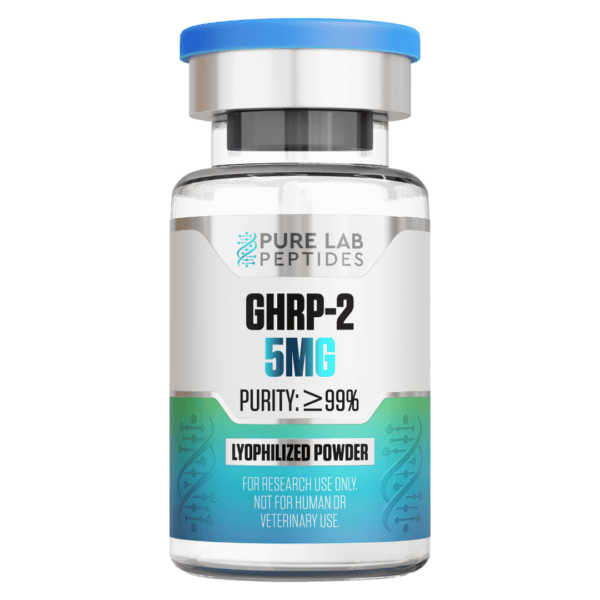
Other presentations: GHRP-6 2 mg, GHRP-6 5 mg.
GHRP-6 in signaling and comparison studies
An original rat anterior-pituitary cell study investigated events accompanying GHRP-6-stimulated growth hormone release. Researchers observed increases in inositol phosphates, phosphorylation of a protein kinase C substrate, and intracellular calcium. The findings supported involvement of the inositol-trisphosphate/diacylglycerol signaling pathway under those experimental conditions.
In a comparison with GHRP-2, rat pituitary cells exposed to one peptide became less responsive to the other, while their response to growth hormone-releasing factor remained. The investigators interpreted the cross-desensitization and antagonist results as evidence of a shared mechanism for the two peptides in that model.
The useful distinction is between peptide identity, a signaling measurement and the final hormone-release response. They are related observations, but one cannot substitute for all the others. These cell-culture studies provide research context; they do not demonstrate a clinical outcome or certify the functional activity of a supplied vial.
Product records and batch reports
The COA and documents tab provides available reports and product files. Match the compound, presentation and lot before comparing results. An HPLC purity result describes the chromatographic measurement; it is not a hormone-release or receptor-activity test.
Use the documentation supplied for this material when planning storage and handling. A shelf-life or solvent instruction from another supplier cannot establish stability for this lot. If the record does not answer a requirement of your assay, request clarification before relying on it.
Additional information
| CAS No. | 87616-84-0 |
|---|---|
| Purity | ≥99% |
| Sequence | His-D-Trp-Ala-Trp-D-Phe-Lys-NH2 |
| Molecular Formula | C46H56N12O6 (reference molecule; excludes counterions and fillers) |
| Molecular Weight | 873.01 g/mol |
| Synthesis | Solid-phase synthesis |
| Format | Lyophilized powder |
| Solubility | Soluble in water or 1% acetic acid |
| Stability & Storage | Stable for up to 24 months at -20°C. |
| Applications | In-vitro assay research, compound characterization, analytical method development |
| Appearance | White lyophilized powder |
| Shipping Conditions | Shipped at ambient temperature; once received, store at -20°C |
| Regulatory/Compliance | Manufactured in a facility that adheres to cGMP guidelines |
| Safety Information | Refer to provided MSDS |
COA & Documents
Independent lot testing
GHRP-6 10mg Certificate of Analysis
This product has featured batch-specific third-party laboratory documentation. The Pure Lab Peptides summary presents selected source-report fields in a consistent format; the linked original laboratory report controls if any information differs.
- Lot number
- 71556
- Report number
- 39707
- Date tested
- September 14, 2026
- Reported purity
- 99.27%
- Labeled content
- 10 mg
Product documents
Product information and laboratory resources. For lot-specific results, use the COA above.
Product & packaging information
Labeled amount, physical form and packaging for GHRP-6 10mg.
Revision 0.4 · 2026-10-05Download PDFLaboratory handling guide
General guidance for applicable lyophilized research materials. Not a product-specific SDS.
Revision 1.0 · 2026-09-22Download PDFGeneral guides & resources
Reading a COA & Verifying Your Lot
PDF · Revision 1.0Receiving, Storage & Traceability Record
PDF · Revision 1.0Research Use & Documentation Scope
PDF · Revision 1.0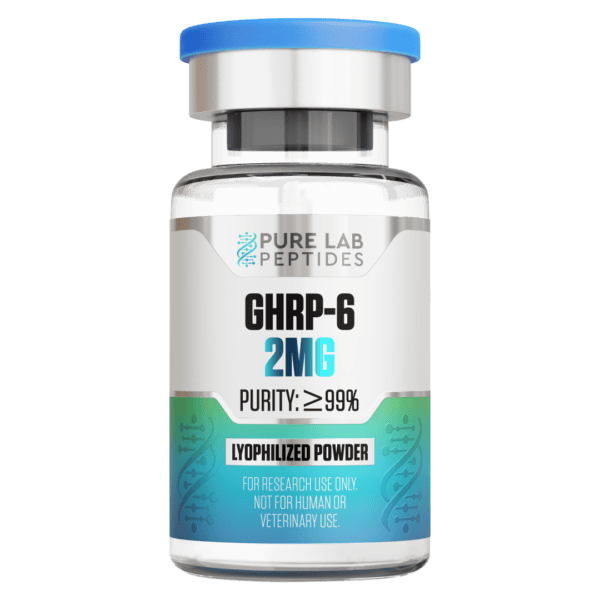
Need Assistance?
Questions about product documentation?
Contact our support team for help with product records, lot information, orders or certificate verification.