 Skip to content
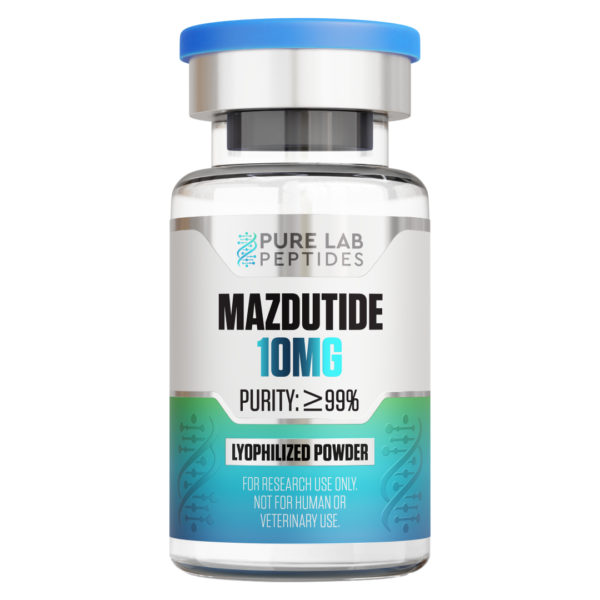
Survodutide, also cataloged as BI 456906, is listed by PubChem and IUPHAR/BPS as a peptide research compound connected to glucagon and GLP-1 receptor pharmacology [1] [2].
- Survodutide is a synthetic peptide research compound also indexed as BI 456906 in scientific databases and receptor-focused resources [1] [2].
- IUPHAR/BPS describes Survodutide as an acylated peptide with a C18 fatty acid conjugate and dual glucagon/GLP-1 receptor context [2].
- ChEMBL lists Survodutide under compound record CHEMBL5314776, which supports database cross-checking during identity review [3].
- Published discovery and preclinical pharmacology literature describes BI 456906 in GCGR and GLP-1R research models [4].
- Structural review literature describes Survodutide as a 29-amino-acid peptide derived from glucagon and containing a C18 diacid element [5].
- Published literature supports research interpretation, not outcomes for a Pure Lab Peptides product.
Fast Answer: What Should Researchers Check Before They Buy Survodutide for Research?

Researchers evaluating where to buy Survodutide for research should prioritize a batch-specific COA, clear RUO labeling, identity-confirming analytical data, lot traceability, and supplier documentation before procurement review. Products discussed in this article are intended for laboratory research use only and are not intended for human or animal consumption. Published literature should guide context, not product claims.
What Documentation Should Appear Before Procurement Review?
The first documents to review are the product label, COA, lot identifier, purity method, identity method, and any supplier notes tied to the exact batch. Official analytical guidance treats identity, purity, and related measurements as distinct analytical aims, which supports separating each data type in documentation review [16].
For peptide research materials, a COA should not be read as a generic marketing asset. It should connect the labeled Survodutide peptide material to the batch, the test method, the date, and the reported analytical data.
Why RUO Labeling Matters on Product Pages
RUO labeling identifies the material’s intended laboratory research use.
Clear labeling reduces ambiguity.
Survodutide Research Peptide Identity and Classification
Survodutide is indexed as a peptide compound with the molecular formula C192H289N47O61 and a PubChem molecular weight entry of about 4232 g/mol [1]. IUPHAR/BPS identifies Survodutide as a peptide and lists BI 456906 and BI456906 as synonyms [2].
What Is Survodutide in Published Research Literature?
Published literature describes BI 456906 as a GCGR/GLP-1R dual agonist peptide in discovery and preclinical pharmacology research [4]. A separate review describes Survodutide as a 29-amino-acid peptide derived from glucagon with GLP-1 activity incorporated into its design [5].
Compound identity links the listing to database records and published receptor research; it does not establish outcomes for the supplied batch.
How BI 456906 Supports Synthetic Peptide Identity Review
BI 456906 is a key synonym for Survodutide in IUPHAR/BPS and PubChem records [1] [2].
ChEMBL also provides a compound record for Survodutide, which can help technical teams compare database naming, target annotation, and compound identifiers across sources [3]. When records agree on naming, procurement review becomes easier.
How the 29-Amino-Acid Acylated Peptide and C18 Fatty Acid Details Fit

The 29-amino-acid sequence and C18 fatty acid conjugate are structural features associated with Survodutide’s acylated-peptide classification [2] [5]. IUPHAR/BPS discusses the C18 conjugate in relation to albumin binding and half-life in the literature [2].
Published discovery literature describes BI 456906 as an acylated peptide with a C18 fatty acid principle [4]. This provides compound-level structural context, not evidence for a supplied batch.
Research Applications in GLP-1 and Glucagon Receptor Models
Survodutide literature includes GLP-1R and GCGR models [2] [4]. UniProt identifies GLP1R as the glucagon-like peptide-1 receptor and GCGR as the glucagon receptor [7] [8].
Metabolic Pathway Research Context
Metabolic-pathway studies examine receptor signaling and compound characterization. IUPHAR/BPS places GLP-1R and GCGR within the glucagon receptor family [9] [10].
Receptor Classification
De Graaf and colleagues describe GLP-1R as a class B G protein-coupled receptor that mediates GLP-1 peptide signaling [11].
Receptor Signaling Context for Survodutide and GCGR
Survodutide is described as a dual agonist in GCGR and GLP-1R research literature [2] [4]. That receptor-pharmacology context does not establish outcomes for a supplied product.
How Do GLP-1R and GCGR Fit the Research Model?

GLP-1R and GCGR are both class B receptor targets in the glucagon receptor family [9] [10]. Structural and pharmacology literature has investigated how peptide ligands interact with these receptor systems [11] [12].
The research model connection is useful for literature interpretation. It does not change the RUO status of the material.
What Does Dual Agonist Language Mean in Literature Review?
Dual agonist language means the literature discusses activity at two receptor targets rather than one. IUPHAR/BPS describes Survodutide as a glucagon/GLP-1 receptor dual agonist, and the discovery literature describes GCGR/GLP-1R research characterization [2] [4].
Why Pathway Relevance Is Not a Product Claim
Pathway relevance does not establish a biological outcome for the supplied material; that requires evidence tied to the material and experimental conditions.
Published Literature Context for Survodutide Research
The evidence landscape for Survodutide includes database identity records, receptor-target resources, structural receptor literature, preclinical pharmacology literature, and human study literature outside RUO product use. Some published literature outside the scope of RUO product use has examined this compound class in human study settings. That literature should not be interpreted as a use claim for research-use-only materials [6].
| Research Area | What Literature Examines | Evidence Type | RUO Interpretation |
|---|---|---|---|
| Compound identity | Survodutide synonyms, formula, class, and database records [1] [2] [3] | Official database | Supports identity review, not product claims |
| Receptor context | GLP-1R, GCGR, and glucagon receptor family annotations [7] [8] [9] [10] | Database and receptor guide | Supports pathway mapping |
| Preclinical pharmacology | BI 456906 receptor and pathway research [4] | Published preclinical literature | Supports model-specific context only |
| Structural receptor science | GLP-1R and GCGR structural research [11] [12] [13] [14] [15] | Structural biology | Supports receptor interpretation |
| Analytical documentation | Method validation, peptide identity, and purity testing principles [16] [17] [18] | Official guidance and analytical literature | Supports COA and testing review |
What Can Preclinical Literature Support?
Preclinical literature can support compound background, receptor model context, and mechanistic questions that researchers may investigate. Zimmermann and colleagues describe BI 456906 in GCGR/GLP-1R discovery and preclinical pharmacology research [4].
Preclinical findings remain specific to their models and do not establish outcomes for Pure Lab Peptides materials.
How Should Lab Teams Interpret Receptor Assay Findings?
Assay metrics belong to the conditions of the assay. Receptor activity values, cell-line context, experimental design, and analytical methods all affect how the data should be read [4].
Survodutide receptor assays provide model-specific information about GCGR and GLP-1R. They do not verify a separately supplied batch.
Translational Limits Across Evidence Types
Distinguish what the literature examines from what product documentation confirms. Findings across evidence categories do not automatically transfer to the supplied RUO material.
Research Evidence and Batch Documentation
Study Findings and Product Evidence
A published paper may examine receptor activity, pathway signaling, structure, or model-specific pharmacology.
Published studies provide scientific background. Procurement review separately requires the COA, analytical testing, and lot matching.
Documentation for Research-Only Procurement
Consumer or clinical suitability is not established by model-specific literature about a research compound.
Review compound identity, batch-specific COA data, analytical verification, and supplier records together.
COA Documentation for Survodutide Peptide Review

A COA is a batch-specific documentation tool. It should help a research buyer check whether the reported Survodutide material aligns with the product label and lot record.
Why Does a Certificate of Analysis Matter for Research Buyers?
A certificate of analysis matters because it organizes test information in a way that can be reviewed before procurement. Official analytical guidance describes identity, purity, and assay-type measurements as separate analytical aims [16] [18].
For Survodutide peptide materials, the COA should support the product page rather than replace it. The product page explains the research listing; the COA should provide batch-level data.
What COA Fields Support Batch-Specific Review?
Useful COA fields include compound name, synonym, lot identifier, purity value, analytical method, date, lab source, and any available chromatogram or mass data. ISO/IEC 17025 describes a framework for competent testing and calibration laboratories, which is relevant when assessing the credibility of laboratory reporting [24].
FDA laboratory guidance also emphasizes that laboratory reports and certificates should reflect documented data review rather than selective reporting [30]. That principle supports careful COA review.
How COA Dates Connect to Lot Traceability
A COA date should make sense next to the lot identifier and product record. If the COA, label, and supplier record do not align, the buyer should resolve that documentation gap before procurement.
Traceability is a documentation concept. NIST describes metrological traceability as a property of measurement data supported by a documented chain of comparisons [25].
Peptide Purity and Identity Testing Considerations
Purity and identity are related, but they are not the same. A purity value helps describe the proportion of the target material relative to detectable impurities under a stated method, while identity testing supports whether the material matches the intended peptide.
How Does HPLC Support Peptide Purity Review?
HPLC can support peptide purity review by separating components under defined chromatographic conditions. USP peptide mapping material describes chromatographic separation as part of identity-focused peptide mapping for proteins and related materials [19].
For a Survodutide COA, the key question is whether the method is named and whether the reported data are tied to the batch. Purity data without method context are less useful.
How Does LC-MS Support Molecular Identity Verification?
LC-MS can support peptide identity review because it combines chromatographic separation with mass spectrometric information. Lian and colleagues describe LC-MS as a central tool for characterizing synthetic peptide impurities and structural features [20].
Prabhala and colleagues also describe mass spectrometry as well suited for analysis of synthetic peptide identity and purity [21]. For research procurement, that supports asking whether identity data are available.
What Does Mass Spectrometry Add to Analytical Confidence?
Mass spectrometry adds mass-based evidence. It can help compare observed mass data with expected molecular identity when paired with appropriate method details and reference information [21].
LC-HRMS literature also describes peptide characterization workflows that can identify peptide-related impurities and support qualitative analysis [23]. This is documentation support, not a replacement for batch-specific review.
Analytical Verification Workflow for BI 456906

A numbered lab-test verification workflow keeps the review documentation-focused:
- Verify that Survodutide, BI 456906, and any catalog naming align across the product page, COA, and label.
- Review the batch-specific COA before procurement.
- Check whether the purity method is named.
- Confirm whether identity testing is supported by LC-MS, mass spectrometry, peptide mapping, or another suitable method.
- Review chromatogram or mass data when available.
- Check the COA date, lot identifier, and testing source.
- Record storage notes and documentation gaps in the laboratory file.
These steps stay within documentation review. They do not provide product-use guidance.
Where Do Retention Time and Mass Data Fit?
Retention time belongs to chromatographic method context. Mass data belong to molecular identity context.
Wei and colleagues describe liquid chromatography peptide mapping with mass spectrometric detection as an identity and characterization tool [22]. In a COA review, the practical question is whether those data connect clearly to the Survodutide lot.
How Reference Standards Improve Documentation Review
Reference standards improve documentation review by providing a comparison point for measurements. NIST notes that standard reference materials are certified and supplied with well-characterized composition or properties [26].
For research-grade Survodutide documentation, reference information can improve confidence in the analytical record. It should still be assessed alongside the COA, lot number, method, and supplier documentation.
Lot Traceability and Vial Labeling Review
Lot traceability connects a physical research material to its documentation. Vial labeling connects the material container to the same identity record.
Why Do Lot Numbers Matter for Research Procurement?
Lot numbers matter because they link the labeled material to the COA and supplier documentation. Without lot-level alignment, a COA may not prove that it belongs to the material being reviewed.
ISO/IEC 17025 and NIST traceability concepts both support the broader principle that laboratory documentation should allow data to be tied back to the measurement and material context [24] [25]. For procurement teams, that means matching the lot across records.
How Should Vial Labels Align With Supplier Documentation?
A peptide vial label should align with the product name, lot identifier, and COA. It should also avoid unsupported claim language.
The best review question is simple: does the label match the documentation? If the answer is unclear, the documentation package needs closer review before the material is selected for laboratory research.
Storage Documentation for Lyophilized Peptide Materials
Storage documentation records how the material is maintained in laboratory inventory. It is not a substitute for an approved experimental protocol.
What Storage Notes Should Clarify for Lab Teams?
Storage notes should clarify temperature category, light exposure considerations, moisture protection, and recordkeeping expectations. Peptide stability literature describes sequence, formulation, and storage context as factors that can affect peptide integrity [27].
How Lyophilized Powder Documentation Supports Chain-of-Custody Review
Lyophilized peptide documentation supports chain-of-custody review by giving a stable record of material identity, storage category, and handling notes. A comparative peptide storage study found that storage conditions can influence peptide degradation patterns over time, which reinforces the need for documentation rather than assumptions [28].
The National Academies’ laboratory chemical management guidance also emphasizes chemical inventory, tracking, and storage management as core laboratory practices [29]. Those practices fit RUO peptide recordkeeping.
Research Procurement Checklist for Survodutide
Use this checklist to evaluate Survodutide documentation consistently.
- Verify that the compound is labeled for research use only.
- Review the batch-specific certificate of analysis.
- Confirm that purity data are linked to a named analytical method.
- Check that the lot number on the COA matches the product documentation.
- Compare Survodutide, BI 456906, molecular formula, and peptide identity references across sources [1] [2] [3].
- Assess whether the product page avoids unsupported claims.
- Document storage conditions and recordkeeping notes in the laboratory file.
What Should Research Buyers Compare Across Suppliers?
Research buyers should compare documentation depth rather than marketing language. Useful comparison points include COA availability, analytical method naming, lot traceability, vial labeling, and RUO clarity.
The strongest supplier documentation is specific. It ties the Survodutide research material to a batch, method, and record set.
How Research-Grade Survodutide Documentation Supports Evaluation
Research-grade Survodutide documentation supports evaluation by reducing uncertainty. It does not replace independent review by qualified research teams.
A strong documentation package makes it easier to compare identity records, COA data, and supplier notes.
Where Supplier Records Support Product-Page Confidence
Supplier records support product-page confidence when they are consistent, current, and batch-specific.
Confidence should come from traceability and analytical support. It should not come from claims that move beyond laboratory research.
Next-Step Documentation Review for Survodutide Materials
Bring together identity, literature context, COA data, analytical methods, labeling, lot traceability, and the research-only designation for final review.
What Should the Final Documentation Review Confirm?
The final review should confirm that Survodutide and BI 456906 are used consistently, that the COA matches the lot, that purity and identity testing are documented, and that the product page stays within research-use-only boundaries.
Key distinctions:
- Published literature does not establish outcomes for a supplied product.
- Preclinical findings should remain model-specific.
- A purity percentage alone does not confirm complete peptide identity.
- A COA should be batch-specific, not generic.
- Pathway relevance does not equal a product claim.
- Catalog specifications should stay separate from research interpretation.
Pure Lab Peptides supplies compounds for laboratory research use only. Products are not intended for human or animal consumption, diagnostic use, therapeutic use, clinical use, veterinary use, or as food, drugs, cosmetics, dietary supplements, or household products. Researchers are responsible for ensuring lawful, appropriate handling and use in accordance with applicable regulations and institutional guidelines.
Review the product-page documentation, COA details, analytical testing notes, and RUO labeling before evaluating Survodutide for laboratory research.
FAQs
What is Survodutide in a research-use-only product context?
Survodutide is discussed in receptor-focused literature and database records as BI 456906 [2]. Before procurement, compare compound name, synonym, molar mass, COA details, and batch records. These documents serve different purposes from published study findings.
What does BI 456906 mean for Survodutide documentation?
BI 456906 is a synonym used in Survodutide research literature and scientific database records [2]. The term helps researchers cross-check product documentation against published literature, receptor resources, and compound records. A clear COA should align the Survodutide name, BI 456906 reference, peptide identity data, and lot-specific documentation.
How do researchers evaluate Survodutide as a receptor agonist?
Researchers evaluate Survodutide as a receptor agonist by reviewing model-specific literature, receptor annotations, and analytical documentation. Published sources describe Survodutide in GLP-1R and GCGR research contexts [2] [4].
What role do signaling pathways play in Survodutide research?
Signaling pathways provide a research framework for interpreting Survodutide literature. GLP-1R and GCGR context can help researchers understand why dual receptor models appear in published work [4].
How can in vitro or EC50 data be interpreted for Survodutide?
In vitro or EC50 data should be interpreted as model-specific research information.
What form-related documentation matters for Survodutide research materials?
Form-related documentation should clarify whether the Survodutide material is presented as peptide powder and how the label, COA, and supplier record describe the batch. Researchers should review HPLC, LC-MS, lot traceability, and peptide identity documentation together.
Researchers Cited in This Guide
The researchers listed below are cited for relevant published work. Their inclusion does not imply that they wrote, reviewed, or endorsed this guide or Pure Lab Peptides products.
Tina Zimmermann
Author profile: ResearchGate
Tina Zimmermann’s publications address Survodutide, BI 456906, GCGR, and GLP-1R, including compound characterization, preclinical pharmacology, and receptor-focused study design. The selected work provides background for model-specific interpretation.
Selected publications:
- A Molecular Metabolism publication on BI 456906 discovery and preclinical pharmacology — Molecular Metabolism, 2022. DOI: 10.1016/j.molmet.2022.101633. PMID: [36356832]
- A Molecular Metabolism study on Survodutide receptor-pathway localization — Molecular Metabolism, 2026. DOI: 10.1016/j.molmet.2026.102326. PMID: [41638399]
Dieter Hamprecht
Author profile: ORCID
Dieter Hamprecht’s publications address Survodutide and GLP-1/glucagon receptor research, including BI 456906 structure, receptor pharmacology, and in vitro characterization.
Selected publications:
- A Molecular Metabolism publication on BI 456906 discovery and preclinical pharmacology — Molecular Metabolism, 2022. DOI: 10.1016/j.molmet.2022.101633. PMID: [36356832]
- A pharmacological profiling publication on Survodutide biomarker strategy — Diabetes, Obesity and Metabolism, 2024. DOI: 10.1111/dom.15551. PMID: [38560764]
REFERENCES
- PubChem. Survodutide compound record. National Center for Biotechnology Information. CID 168429725.
- IUPHAR/BPS Guide to Pharmacology. Survodutide ligand record. GtoPdb Ligand ID 13383.
- ChEMBL. Survodutide compound record CHEMBL5314776. European Bioinformatics Institute.
- Zimmermann T, Thomas L, Baader-Pagler T, et al. BI 456906 discovery and preclinical pharmacology paper. Molecular Metabolism. 2022. PMID: 36356832. DOI: 10.1016/j.molmet.2022.101633.
- Klein T, Augustin R, Hennige AM. Survodutide structural and pharmacology review. Diabetes Research and Clinical Practice. 2024. PMID: 37330144.
- le Roux CW, et al. Survodutide receptor-agonist human study record. The Lancet Diabetes & Endocrinology. 2024. PMID: 38330987.
- UniProt. GLP1R reviewed protein entry P43220. UniProtKB/Swiss-Prot.
- UniProt. GCGR reviewed protein entry P47871. UniProtKB/Swiss-Prot.
- IUPHAR/BPS Guide to Pharmacology. GLP-1 receptor target record. GtoPdb Target ID 249.
- IUPHAR/BPS Guide to Pharmacology. Glucagon receptor target record. GtoPdb Target ID 251.
- de Graaf C, Donnelly D, Wootten D, et al. GLP-1 receptor and class B GPCR review. Pharmacological Reviews. 2016. PMID: 27630114.
- Siu FY, He M, de Graaf C, et al. Human glucagon receptor structure study. Nature. 2013. PMID: 23863937. DOI: 10.1038/nature12393.
- Zhang H, Qiao A, Yang D, et al. Full-length glucagon receptor structure study. Nature. 2017. PMID: 28514451.
- RCSB Protein Data Bank. GLP-1 peptide hormone bound to GLP-1 receptor, PDB 6X18. RCSB PDB.
- RCSB Protein Data Bank. Human glucagon receptor bound to glucagon, PDB 6LMK. RCSB PDB.
- International Council for Harmonisation. Q2(R2) Validation of Analytical Procedures. ICH Guideline. 2023.
- International Council for Harmonisation. Q14 Analytical Procedure Development. ICH Guideline. 2023, corrected 2025.
- U.S. Food and Drug Administration. Analytical procedures and methods validation guidance. FDA Guidance. 2015.
- United States Pharmacopeia. Peptide Mapping chapter overview. USP Harmonization Standards.
- Lian Z, Wang N, Tian Y, Huang L. Synthetic peptide characterization using LC-MS. Journal of the American Society for Mass Spectrometry. 2021. PMID: 34110145. DOI: 10.1021/jasms.0c00479.
- Prabhala BK, Mirza O, Højrup P, Hansen PR. Synthetic peptide characterization by mass spectrometry. Methods in Molecular Biology. 2015. PMID: 26424265. DOI: 10.1007/978-1-4939-2999-3_9.
- Wei Z, Tous G, Yim A, et al. Peptide mapping with LC-MS as identity and characterization tool. Developments in Biologicals. 2005. PMID: 16375249.
- Zeng K, et al. LC-HRMS characterization of peptide materials and impurities. Analytical and Bioanalytical Chemistry. 2015.
- International Organization for Standardization. ISO/IEC 17025 testing and calibration laboratories. ISO.
- National Institute of Standards and Technology. Metrological Traceability FAQ and policy resources. NIST.
- National Institute of Standards and Technology. Standard Reference Materials overview. NIST.
- Shi M, et al. Protein and peptide instability strategies review. Pharmaceutics. 2023.
- Tran D, et al. Comparative peptide storage conditions study. PLoS ONE. 2012.
- National Research Council. Prudent Practices in the Laboratory: chemical management guidance. National Academies Press. 2011.
- U.S. Food and Drug Administration. Laboratory data review and documented reporting guidance. FDA Guidance. 2006.
Research Disclaimer
This material is supplied strictly for in vitro laboratory research and is not for human or veterinary use. Published studies describe specific experimental materials, models, and methods; they do not establish the safety, efficacy, or suitability of this catalog product for non-research use. Review the original publications and the lot-specific analytical documentation independently.
There are no reviews yet.